Power Up Your Wallet Decoding Car Battery Replacement Prices
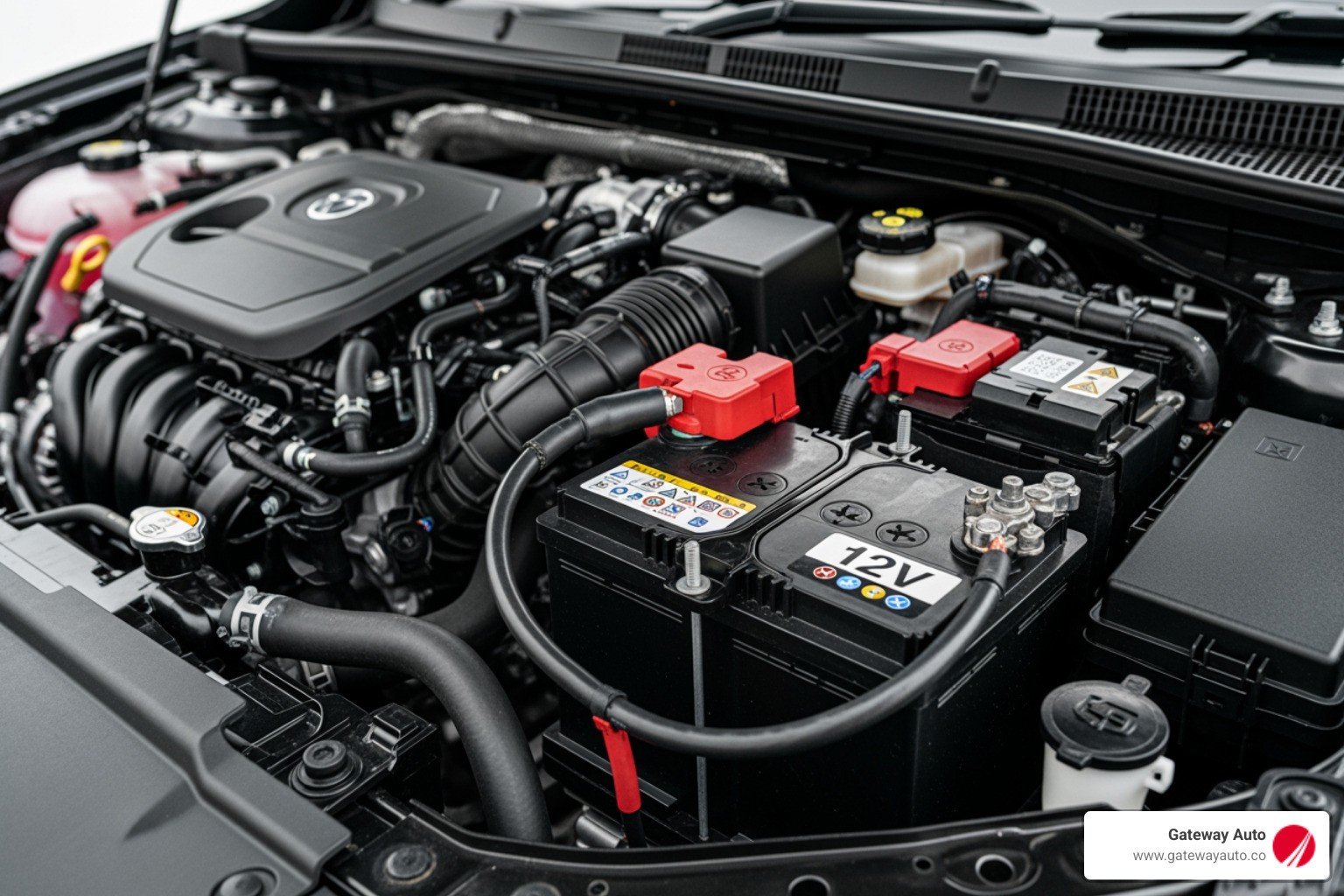
Why Understanding Battery Replacement Cost Matters for Every Driver
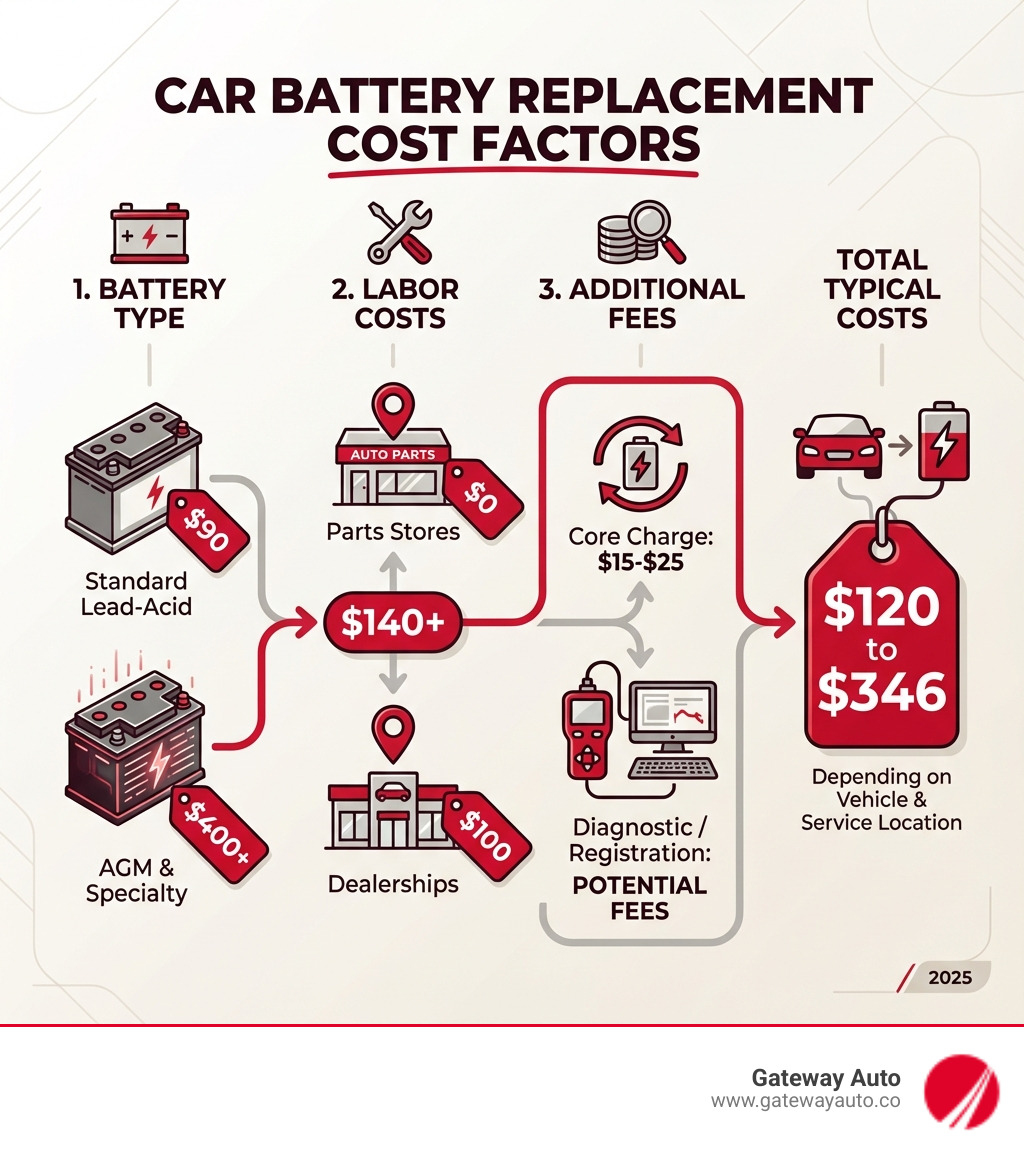
Battery replacement cost varies widely based on several factors, but most Omaha drivers can expect to pay between $120 and $346 for a complete battery replacement. Here's what you need to know:
- Standard lead-acid batteries: These cost between $90 and $225, plus labor.
- AGM batteries: For newer vehicles with start-stop technology, these cost $150 to $400 or more.
- Labor costs: This can range from $0 to $100, depending on where you go.
- Total average cost: The total for parts and installation is typically between $185 and $400.
If your car has ever refused to start on a cold Nebraska morning, you know the sinking feeling that comes with a dead battery. It's not just an inconvenience—it's an unexpected expense that can disrupt your entire day and leave you wondering if you're paying a fair price.
The truth is, battery replacement costs aren't one-size-fits-all. The final bill depends on your vehicle type, the battery technology it requires, where you get the work done, and several factors that aren't always obvious upfront. Some drivers pay under $150 for a straightforward replacement at an auto parts store, while others face bills exceeding $400 at a dealership for vehicles with complex electrical systems.
This guide breaks down every element that influences what you'll pay, from the battery itself to hidden fees like core charges and labor rates. You'll learn how to recognize when your battery is failing, what questions to ask before you buy, and how to avoid overpaying while still getting quality parts and service.
I'm Ben Toscano, and over the past two decades building Gateway Auto here in Omaha, I've helped thousands of customers steer battery replacement cost decisions with transparency and honesty. Understanding what drives these prices empowers you to make choices that protect both your vehicle and your budget.
Know your Battery replacement cost terms:
When to Replace Your Car Battery: Key Warning Signs
Nobody wants to be stranded in a parking lot, especially when the Nebraska weather turns frosty. The good news is that your car battery often sends out distress signals before it completely gives up the ghost. Learning to recognize these signs can save you a lot of hassle and help you plan for the battery replacement cost before it becomes an emergency.
Here are the key warning signs that your car battery is on its last legs:
- Slow Engine Crank: This is often the most common and earliest indicator. When you turn the key or push the start button, does your engine turn over sluggishly, taking longer than usual to catch? It sounds like a "rrr...rrr...rrr" instead of a quick "vroom." This means the battery isn't delivering enough power to the starter motor.
- Dimming Headlights or Electrical Issues: If your headlights appear dim, your interior lights flicker, or your power windows move slowly, especially when the engine is off or just starting, it's a sign of a weak battery. The battery struggles to provide consistent power to your vehicle's electrical systems.
- Clicking Sound on Start: A rapid clicking sound when you try to start the car typically indicates that your battery is too weak to engage the starter motor. It's trying, bless its heart, but it just doesn't have the juice.
- Dashboard Warning Light: Most modern vehicles have a battery warning light on the dashboard. If this light illuminates, it's a clear signal that there's an issue with your battery or the charging system. Don't ignore it!
- Corroded Battery Terminals: Pop the hood and take a look at your battery terminals. If you see a fuzzy, white, or bluish-green powdery substance around the terminals, that's corrosion. This buildup can impede the flow of electricity, making it harder for your battery to charge and deliver power.
- Swollen Battery Case: While less common, extreme heat or overcharging can cause the battery case to swell or bulge. This is a serious sign of internal damage and means the battery is dangerous and needs immediate replacement.
- Old Age: Even if you don't notice overt symptoms, if your battery is three to five years old, it's probably nearing the end of its typical lifespan. In the extreme heat of Nebraska summers or bitter cold of our winters, batteries can degrade faster, sometimes only lasting three to four years. Proactive replacement can prevent unexpected breakdowns.
- Frequent Jump-Starts: If you find yourself needing a jump-start regularly, it's a definite sign that your battery isn't holding a charge. While a jump-start can get you going, it's a temporary fix, not a solution.
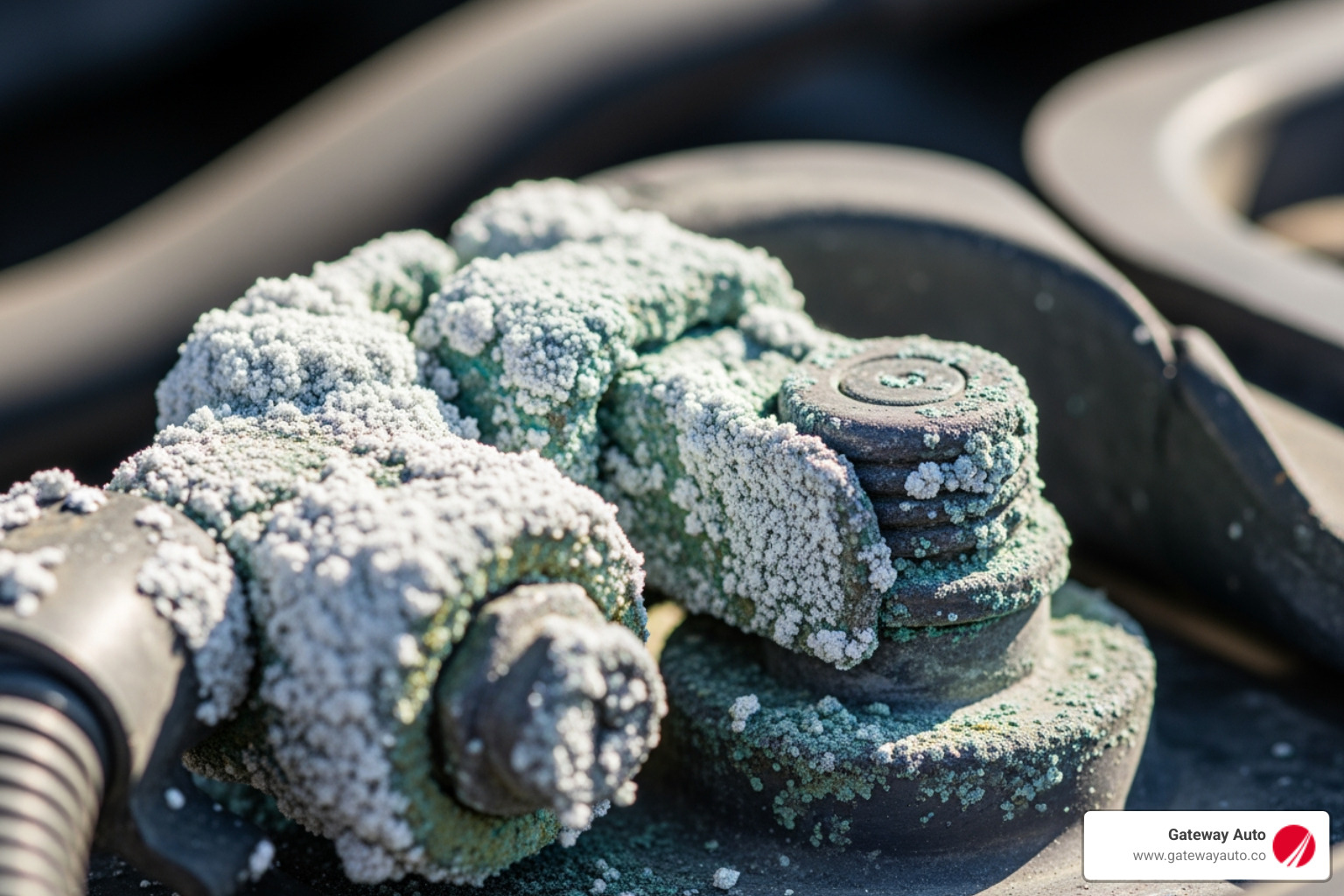
If you notice any of these signs, it's time to have your battery tested. Our team at Gateway Auto can quickly assess its health and recommend the best course of action. For more information on your vehicle's electrical components, check out our guide on the Engine Electrical System.
Factors Influencing Car Battery Replacement Cost
The journey to understanding battery replacement cost begins with recognizing that not all batteries are created equal, and neither are all vehicles. The price you pay is a complex equation influenced by several key variables, from the type of battery your car uses to where you live and who does the work. Let's dig into the specifics.
Breaking Down the Average Battery Replacement Cost
When we talk about the average battery replacement cost, we're looking at a broad spectrum. Most drivers in Omaha will spend between $90 and $200 for a standard replacement, but this can quickly climb depending on the battery type.
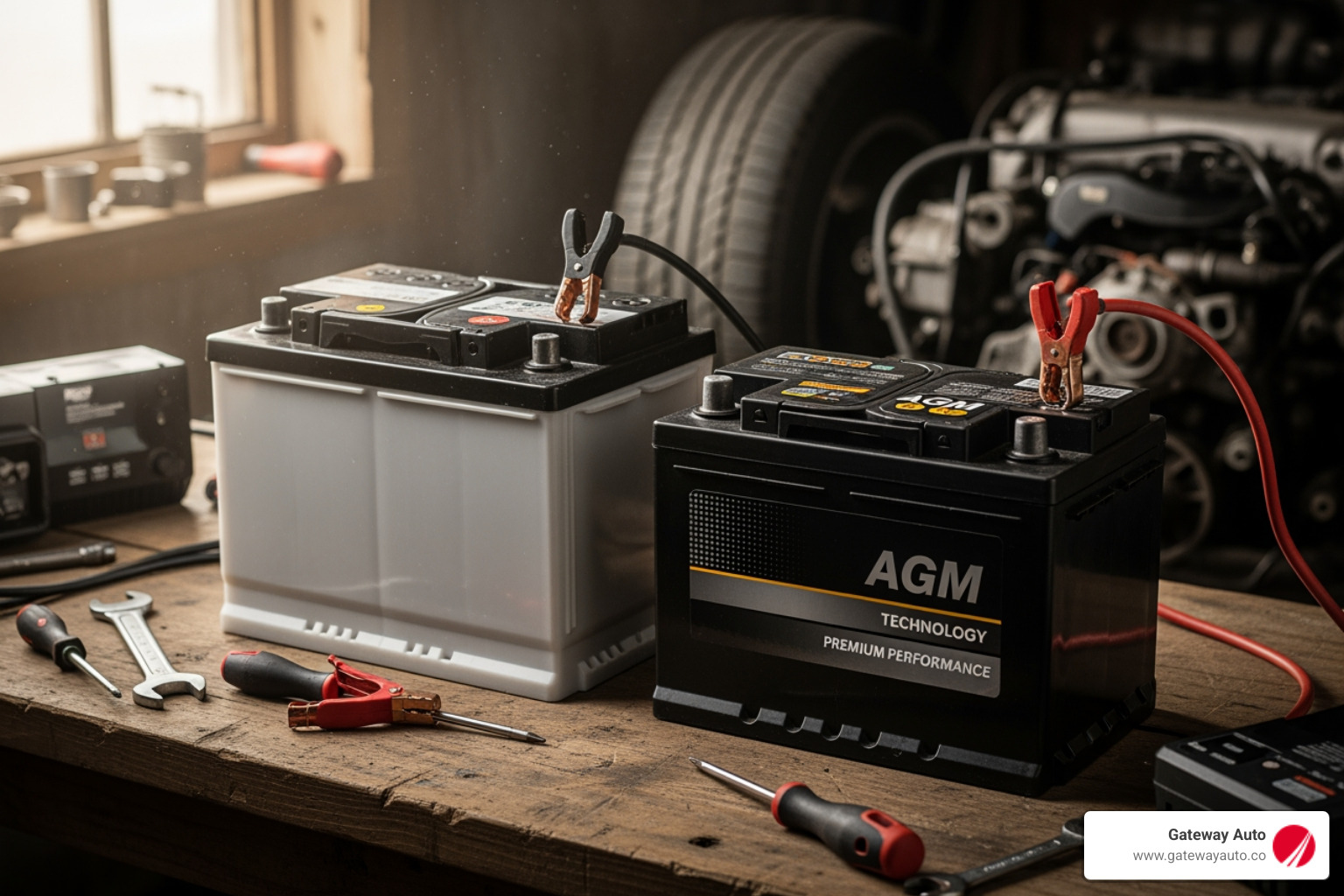
- Standard Lead-Acid Batteries: These are the most common and typically the most affordable option. They're what most of us picture when we think of a car battery. Prices usually fall between $90 and $225, though some sources suggest a range of $75 to $150 for the battery itself, or $185 to $300 including some labor.
- AGM (Absorbent Glass Mat) or Premium Batteries: These are a step up in technology and price. AGM batteries are designed to handle higher electrical demands, last longer, and perform better in extreme temperatures. They are often required for vehicles with start-stop technology, advanced electronics, or high-end audio systems. You can expect to pay anywhere from $150 to $400 or more for an AGM battery. Some statistics show these specifically costing $230 to $450 or even $250 to $400.
- Specialty and Premium Batteries: For performance cars, off-road vehicles, hybrids, or certain European models, specialty batteries like lithium-ion might be required. These often feature improved vibration resistance, spill-proof designs, or compact sizing for unusual engine compartments. While they offer superior performance and durability, their price tag can be steep, ranging from $300 to $500 or even higher.
Overall, the average cost of a car battery can range from $185 to $400, depending on all these factors.
How Vehicle Type and Specifications Drive Up the Price
The kind of vehicle you drive plays a significant role in your battery replacement cost. It's not just about size; it's about electrical demand and specific engineering.
- Cars vs. Trucks/SUVs: Larger vehicles, like trucks and SUVs, generally require more powerful batteries with higher Cold Cranking Amps (CCA) to start their bigger engines. This translates to a higher price tag. A heavy-duty truck battery, for instance, can push the total bill to $250 or more.
- Luxury and European Vehicles: These often come with sophisticated electrical systems and may require specific battery types or brands. Some European models, like certain BMWs or Audis, even require battery registration with a scan tool after replacement, which adds to the labor cost.
- Start-Stop Technology: If your vehicle has a start-stop system (where the engine automatically shuts off at red lights and restarts when you lift your foot off the brake), it almost certainly uses an AGM battery. These batteries are designed to handle the frequent cycling and higher electrical loads of such systems, making them more expensive than standard lead-acid options.
- Cold Cranking Amps (CCA): This rating indicates how much power a battery can deliver to start an engine in cold temperatures. In Nebraska, where winter mornings can be brutal, a higher CCA rating is crucial. Batteries with higher CCA ratings generally cost more.
- Reserve Capacity (RC): RC measures how long your battery can power essential accessories if your alternator fails. A higher RC is desirable but also adds to the cost.
- Battery Group Size: Batteries come in various physical sizes and terminal configurations (group sizes) to fit different vehicles. Getting the correct group size is non-negotiable, and some less common sizes might be pricier.
Even hybrid and electric vehicles, which rely on large high-voltage batteries for propulsion, still use a small 12-volt battery to power essential accessories and "wake up" their high-voltage system. This 12-volt battery also needs replacement periodically.
The Impact of Brand and Warranty on Long-Term Value
When evaluating battery replacement cost, it's tempting to go for the cheapest option, but considering the brand and warranty can offer significant long-term value.
- Brand Reputation vs. Price: Reputable brands often have a higher upfront cost, but they generally come with better performance, greater reliability, and a longer lifespan. Many drivers are willing to pay for the peace of mind that comes with proven quality.
- Warranty Length: Batteries typically come with warranties ranging from one to five years. A longer warranty usually indicates a higher-quality battery and can be a smart investment. While it adds to the initial purchase price, it protects you from having to buy a new battery again within that period. For example, some premium batteries offer extensive 4-year free replacement limited warranties.
- Prorated vs. Free Replacement: Understand the type of warranty. A "free replacement" warranty means you get a new battery at no cost if yours fails within the specified period. A "prorated" warranty means you'll pay a percentage of the new battery's cost based on how long you've owned the failed one. Always read the fine print!
- Lifespan vs. Upfront Cost: A more expensive, higher-quality battery with a longer warranty that lasts 5 years could be more cost-effective than a cheaper battery that needs replacement every 2-3 years. It's about total cost of ownership, not just the initial sticker price.
Decoding the Final Bill: Parts, Labor, and Potential Fees
Understanding the sticker price of the battery is only half the battle. Your total battery replacement cost will include other charges that can vary widely depending on where you go for service. Let's peel back the layers of your final bill.
For a deeper dive into overall vehicle repair expenses, check out our guide on Vehicle Repair Cost.
How Service Providers Affect Your Battery Replacement Cost
The choice of where to get your battery replaced significantly impacts the overall cost and experience.
- Dealerships: Often seen as the most expensive option, dealerships typically charge the highest labor rates (between $50-$100) and use OEM (Original Equipment Manufacturer) parts. They excel at servicing specific makes and models, especially those requiring complex battery registration with factory scan tools (common in European or newer start-stop vehicles). While pricier, you often get specialized expertise and guaranteed OEM compatibility.
- Independent Mechanics: Local, independent shops like Gateway Auto often strike a balance between cost and quality. Our labor rates are typically more competitive than dealerships, and we can offer a range of battery brands to suit your budget and vehicle needs. You often get personalized service and a focus on transparency, ensuring you understand the work being done.
- Auto Parts Stores: Many auto parts retailers offer free battery testing and, if you purchase a battery from them, free installation. This can be a great way to save on labor costs if your battery is easily accessible (under the hood). However, for more complex installations (under the seat, in the trunk, or those requiring battery registration), they may not offer free service, or it might be best left to a professional.
Uncovering Hidden Costs
Beyond the battery itself and standard labor, there are a few other charges that might sneak onto your bill, influencing the final battery replacement cost.
- Labor Charges: As mentioned, these can range from $0 (if you buy and get it installed for free at an auto parts store for an easy installation) to $100 at a dealership. Most quick-lube and tire chains might charge $20-$40 for installation if you don't buy the battery from them.
- Core Charge/Disposal Fee: When you buy a new battery, you'll almost always see a "core charge" of around $15-$25. This is a refundable deposit designed to encourage you to return your old battery for recycling. If you return your old battery, you get this money back. If you don't, it becomes a non-refundable environmental disposal fee. This ensures that harmful chemicals are properly managed and don't end up in our Omaha landfills.
- Diagnostic Fees: If your car has a persistent no-start issue, a mechanic might need to perform diagnostics to determine if the battery is truly the culprit or if there's an underlying issue with your alternator or electrical system. These diagnostic services can cost an additional $20-$40.
- Battery Registration/ECU Reset: For many modern vehicles, especially those with start-stop technology or European engineering, simply swapping the battery isn't enough. The vehicle's computer (ECU) needs to be "told" that a new battery has been installed so it can adjust its charging parameters. Skipping this step can lead to premature battery failure or issues with other electrical components. This process requires specialized scan tools and can add $5-$15 to the labor cost.
- Computer Memory Saver/Code Reset: When a battery is disconnected, some vehicles lose their radio presets, clock settings, and even certain engine or transmission learned parameters. A mechanic might use a memory saver during the replacement to prevent this, or perform a code reset afterward, which can be an additional small charge ($5-$15).
- Corrosion-Preventive Spray Sleeves: These small felt washers or sprays applied to the terminals can prevent future corrosion buildup and might cost an extra $3-$8.
By understanding these potential charges, you can ask the right questions and get a clear, transparent estimate for your battery replacement cost before any work begins.
Smart Strategies to Save on Your Next Battery Replacement
Nobody likes unexpected expenses, but with a little planning and smart decision-making, you can significantly reduce your battery replacement cost. Here are our top tips for being a savvy battery shopper and owner.
Preventive maintenance is always cheaper than reactive repairs. Learn more about its importance in our article: Why is Preventive Auto Maintenance Important.
DIY vs. Professional Installation: A Cost-Benefit Analysis
For some, the thought of replacing a car battery themselves is empowering. For others, it sounds like a recipe for disaster. Let's weigh the pros and cons for your battery replacement cost.
The DIY Advantage:
- Savings on Labor: The biggest draw for DIY is saving the $20-$80 (or more) in labor costs. If you have the tools and confidence, this can be a significant saving.
- Convenience: You can do it on your own schedule, in your own driveway.
The DIY Reality (and Risks):
- Required Tools: You'll need a 10mm combination wrench or ratchet (for most terminal nuts), a terminal puller, a battery carrier strap (batteries are heavy!), safety glasses, gloves, and often a baking soda/water mix for cleaning. For modern cars, a memory saver (OBD II voltage maintainer) is crucial to prevent losing electronic settings.
- Safety Risks: Car batteries contain corrosive acid and can produce explosive hydrogen gas. Sparks can cause serious injury or fire. Improper handling can lead to acid burns.
- Small Margin for Error: Simply loosening two clamps and lifting sounds easy, but modern vehicles pack sensitive electronics, tight engine bays, and complex charging systems.
- Disconnecting terminals in the wrong order (always negative first, then positive) can cause electrical shorts.
- If your vehicle requires battery registration (coding) with a scan tool (common in BMW, Audi, Ford start-stop, and many hybrids), skipping this step can overcharge the new battery and void the warranty. This is a task most DIYers cannot perform.
- Tightening terminals too much can damage the battery posts.
- For hybrids and EVs, high-voltage cabling is present; one wrong move is far pricier than a $50 install fee.
When to Call a Pro:We generally recommend professional installation if:
- Your car is a newer model with complex electronics or start-stop technology.
- It's a European luxury vehicle.
- The battery is located in a hard-to-reach spot (under the seat, in the trunk).
- You don't have the proper tools or feel uncomfortable working with automotive electrical systems.
- You simply value your time and peace of mind over a small labor saving.
For most people in Omaha, the modest labor cost of professional installation is a small price to pay for expertise, proper disposal, and avoiding potential costly mistakes.
Beyond the Car: A Quick Look at iPhone Battery Costs
While our focus is primarily on car batteries, it's worth noting that the principles of battery degradation and replacement costs apply to other devices we rely on daily, like our smartphones. If your iPhone can barely make it to lunchtime without a recharge, a new battery can make it feel like new again.
- Smartphone Battery Degradation: Just like car batteries, phone batteries lose capacity over time with normal use.
- iPhone Replacement Cost: At the Apple Store, replacing an iPhone battery costs $99 for newer models (iPhone 14 and iPhone 15) and $49 to $89 for earlier models. For comparison, Best Buy’s Geek Squad charges $70 to $80 for Samsung Galaxy S9 to S23 Ultra battery replacements.
- Service Options: You can schedule a visit at an Apple Authorized Service Provider or Apple Store, or arrange to send your iPhone directly to Apple for repair.
- AppleCare Benefits: If you have AppleCare and your battery holds less than 80% of its original capacity, the replacement is often at no additional cost. Apple also uses genuine parts, ensuring safety and performance.
This is a great example of how a relatively small battery replacement cost can extend the life of an expensive device, which is a principle we apply to your vehicle as well! For more details on iPhone battery service, you can visit Official Apple Support for iPhone Battery Replacement.
Frequently Asked Questions about Battery Replacement
We get a lot of questions about car batteries here at Gateway Auto. Here are some of the most common ones that help shed more light on battery replacement cost and related topics.
How long does a car battery typically last?
The typical lifespan of a car battery is generally three to five years for standard lead-acid batteries. However, some batteries, particularly in average cars, trucks, or SUVs, can last up to six years. This lifespan can vary significantly based on several factors:
- Climate Impact: Here in Nebraska, both extreme heat and extreme cold can shorten battery life. High temperatures accelerate the chemical reactions that degrade a battery, while bitter cold demands more power to start your engine, straining a weak battery. In regions with high heat and humidity, a battery might only last three or four years.
- Driving Habits: Frequent short trips (less than 20 minutes) don't allow the alternator enough time to fully recharge the battery, leading to a gradual drain and shorter lifespan.
- Vehicle Electronics Load: Modern vehicles are packed with electronics, even when the engine is off (think security systems, memory functions). This "parasitic drain" can wear down a battery faster, especially if the car sits for extended periods. Heavy accessory use (powerful stereos, heated seats) also puts more strain on the battery.
Regular testing, especially before summer and winter, can help you predict when a replacement might be needed and avoid being stranded.
Can I just keep jump-starting a weak battery?
While jump-starting can get you out of a bind, it's a Band-Aid, not a cure. Repeated jump-starts indicate a deeper issue—either your battery can no longer hold a charge, or your charging system (alternator) is failing.
Continually jump-starting a weak or dying battery can:
- Overwork the Alternator: Your alternator is designed to maintain a fully charged battery, not to fully recharge a dead one. Constantly trying to charge a depleted battery puts excessive strain on the alternator, potentially leading to its premature failure, which is a much more expensive repair than a battery replacement.
- Damage to Electronics: The surge of power from a jump-start can sometimes damage sensitive electronic components in modern vehicles, leading to costly electrical issues.
If your battery fails a load test or needs more than one jump per month, replacement is the smarter—and ultimately cheaper—move. Don't wait until you're stuck in a blizzard to address a failing battery.
What is a "core charge" and can I avoid it?
A "core charge" is a refundable deposit, typically $15 to $25, added to the purchase price of a new car battery. Its purpose is to incentivize you to return your old battery.
- Recycling Incentive: Car batteries contain lead and sulfuric acid, both of which are hazardous materials. The core charge ensures that these batteries are returned to the retailer or service center for proper recycling. This is an environmentally responsible practice that prevents harmful substances from polluting our environment.
- How to Get Your Money Back: You can easily avoid paying the core charge by simply bringing your old battery with you when you purchase a new one, or by returning it shortly after your replacement. Once your old battery is received, the core charge will be refunded to you.
So, while it appears as an extra cost on your bill, it's a temporary one that promotes responsible disposal and can be fully recovered.
Get a Clear Estimate and Drive with Confidence
Navigating battery replacement cost doesn't have to be a guessing game. By understanding the factors that influence pricing, recognizing the warning signs of a failing battery, and knowing your options for service, you can make informed decisions that protect your vehicle and your wallet.
Remember these key takeaways:
- Proactive testing is key: Don't wait until your battery dies to get it checked. Regular inspections, especially before Omaha's extreme seasons, can save you from unexpected breakdowns.
- Battery type matters: Standard lead-acid, AGM, and specialty batteries have different price points and are suited for different vehicle needs.
- Consider all costs: Factor in the battery price, labor, and potential hidden fees like core charges or battery registration.
- Choose your provider wisely: Dealerships, independent mechanics, and auto parts stores each offer different benefits and price structures. For comprehensive care and transparent pricing, we believe an all-in-one automotive center like Gateway Auto offers the best value.
At Gateway Auto, we're committed to providing transparent estimates and expert service for all your automotive needs, including battery replacement. Our ASE-certified technicians will help you choose the right battery for your vehicle and ensure a professional, safe installation.
Don't let a dead battery derail your day. Get a clear estimate and drive with confidence. Get a transparent estimate for your auto repair needs from Gateway Auto today, and let us help you power up your ride for the roads of Omaha and beyond!
All your automotive needs under one roof
Gateway Auto offers service, collision, fleet and quality vehicle sales under the same trusted brand to ensure you stay on the road with a team by your side.