
What to Do After a Car Accident - Step-by-Step Actions to Take Immediately

A car accident can leave you shaken, confused, and unsure of what needs to happen next. Even a minor crash can create stress, injuries, vehicle damage, insurance questions, and repair decisions that need attention quickly.
Knowing what to do after a car accident helps you protect your well-being, your passengers, your claim, and your vehicle. The first moments should be focused on safety. After that, your attention can shift to documenting the scene, exchanging information with the other party, contacting your insurance company, and arranging proper auto repair.
For Omaha drivers, Gateway Auto offers a local team that understands both the repair side and the stress that follows a crash. Whether your car needs body repair, paint work, collision service, mechanical repair, or an estimate for an insurance claim, our team can help you take the next step with less uncertainty.
Check Yourself, Your Passengers, and the Scene
The first thing to do after an accident is pause and assess safety. Take a breath, look around, and check yourself for pain, bleeding, dizziness, confusion, or trouble moving. Adrenaline can hide injuries, so do not assume you are fine just because you can stand or talk.
Next, check your passengers. Ask each person if they are hurt, where they feel pain, and whether they can move normally. Pay close attention to children, older adults, and anyone who seems confused, quiet, or disoriented. Their well-being matters before anything else.
If someone has serious injuries, call 911 right away. Do not move an injured person unless there is an immediate danger, such as fire, leaking fuel, or oncoming traffic. Moving someone with a neck, back, or head injury can make the injury worse.
Turn on your hazard lights if you can do so safely. If the car is in traffic and can be moved without risk, pull to a safe nearby location. If the vehicle cannot be moved or the crash is serious, stay clear of traffic and wait for help.
Use this quick safety check:
- Look for injuries to yourself, your passengers, and anyone else involved.
- Move to a safer spot only if the vehicle can be moved safely.
- Turn on hazard lights and use reflective triangles if available.
- Call 911 if anyone is hurt, traffic is blocked, or the crash involves serious damage.
- Avoid standing between vehicles or near moving traffic.
- Stay calm and avoid arguing with the other driver.
Even if the crash seems minor, monitor your condition over the next several hours and days. Headaches, stiffness, soreness, numbness, nausea, and back or neck pain can appear later. If symptoms develop, seek medical care and keep records for your personal injury documentation and insurance claim.
Call the Police and Gather Information
After checking for injuries, decide whether you need to call the police. In many situations, calling law enforcement is the safest choice. A police report can help document what happened, identify the drivers involved, and support your accident claim if fault is later disputed.
You should call the police if anyone is injured, the vehicles cannot be safely driven, there is major vehicle damage, the other party leaves the scene, there are signs of impaired driving, or anyone refuses to share information. When in doubt, call and ask for guidance.
When officers arrive, give clear and honest information. Stick to what you saw and experienced. Do not guess, exaggerate, or admit fault at the scene. Fault is determined by evidence, statements, traffic laws, and sometimes the insurance company.
You should also gather your own records. The police report may not include every detail you need for a claim, repair estimate, or later case review. Use your phone to take photos and write notes while the information is fresh.
Collect these details from the other party:
- Name, phone number, and address
- Driver's license number
- Insurance company and policy number
- License plate number
- Vehicle make, model, color, and year
- Contact information for passengers or witnesses
- Police report number, if available
Photograph the accident scene from several angles. Include the position of each car, vehicle damage, license plates, street signs, lane markings, traffic signals, weather conditions, skid marks, debris, and any visible injuries. If the crash happened in a parking lot, take wide photos showing nearby stores, signs, parking spaces, and traffic flow.
Avoid discussing blame with the other party. It is fine to ask if they are safe and exchange information, but don't argue over fault. Keep the conversation calm and focused on facts.
Document Vehicle Damage Before You Leave
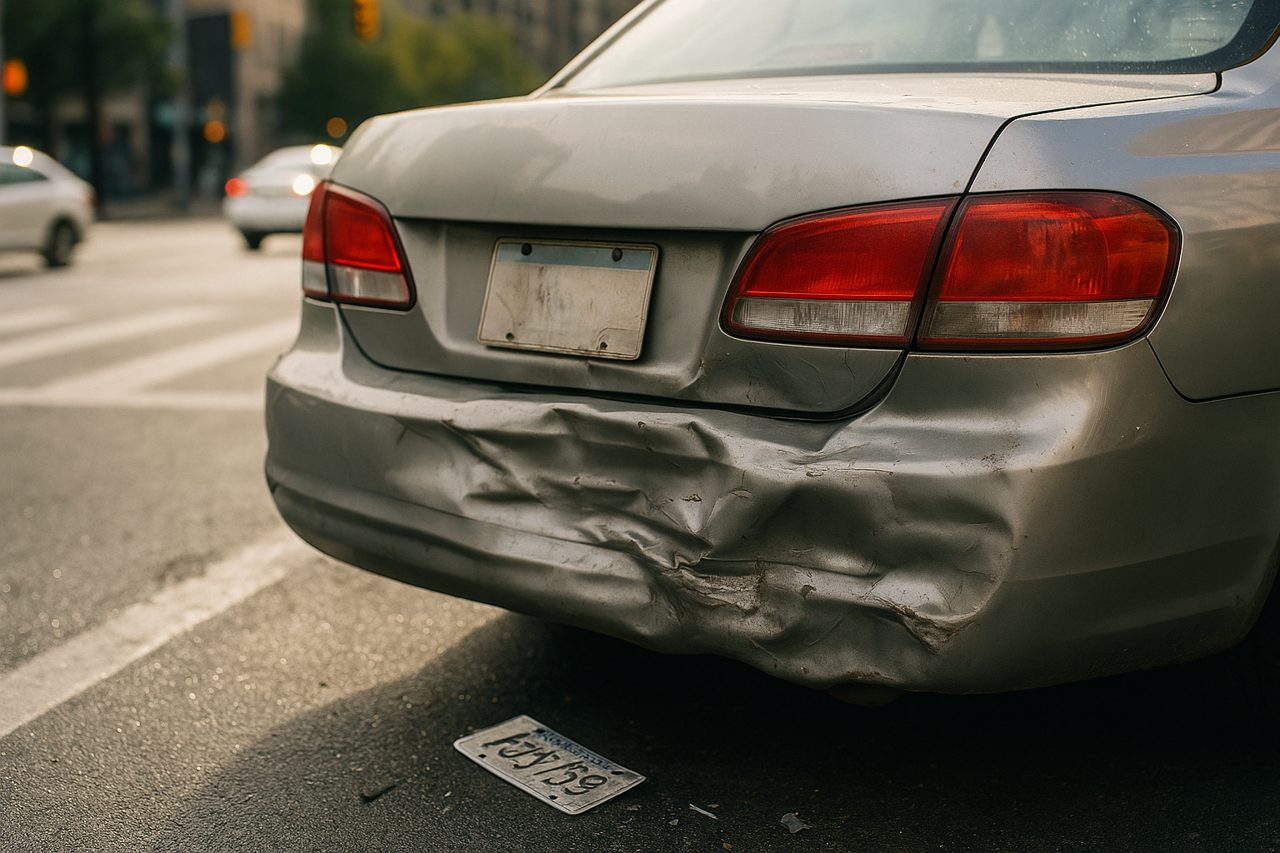
Once everyone is safe and you have exchanged information, take a closer look at the car. Some damage is obvious, such as a cracked bumper, broken headlight, dented panel, leaking fluid, or deployed airbag. Other damage may not show up until a trained technician inspects the vehicle.
Do not assume the car is safe to drive because it starts. After an accident, the vehicle may have hidden damage to the frame, suspension, steering, cooling system, sensors, alignment, wheels, brakes, or safety systems. Even low-speed accidents can damage brackets, mounting points, wiring, and parts behind the bumper cover.
Before leaving the scene, check for leaking fluids, tire damage, rubbing noises, dashboard warning lights, smoke, strange smells, and loose parts. If the hood, trunk, or doors do not close correctly, that may point to body or structural movement. If the steering feels off, the brakes feel different, or the vehicle pulls to one side, do not drive it.
- Leaking fluid: May mean a cooling, oil, brake, or transmission issue. Do not drive until it’s inspected.
- Airbags deployed: The safety system has activated. Tow the vehicle for inspection.
- Bent wheel or flat tire: Points to wheel, tire, or suspension damage. Use towing or roadside help.
- Hood, trunk, or doors do not close: May signal a body alignment or frame concern. Schedule a body repair inspection.
- Warning lights appear: Could be a sensor, brake, airbag, or engine issue. Arrange diagnostic service.
- The bumper is loose or cracked: May mean hidden mounting or absorber damage. Get a collision estimate.
- The car pulls or vibrates: Points to an alignment, steering, suspension, or tire issue. Avoid driving at high speeds.
If you cannot safely drive the vehicle, arrange a tow. Gateway Auto can help Omaha drivers understand repair options after the vehicle arrives at the shop. A proper inspection can identify both visible and hidden damage, helping you avoid unsafe driving and surprise repair costs later.
Save receipts for towing, rideshare trips, rental cars, medical care, and any accident-related expenses. These records may help with the claims process, depending on your policy and the facts of the accident.
Start the Insurance Claim Process
After the scene is handled, contact your insurance company as soon as you reasonably can. Starting the insurance claim early helps reduce delays, especially if the car needs towing, a rental, an inspection, or collision repair.
Have your information ready before you call. The insurance company may ask for your policy number, the date and time of the accident, location, names of drivers, photos, police report number, witness details, and a description of vehicle damage. Answer honestly and keep your explanation factual.
Ask your insurance company what happens next. You may be assigned an adjuster who reviews the claim, inspects the damage, and communicates with the repair center. You should also ask about your deductible, rental coverage, repair authorization, parts policies, and whether you need to upload photos or forms.
If the accident was not your fault, you may also hear from the other driver’s insurance company. Be careful with recorded statements and settlement offers, especially if injuries are involved or the full damage is not yet known. If you have personal injury concerns, disputed fault, or pressure from an insurer, consider speaking with an accident attorney before accepting a settlement.
Many drivers wonder whose insurance to call after an accident. In most cases, you should notify your own insurance company even if another driver caused the crash. Your company can explain your coverage, help with next steps, and tell you how the claim should proceed.
Keep a simple file with:
- Police report number and officer information
- Photos and videos from the scene
- Other party and witness contact details
- Insurance claim number
- Adjuster name, phone number, and email
- Medical notes and bills, if injuries are involved
- Towing, rental, and repair receipts
- Written estimate from the repair shop
Good organization can make the accident claim easier to manage. It also helps the repair center, insurance company, and any attorney understand what happened and what the vehicle needs.
Get a Repair Estimate and Choose the Right Shop
Once the claim is open, the next step is arranging a repair estimate. You may be given a list of repair facilities, but you can choose the shop you trust. The right repair center should explain the damage clearly, communicate with your insurance company when needed, and focus on restoring safety, fit, finish, and function.
Gateway Auto helps Omaha drivers with collision repair, body repair, paint work, paintless dent repair, mechanical service, and related auto care under one local brand. That matters because an accident can affect both the body and mechanical systems. A bumper impact may involve sensors. A side impact may affect alignment. A front-end crash may involve the cooling system, frame, lights, suspension, or steering.
A good estimate should be based on a careful inspection. In some cases, the first estimate only covers visible damage. After disassembly, the repair center may find hidden damage behind panels, bumpers, trim, or lights. When that happens, the shop may send a supplement to the insurance company for review.
Do not judge repair quality by price alone. A low estimate may leave out needed steps, parts, paint procedures, calibration, or hidden damage. Ask what is included, what may change after disassembly, and how the shop handles communication during the repair.
When choosing a repair center, look for:
- Clear written estimates
- Experience with collision and auto body repair
- Help working with insurance companies
- Paint matching and refinishing capability
- Mechanical service if the crash affected drivability
- Updates during the repair process
- Warranty support for completed work
- A local team willing to answer questions
Gateway Auto offers Omaha drivers a practical path forward after a crash. You can schedule service, request a collision estimate, ask about insurance coordination, and get help understanding whether the damage is cosmetic, structural, mechanical, or safety-related.
Schedule Service With Gateway Auto After an Accident
A car accident does not end when everyone leaves the scene. You still need to protect your health, organize information, manage the claim, and make sure the vehicle is safe before returning to normal driving.
Gateway Auto is here to help Omaha, La Vista, Millard, Papillion, and nearby drivers move from stress to a clear plan. Our team can inspect vehicle damage, prepare an estimate, work with insurance, and complete needed repair work with honest communication along the way.
If your vehicle has dents, bumper damage, paint damage, warning lights, alignment issues, steering concerns, or hidden collision damage, do not wait for the problem to get worse.
Subscribe to Our Newsletter
Get maintenance tips, seasonal reminders, and Gateway Auto news straight to your inbox.
.avif)
%20(3).png)