



What a proper refinish actually involves
Paint is the last thing that happens to a repaired panel and the only thing anyone sees. Getting it right is mostly about what happens before any color goes on.
The panel is stripped back and sanded flat, because paint magnifies whatever is underneath it rather than hiding it. Primer goes on to give the surface something to bond to and to fill the last of the sanding scratches. A sealer follows, which stops the layers beneath from bleeding through and gives the color a consistent base to sit on. Only then does color go down, followed by clear coat, which is what actually provides the gloss and the UV protection.
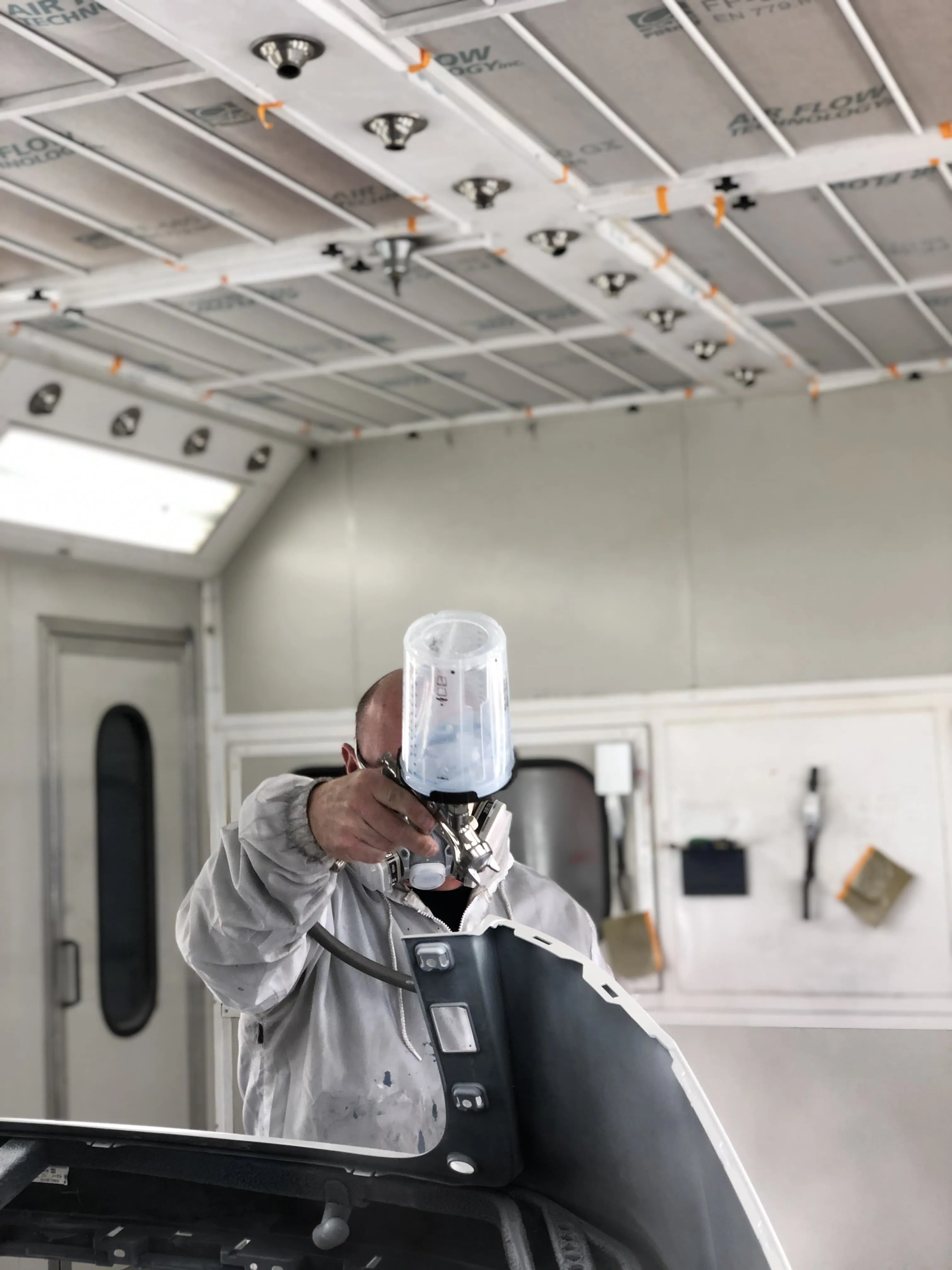
All of it happens in a controlled booth. Airborne dust that settles on wet clear coat becomes a permanent defect, so booth conditions and airflow matter as much as the products. The panel then cures before it is reassembled, polished, and inspected.
Shortcuts at any stage show up months later as peeling, cloudiness, or a panel that has visibly aged differently from the ones beside it.
When a panel needs paint instead of PDR
We check every dent for paintless dent repair eligibility first, because keeping factory paint can be the better outcome. A panel comes to the paint booth when one of these is true:
- The paint is cracked, chipped, or scratched through
- The dent sits on a sharp crease or a body line
- The metal is stretched and will not return to shape
- The panel is being replaced rather than repaired
- Filler was needed to restore the contour
- The finish is already failing from age, sun, or a previous repair
Color matching and why the paint code is not enough
Every vehicle has a paint code, and every paint code covers a range rather than a single exact color. Two vehicles built in the same year with the same code can differ, because pigment batches vary, plant application varies, and paint changes as it ages. A ten-year-old red has been sitting in Nebraska sun for a decade and is no longer the red that left the factory.
So the code is a starting point, not an answer. From there the color is verified against the actual vehicle, adjusted, and sprayed onto a test card that gets checked against the panel in the light it will live in.
The second half of the job is blending. Rather than painting a repaired panel edge to edge and letting it meet the old paint at a hard line, color is faded out into the adjacent panels so the transition happens gradually across a surface your eye reads as continuous. That is why a door repair often involves spraying part of the fender, and it is the difference between a repair you cannot find and one you notice every time you walk up to the car.
Metallic and pearl finishes make both halves harder. The flake has to lie the same way as the surrounding panel or the color shifts as you move around the vehicle, which is why those repairs take more blending and more checking.
Durability, warranty, and caring for new paint
A correctly applied finish should last the life of the panel. What shortens it is contamination during application, insufficient cure, or a surface that was not prepared properly, which is why the prep stages matter more than the spray does.
Body labor performed by Gateway Auto is backed by a lifetime service warranty for as long as you own the vehicle. If a refinished panel develops a problem attributable to the work, bring it back.
Fresh paint does need a short break-in. For the first month, hand wash rather than running it through a brush car wash, keep it out of automated washes with abrasive strips, and hold off on wax or sealant until the finish has fully cured. Avoid parking under sap-heavy trees, and get bird droppings off promptly, since both etch new clear coat faster than cured clear coat. We will give you the specifics for your repair at pickup.
Body labor and paint are guaranteed against defects in workmanship for as long as you own the vehicle.

Questions & answers
How do you match my car's paint color?
We start from the vehicle's paint code, then verify and adjust against the actual panel, because paint varies by production batch and fades with age. The mixed color is sprayed onto a test card and checked against your vehicle before anything is applied to the car.
Will the repaired panel match the rest of my car?
That is the goal, and it is why we blend into adjacent panels rather than stopping at the panel edge. Vehicle age, prior repainting, and metallic or pearl finishes all make the job harder, so we will tell you what to expect for your specific vehicle before work begins.
How long does auto body painting take?
It depends on how many panels are involved and how much prep the surface needs. Paint also has to cure before the vehicle can be reassembled and polished, and that time is not something worth rushing. You get a timeline after the estimate.
Can you paint just one panel?
Yes, though the color is normally blended into the panels on either side so there is no hard transition line. That blending is part of doing a single panel properly rather than an upsell.
When can I wash or wax my car after painting?
Hand wash only for the first month, and skip automated brush washes. Hold off on wax or sealant until the finish has fully cured. We will give you the specific timeline for your repair when you pick the vehicle up.
Do you paint vehicles that were not in an accident?
Yes. Faded, oxidized, or peeling clear coat, scratched panels, and vandalism damage all come through the booth. Bring it in for a free estimate and we will tell you what the panel needs.



