Collision Repair & Auto Body Repair in Omaha, NE
Get your vehicle back on the road safely with Omaha’s most trusted certified repair experts. We provide fast estimates and professional service with no appointment required for your convenience.
.avif)

Collision Repair and Auto Body Services for Accidents, Dents, Hail, and Paint Damage
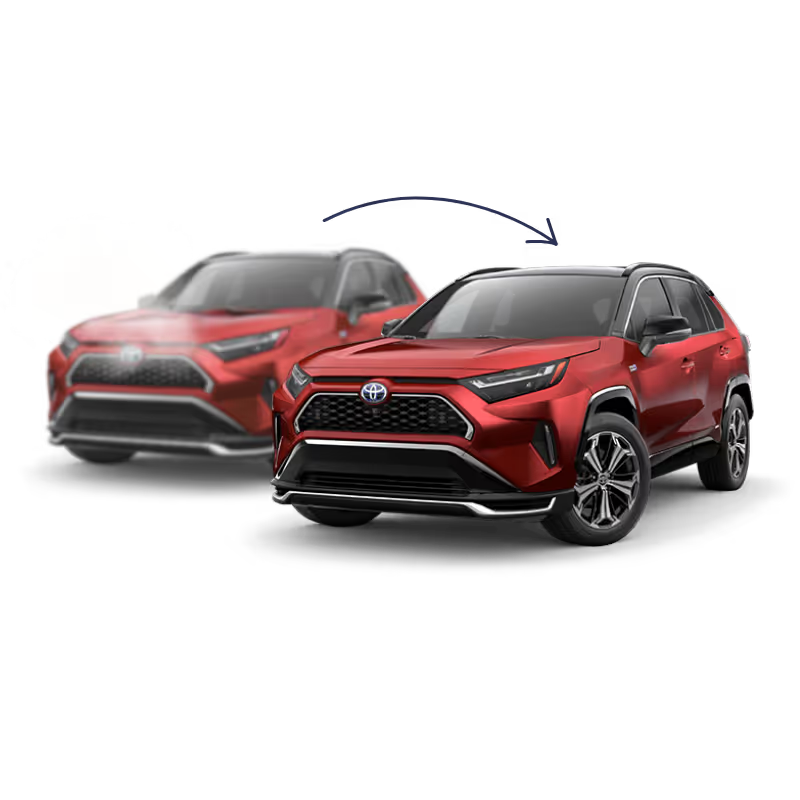
Collision damage is not always obvious from the outside. A bumper, quarter panel, door, or hood may look like the main issue, but an impact can also affect alignment, mounting points, frame areas, sensors, paint layers, and safety systems. Our body shop evaluates the visible and hidden damage so your estimate reflects the work your vehicle actually needs.
Accident and Collision Repair
Auto Body Painting
Bumper and Panel Repair
Frame and Structural Repair
Paintless Dent Repair
Hail Damage Repair
Electric Vehicle Body Repair
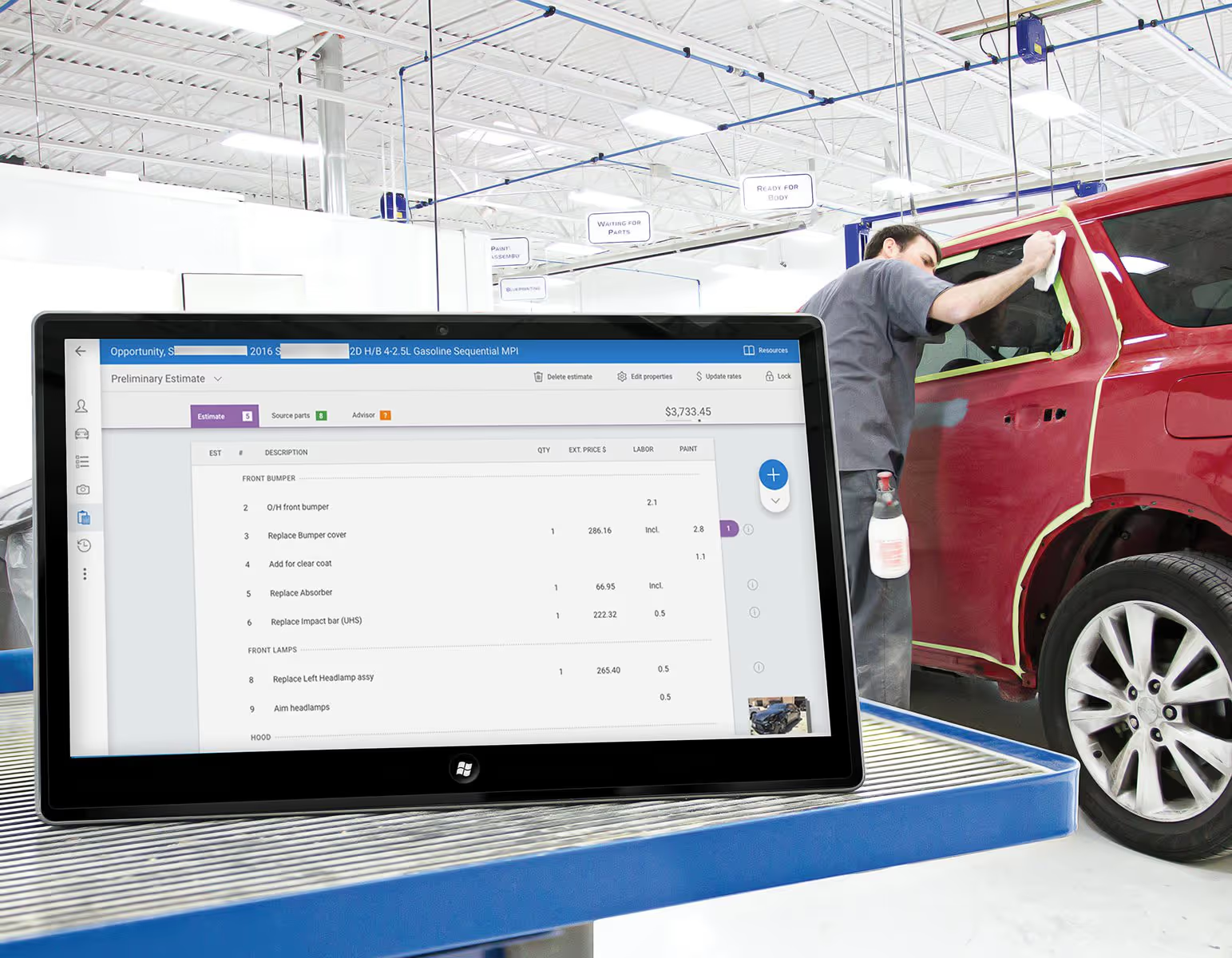
Estimates and Documentation
What the Gateway Auto Collision Repair Process Looks Like
Six steps from the first estimate to the day you pick the vehicle up, with your approval required before any work starts.
- 01
Start with a free estimate
Bring your vehicle in for a drive-in estimate, begin an online estimate, or call Gateway Auto to discuss your situation. Our team reviews the damage and explains the recommended repair path.
- 02
Review the repair plan
Once the damage is assessed, we walk you through the estimate and answer your questions. If insurance is involved, we help coordinate the information needed for your claim.
- 03
Schedule the repair
When the estimate and claim details are ready, we confirm timing and schedule your repair. If you need rental support, we help coordinate on-site rental pickup and drop-off.
- 04
Complete the body and paint work
Depending on the damage, repair work may involve panel repair, replacement parts, frame straightening, welding, paint matching, refinishing, or paintless dent repair. Our technicians use modern repair methods and manufacturer repair information to support a proper result.
- 05
Stay updated during the repair
Gateway Auto sends updates as your vehicle moves through the repair process, including if added findings, insurer review, or parts availability change the plan. You should not have to chase down basic information about your car.
- 06
Final check and vehicle return
Before your vehicle is returned, fit, finish, and completed repairs are reviewed by our quality assurance team. Gateway also includes a complimentary exterior wash and interior clean, so your vehicle comes back repaired, checked, and ready for the road.
Why Omaha Drivers Choose Gateway Auto

Family owned in Omaha since 2002
Gateway Auto has served the Omaha metro since 2002 with a family-owned approach built around helping people protect their freedom of mobility, not treating customers like numbers. More than 400 customer-submitted five-star reviews provide outside perspective on that experience.
I-CAR Gold Class, with a lifetime warranty on body labor
Our collision team operates as an I-CAR Gold Class business, a distinction held by fewer than 15% of body shops nationwide. Body labor performed by Gateway Auto is also backed by a lifetime service warranty for as long as you own the vehicle.
Several services under one roof
Free estimates, insurance coordination, repair updates, and on-site rental support. If you need collision repair now and mechanical service later, you can work with the same trusted family of automotive professionals.
Additional Body Repair Services and Information
Dent and hail work, structural safety, fleet support, and how an independent body shop compares with a dealership.
Paintless Dent Repair and Hail Damage Repair
Not every dent requires paint or part replacement. Paintless dent repair can be a strong option when the paint surface is still intact and the damage can be accessed safely. This method allows trained technicians to massage dents back into shape without sanding, filling, or repainting the panel.
Gateway Auto offers paintless dent repair for qualifying door dings, small dents, and hail damage. It can often help preserve the factory finish while reducing repair time and cost compared with traditional body repair.
Hail dent repair is common for Omaha drivers after spring and summer storms. Even small hail dents can affect the look and resale value of your vehicle. If your car has hail damage, Gateway Auto can inspect it, explain whether paintless dent repair is an option, and help with insurance claim documentation.
Paintless dent repairHail damage repairBody Repair for Safety, Value, and Daily Use
Auto body repair is not only about appearance. Collision damage can affect how doors close, how panels align, how safety features function, and how your vehicle responds in another impact. That is why Gateway Auto looks beyond surface damage.
Proper body repair may involve structural measuring, frame straightening, panel replacement, welding, refinishing, calibration-related planning, and quality checks. The right repair plan depends on the vehicle, the damage, and the manufacturer's repair procedures.
A poorly completed repair can lead to uneven gaps, mismatched paint, water leaks, wind noise, tire wear, warning lights, or reduced resale value. Choosing a trusted body shop helps protect your investment and gives you more confidence when you return to daily driving.
Fleet and Commercial Collision Repair in Omaha
When a company vehicle is down, it affects scheduling, customer service, and productivity. Gateway Auto supports businesses that rely on cars, vans, trucks, and fleet vehicles to keep work moving across Omaha.
Our fleet and commercial auto body services are built for practical needs: clear estimates, timely updates, flexible scheduling, insurance coordination, and repair planning that helps reduce downtime. Whether you manage a few service vehicles or a larger commercial fleet, Gateway Auto can help with collision repair, body repair, hail damage, paint work, and ongoing vehicle care.
Because Gateway Auto offers collision, mechanical repair, fleet support, and vehicle sales under one trusted brand, business owners can keep many automotive needs in one place. That saves time and keeps communication simpler.
Fleet servicesDo You Have to Go to a Dealership for Collision Repair?
Many drivers assume a dealership is the only place that can perform proper collision repair. In many cases, an independent collision repair facility can access the same parts and repair information needed to complete the work properly.
The right choice depends on the shop's training, equipment, repair procedures, communication, and commitment to doing the work correctly. Gateway Auto uses modern repair tools and methods, works with insurance companies, and repairs many makes and models.
If your insurance company suggests a repair facility, remember that you still have the right to choose where your vehicle is repaired. Choose a body shop that gives you clear answers, documents the damage, explains the estimate, and stands behind the work.
Auto Body Painting and Paint Matching
A quality collision repair should look clean, consistent, and well-blended. Paintwork is a major part of that result. For vehicles with collision damage, scratches, panel repairs, hail damage, and paint defects caused by impact, Gateway Auto provides auto body painting and refinishing.
Modern paint matching requires the right process, materials, and attention to detail. Our team works to match your vehicle's colour and finish so repaired areas blend with the surrounding panels. This may involve surface preparation, primer, colour application, clear coat, curing, and final inspection.
If your vehicle has metallic, pearl, or custom paint characteristics, the refinishing process may require additional blending to help the repaired area match under different lighting conditions. We explain what your repair requires before work begins.
How Much Does Collision Repair Cost?
Pricing varies widely because no two repairs are alike. These are the things that actually move the number on your estimate. The only way to get an accurate figure is to have the vehicle inspected, which is why the estimate is free.
Extent of the damage
A shallow door dent and a crushed quarter panel are not the same job.
Parts
OEM or aftermarket, and whether a panel is repaired or replaced outright.
Paint and blending
Metallic and pearl finishes need blending into the panels on either side.
Sensors and calibration
Cameras and radar in bumpers, mirrors and windshields may need recalibrating.
Hidden damage
What turns up once panels come off can change the scope.
Deductible and coverage
What your policy pays, and what is left for you. If you want to control costs, ask which repairs are required for safe operation, which are cosmetic, and how your deductible applies. Avoid choosing a repair only because it is the cheapest option, because poor body work creates bigger problems later.
Common Questions
What is the difference between auto body repair and collision repair?
Auto body repair is a broad term for exterior, paint, panel, dent, and structural work. Collision repair focuses on damage caused by an impact. Gateway Auto's collision department handles both cosmetic and structural needs, whether the cause was an accident, hail, or a parking lot scrape.
Do I need an appointment for a body repair estimate?
No. Gateway Auto offers free drive-in estimates for collision and body damage with no appointment. You can also start an online estimate or call before visiting.
Can I get an estimate without visiting the shop in person?
Yes. Send photos of the damage to receive a preliminary estimate, though a thorough in-person inspection is always needed for a final, accurate quote.
How much does auto body repair usually cost?
Cost depends on the affected area, labor, paint, materials, replacement parts, sensors, hidden damage found during teardown, and insurance requirements. A free assessment gives you a more useful starting point than a broad online price.
Will Gateway Auto work with my insurance company, and do I have to use the shop they recommend?
Gateway Auto works with all insurance companies and helps with claim communication, estimate documentation, and supplemental repair requests when hidden damage is found. You are not required to use the shop your insurer recommends. Read more in our guide to the collision repair insurance claim process.
How long does auto body repair typically take?
Timing depends on the extent of the damage, parts availability, insurer approval, paint steps, and issues found during disassembly. Minor repairs such as small dents or scratches may be completed within a few days, while extensive collision repairs can take a week or more. We provide a timeline after the estimate and update you if the expected completion date changes.
Are paint color matches guaranteed after body repairs?
Gateway Auto uses advanced color-matching technology and quality paint so repairs blend with your vehicle's existing finish. Some factors, such as vehicle age or prior repainting, can affect the result, so discuss your expectations with our team before work begins.
Does Gateway Auto offer a warranty on body repair?
Yes. Body labor services performed by Gateway Auto are backed by a lifetime service warranty for as long as you own the vehicle. Ask the team to explain the applicable terms for your repair.
Can Gateway Auto help if my vehicle cannot be driven?
Yes. Gateway Auto works with Arrow Towing in Omaha to help transport vehicles that cannot be safely driven to the shop. Call Gateway Auto or Arrow Towing for help arranging the tow.
What types of auto body repairs does Gateway Auto provide?
Accident and collision repair, auto body painting, paintless dent repair, hail damage repair, bumper and panel repair, frame and structural repair, electric vehicle body repair, and free body repair estimates for many makes and models.
What are signs of poor body work?
Watch for uneven panel gaps, doors or hoods that do not close smoothly, paint that does not match, overspray, rough texture, water leaks, rattles, warning lights, or alignment issues. If something does not look or feel right after a repair, ask the shop to review it. Gateway Auto completes final checks before returning your vehicle and communicates throughout the process so concerns are addressed early.
What should I do immediately after a car accident in Omaha or La Vista?
Prioritize safety by checking for injuries and moving to a safe location if possible. Call emergency services if needed, exchange information with the other parties, document the scene with photos, and file a police report if required. Then contact your insurance provider and a trusted local body shop to begin the repair process. Read our full guide on what to do after a car accident.
Ready to get back on the road?
If your vehicle has collision damage, dents, hail damage, scratches, or body damage, Gateway Auto is ready to help. Start with a free estimate, ask about insurance claim support, or schedule your repair with a local team that keeps the process clear from start to finish.