Is Your Car AC Stuck on Defrost Mode
When Your Defroster Stops Working: What's Actually Going On
Auto AC defroster issues are one of those problems that don't get much attention — until a freezing morning leaves you squinting through a fogged-up windshield with nowhere to be late.
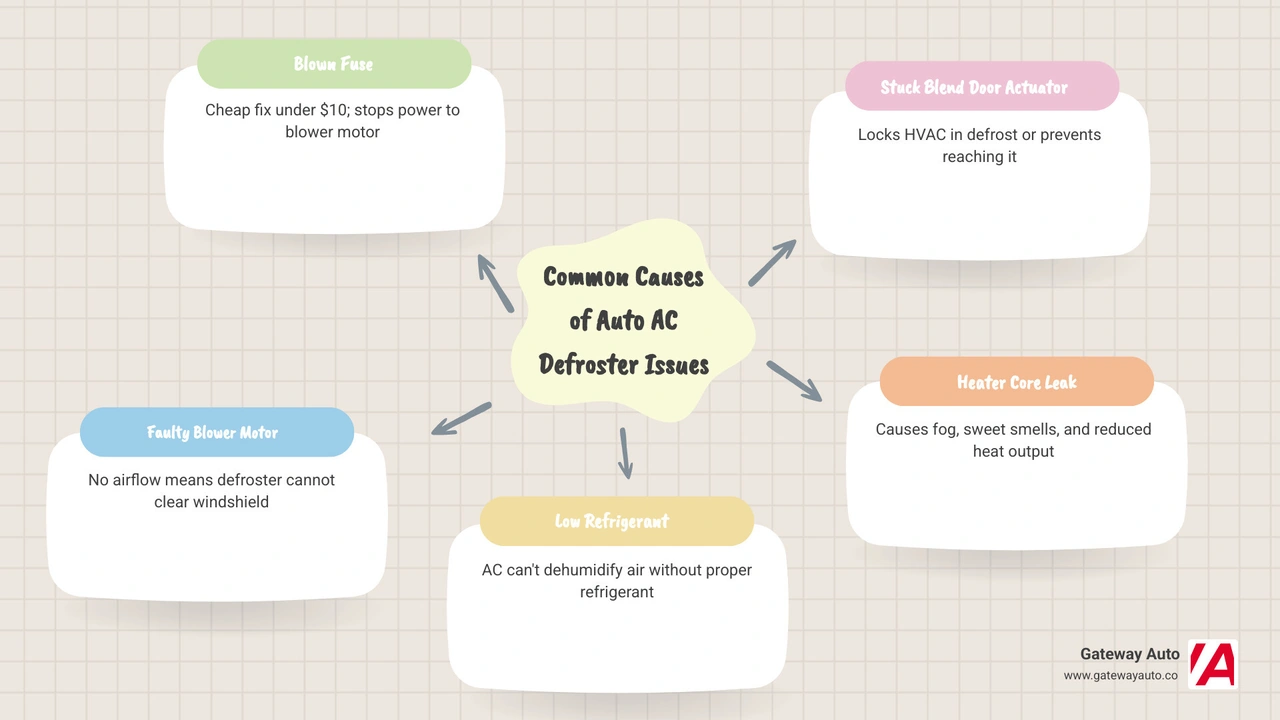
Here are the most common reasons your defroster may not be working:
- Blown fuse — one of the most frequent causes, and one of the cheapest fixes (under $10)
- Faulty blower motor or resistor — no air moving means no defrosting
- Low refrigerant — the AC system can't dehumidify the air without it
- Damaged rear defroster grid — breaks in the heating wires leave bands of fog that won't clear
- Stuck blend door actuator — HVAC stuck in defrost mode or unable to reach it
- Heater core leak — causes fogging, sweet cabin odors, and reduced heat output
- Broken vacuum line or bad climate control module — can lock airflow in one mode
Most of these are diagnosable without special tools. Some you can fix yourself. A few — like a heater core replacement — genuinely need a professional.
We'll walk through all of it clearly so you know exactly where to start.
I'm Ben Toscano, co-founder of Gateway Auto here in Omaha, and in over 20 years of running this shop I've seen every variation of auto AC defroster issues imaginable — from a simple blown fuse to a full heater core job requiring dashboard removal. If your defroster is letting you down, you're in the right place.
Understanding Auto AC Defroster Issues and How They Work
To figure out why your defroster is acting up, it helps to understand how it works. Many drivers assume the defroster is just the heater blowing air at the glass. In reality, your front defroster is a sophisticated climate control function that coordinates heat, directed airflow, and your air conditioning system to clear your windshield.
When you press the defrost button, your HVAC system redirects high-velocity air through specialized vents at the base of your windshield. At the same time, it changes where it gets that air and how it processes it to maximize heat transfer and moisture absorption.
Why Does the AC System Matter for Auto AC Defroster Issues?
It surprises a lot of drivers in Omaha when we tell them their air conditioning has to work for their winter defroster to do its job.
When your windshield fogs up, it is because warm, moisture-laden air inside the cabin is hitting the cold glass and condensing into tiny water droplets. To clear this fog, you do not just need hot air—you need dry air.
This is where the AC system comes in. When you turn on the defroster, your vehicle automatically engages the AC compressor. The cabin air is drawn across the cold evaporator core first. This super-cools the air, forcing the moisture to condense onto the evaporator coil and drain out underneath your car.
Once the air is dried, it passes through your heater core to be warmed up before blowing onto your windshield. If your AC system is broken, the air blowing onto your glass remains humid, which often makes the fogging worse.
If you want to understand how this moisture removal works in detail, you can read about how the AC system removes moisture. If your system is failing to cool or dry the air, it helps to learn more about why your car's AC is blowing warm air to pinpoint compressor or refrigerant issues.
Low refrigerant is the culprit in about 60% of vehicle AC issues. When refrigerant leaks out, the low-pressure safety switch prevents the AC compressor clutch from engaging. Without that compressor running, your defroster loses its dehumidifying power.
Why Is Your HVAC Stuck in Defrost Mode?
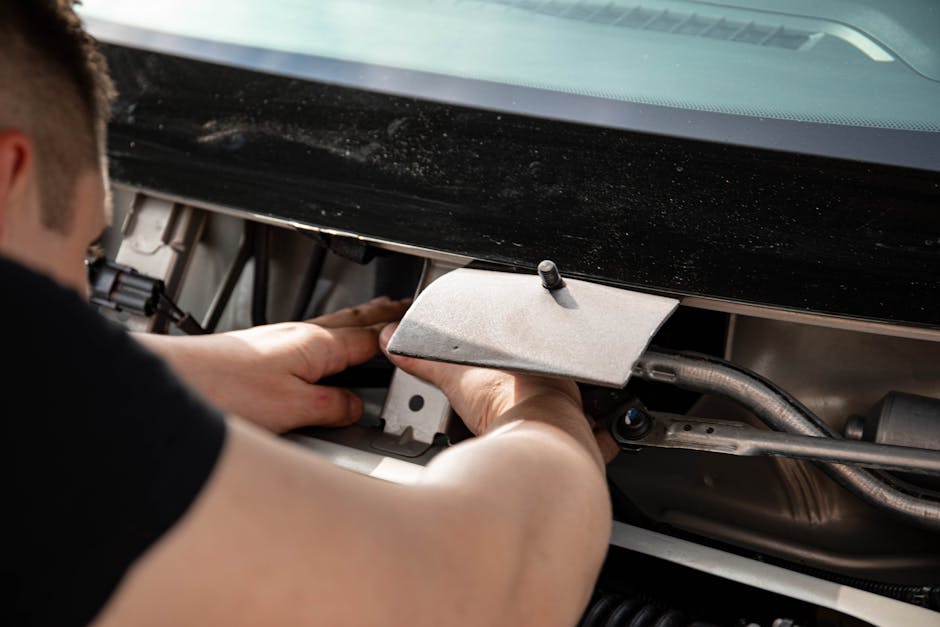
Sometimes the problem isn't that the defroster won't work, but that your climate control system is completely stuck in defrost mode. No matter what buttons you press, air only blows out of the vents at the base of the windshield.
This is almost always a mechanical or vacuum-routing failure inside your dashboard:
- The Blend/Mode Door Actuator: Your dashboard contains small plastic doors that swing open and closed to route air to your feet, face, or windshield. These doors are driven by small electric motors called blend door actuators. Over time, the plastic gears inside these actuators strip out or the motor burns out. If it fails while the door is directing air to the windshield, you are stuck in defrost mode.
- Vacuum-Operated Systems: Many older vehicles use engine vacuum to move the climate control doors. These systems are designed with a brilliant safety fail-safe: if the system loses vacuum pressure, helper springs automatically pull the doors into the defrost position. This ensures that even if your system fails completely, you can still clear your windshield to drive safely. However, a cracked vacuum line, a broken feed hose, or a leaking vacuum reservoir will trigger this fail-safe permanently.
- Climate Control Module Glitch: Sometimes, especially after a battery replacement or an electrical surge, the climate control computer loses its calibration.
You can read more about the mechanical details and causes of AC stuck on defrost to see if your actuator or vacuum lines are the primary suspect. Often, you can attempt a climate control reset at home by pulling the heater/defroster fuse for five minutes to force the actuators to run a self-relearn cycle.
What Does a Sweet Smell in the Cabin Mean?
If you turn on your defroster and are greeted by a sweet, warm smell that reminds you of fresh maple donuts—but there is no pastry in sight—do not ignore it.
That sweet smell is the distinct odor of ethylene glycol, the main ingredient in engine coolant. A sweet smell inside the cabin, often accompanied by an oily film building up on the inside of your windshield, is a classic warning sign of a leaking heater core.
The heater core is essentially a miniature radiator buried deep behind your glovebox. Hot coolant from your engine flows through it to provide cabin heat. When it develops a pinhole leak, it sprays a fine mist of toxic coolant into your HVAC ductwork, which is then blown directly into your face when you turn on the fan.
If you suspect a coolant leak, you should get a professional cooling system service and repair immediately. A technician can perform a cooling system pressure test to confirm if the heater core is leaking before it leaves you stranded with an overheated engine or ruins your vehicle's carpet.
How to Diagnose and Resolve Your Defroster Problems
Getting to the bottom of auto AC defroster issues requires a bit of systematic troubleshooting. You do not want to buy an expensive blower motor if you only have a blown fuse.
Troubleshooting Auto AC Defroster Issues at Idle vs. Driving

One helpful clue is observing when your defroster fails. Does it work fine while you are cruising down Dodge Street or I-80, but fail to clear the glass when you are sitting at a red light?
If your system only blows cold air or dehumidifies when the car is moving, you likely have a weak condenser fan or a clogged condenser. When you are driving, natural airflow cools the AC condenser at the front of your car. At idle, the system relies entirely on an electric cooling fan. If that fan motor is failing, the AC system pressure spikes and shuts down the compressor at idle.
For a step-by-step approach to isolating these issues, check out this guide on diagnosing car AC not blowing cold.
If you have no airflow at all, check these electrical components first:
- Fuses and Relays: Rear defrosters and heated mirrors pull a heavy electrical load. It is very common to blow a defroster fuse during peak winter use. Fuses are an easy DIY check and cost under $10 to replace.
- Blower Motor Resistor: If your fan only blows on the absolute highest speed setting but is completely dead on lower settings, your blower motor resistor has failed. This part typically costs between $50 and $150 and is usually accessible under the passenger-side dashboard.
- Blower Motor: If you hear a loud squealing or grinding noise, or if the fan won't spin at all despite good fuses, the blower motor itself is likely shot. A replacement typically ranges from $150 to $500.
When to Seek Professional Help for Defroster Repairs
While replacing a fuse or swapping out a cabin air filter is a great DIY weekend project, some defroster repairs require specialized tools and training.
Refrigerant handling is strictly regulated. If your defroster issues stem from an AC leak, you cannot simply buy a retail recharge can and hope for the best. Those cans often contain "stop-leak" additives that can clog expensive internal expansion valves and ruin professional recovery equipment. Legally and mechanically, an AC system must be professionally evacuated, vacuum-tested, and recharged with the exact weight of refrigerant.
Furthermore, replacing a leaking heater core is one of the most labor-intensive jobs in automotive repair. It requires completely disassembling the dashboard, steering column, and passenger compartment trim. This process typically takes six to ten hours of meticulous labor and costs between $500 and $1,500 depending on your vehicle's make and model.
If you are facing a complex electrical issue, a suspected heater core leak, or need to know the exact car AC repair cost for your vehicle, our team is here to help.
At Gateway Auto, our ASE certified technicians have been serving the Omaha and La Vista metro areas for over 20 years. We are an all-in-one shop, meaning we handle everything from complex mechanical diagnostics to I-CAR Gold Class certified collision repairs under one trusted roof.
Don't spend your morning commute scraping the inside of your windshield. You can easily schedule an air conditioning service repair online, or stop by one of our Omaha locations to let our family take care of yours.