


Cooling System Service in Omaha
Cooling & Heating
%20(1920%20x%201080%20px).avif)
Warning signs
- Temperature gauge climbing toward the red
- Steam or a sweet smell from under the hood
- Coolant on the ground under the front of the car
- Heater blows cold when the engine is warm
- Coolant level keeps dropping with nothing visible on the ground
- Whining or grinding from the front of the engine
What we do
- Book your appointment. Schedule online or call and describe the leak, the temperature gauge, or the heater problem. If the engine is overheating, pull over and let it cool. Do not try to drive it in.
- Choose your transportation plan. You can drop the car off, wait when appropriate, or reserve a courtesy car in advance.
- Pressure test and diagnosis. The technician pressure tests the system for leaks, tests the thermostat and cooling fans, checks the coolant condition, inspects the water pump, and checks for exhaust gases in the coolant.
- Review and approve. Your advisor explains what failed and what it costs to fix. Gateway Auto does not start a repair without your authorization.
- Repair, refill, and verify. The failed part is replaced, the system is refilled with the correct coolant, air is burped out, and we check for leaks and proper operating temperature. Covered mechanical repairs are backed by a 24-month, 24,000-mile nationwide warranty.
What it costs
Honest ranges for the most common jobs. Run your vehicle and the repair through the estimator for a real number, then we confirm it in writing after the inspection.
A water pump runs $300 to $600, or $600 to $1,200 with the timing belt. A radiator runs $400 to $900 and up depending on the vehicle. You approve the number before any work starts.
24 months or 24,000 miles on parts and labor, honored at shops across the country, with roadside assistance.
.avif)
In depth
Your engine produces immense heat. The cooling system prevents overheating by circulating coolant through the engine, radiator, and heater core. Neglected cooling systems cause blown head gaskets, warped cylinder heads, and destroyed engines. We service and repair all cooling system components before overheating causes catastrophic damage.
How Your Cooling System Works
Coolant (antifreeze mixed with water) circulates through passages in your engine block and cylinder head, absorbing heat. The water pump pushes hot coolant to the radiator, where air flowing through cooling fins dissipates heat. Cooled coolant returns to the engine to repeat the cycle.
Key components:
- Radiator (dissipates heat)
- Water pump (circulates coolant)
- Thermostat (regulates coolant flow and engine temperature)
- Hoses (carry coolant between components)
- Cooling fans (pull air through radiator)
- Heater core (provides cabin heat)
- Coolant (transfers heat and prevents corrosion)
When any component fails, your engine overheats.
Coolant Flush
What it does: A coolant flush removes old coolant contaminated with rust, scale, and degraded additives, then refills system with fresh coolant.
Why coolant breaks down:
Coolant isn't just water and antifreeze. It contains corrosion inhibitors, lubricants for water pump seals, and pH buffers. Over time:
- Additives deplete
- Coolant becomes acidic
- Corrosion starts inside engine
- Seals deteriorate
- Scale and rust accumulate
Signs you need a coolant flush:
- Coolant is rusty or murky (should be bright green, orange, pink, or yellow)
- Sweet smell from vents
- Overheating
- Heater doesn't work well
- It's been 5+ years since last flush
Our coolant flush process:
- Drain old coolant
- Flush system with water to remove contaminants
- Pressure test system for leaks
- Refill with correct coolant type and mixture (50/50 coolant and water)
- Burp system to remove air pockets
- Test for proper temperature regulation
- Check for leaks
Coolant types:
Green (Traditional):
- Older formula (silicate-based)
- 2-3 year lifespan
- Works in older vehicles
- Don't mix with other coolant types
Orange/Gold (Dex-Cool):
- Extended life (5 years)
- Used in GM vehicles primarily
- Can be mixed with specific coolant types only
Pink/Red (Asian formula):
- Used in Toyota, Honda, Nissan, etc.
- 5 year lifespan
- Vehicle-specific formulation
Purple/Blue (European formula):
- Used in BMW, Mercedes, VW, Audi
- Different corrosion inhibitors
- Don't mix with other types
We use the correct coolant type for your vehicle. Mixing incompatible coolants causes sludge and corrosion.
Recommended interval: Every 30,000 miles or 3-5 years, whichever comes first
Radiator Service
What it does: The radiator is a heat exchanger filled with thin tubes and cooling fins. Hot coolant flows through tubes while air flows through fins, transferring heat from coolant to air.
Signs of radiator problems:
- Overheating
- Coolant leaks under vehicle (green, orange, or pink fluid)
- Low coolant level
- Visible damage to radiator
- Rust in coolant
- Coolant smells burnt
Common radiator failures:
Leaks:
- Plastic tank cracks (common on modern radiators)
- Core leaks from corrosion
- Damaged cooling fins from road debris
- Failed seals at tank-to-core connection
Clogs:
- Internal corrosion blocks coolant flow
- Scale buildup restricts passages
- Contaminated coolant creates sludge
Physical damage:
- Impact from road debris
- Bent fins reduce cooling efficiency
- Damage from accidents
Radiator Repair vs. Replacement
Repair (less common on modern vehicles):
- Small leaks can sometimes be sealed
- Damaged fins can be straightened
- External leaks at connections can be resealed
Replacement (usually necessary):
- Plastic tank cracks can't be reliably repaired
- Internal corrosion requires replacement
- Severely damaged radiators
- Average Cost: $400-$900+ depending on vehicle
Our radiator replacement service:
- Drain and dispose of old coolant
- Remove old radiator
- Inspect for cause of failure (overheating, corrosion)
- Install new radiator
- Replace radiator hoses if worn
- Pressure test system
- Fill with fresh coolant
- Burp system
- Test for leaks and proper cooling
OEM vs. Aftermarket radiators:
- OEM radiators match original specifications exactly
- Quality aftermarket radiators work fine and cost less
- Cheap aftermarket radiators fail quickly (we don't use these)
Water Pump Replacement
What it does: The water pump circulates coolant through the entire cooling system. It's driven by serpentine belt or timing belt.
Signs of water pump failure:
- Coolant leak from front/center of engine
- Squealing or grinding noise from water pump area
- Overheating
- Steam from engine
- Coolant in oil (rare but catastrophic)
- Visible wobble in water pump pulley
What causes water pump failure:
- Worn bearings
- Failed seals
- Impeller erosion
- Contaminated coolant
- Normal wear (typical lifespan: 60,000-100,000 miles)
Our water pump replacement service:
- Drain coolant
- Remove components for access (timing cover, belts, etc.)
- Remove old water pump
- Clean mounting surface
- Install new water pump with new gasket
- Replace timing belt if it drives water pump (labor overlap saves money)
- Replace coolant
- Pressure test system
- Verify proper operation
Timing belt-driven water pumps:
If your timing belt drives the water pump, we recommend replacing both simultaneously. Here's why:
- Labor to access water pump requires timing belt removal
- Replacing both saves significant labor cost later
- Timing belts are due at similar intervals (60,000-100,000 miles)
- Failed water pump can damage timing belt
- Failed timing belt can damage water pump
Average Cost:
- Water pump only: $300-$600
- Water pump + timing belt: $600-$1,200 (huge labor savings vs. doing separately)
Thermostat Replacement
What it does: The thermostat is a temperature-controlled valve that regulates coolant flow. When engine is cold, thermostat stays closed to help engine warm up quickly. When engine reaches operating temperature (usually 195-220°F), thermostat opens to allow coolant circulation.
Signs of thermostat failure:
Stuck closed:
- Rapid overheating
- Temperature gauge goes high quickly
- Upper radiator hose stays cool (no coolant flow)
- Engine runs hot
Stuck open:
- Engine takes forever to warm up
- Poor heat from heater
- Temperature gauge stays low
- Poor fuel economy (engine runs too cool)
- Check engine light (coolant temp too low)
Our thermostat replacement service:
- Drain coolant
- Remove thermostat housing
- Replace thermostat and gasket
- Refill coolant
- Burp system
- Verify proper operating temperature
- Check for leaks
When to replace: Thermostats typically last 80,000-100,000 miles but can fail earlier. We check thermostat operation during cooling system service.
Cooling System Hoses
What they do: Rubber hoses carry coolant between engine, radiator, and heater core. They must withstand high temperatures, pressure, and constant expansion/contraction cycles.
Types of cooling hoses:
Upper and lower radiator hoses:
- Carry coolant between engine and radiator
- Large diameter hoses
- Critical - failure causes instant overheating
Heater hoses:
- Smaller hoses connecting engine to heater core
- Supply hot coolant for cabin heat
- Failure causes coolant loss and sweet smell in cabin
Bypass hoses:
- Various smaller hoses routing coolant through engine
- Vehicle-specific configurations
Signs hoses need replacement:
- Visible cracks or splits
- Bulging or soft spots
- Hardening (hose feels stiff instead of flexible)
- Leaks at connections
- Age (rubber degrades over time)
Our hose replacement service:
- Inspect all cooling system hoses
- Replace worn or damaged hoses
- Use quality OEM or OEM-equivalent hoses
- Install new hose clamps
- Pressure test for leaks
- Refill coolant
Preventive replacement: We often replace hoses proactively when doing other cooling system work. Hoses are inexpensive compared to tow trucks and overheating damage.
Heater Core Issues
What it does: The heater core is a small radiator inside your dashboard that provides cabin heat. Hot coolant flows through heater core, and blower fan pushes air through it into cabin.
Signs of heater core problems:
- Sweet smell inside vehicle
- Foggy windshield (doesn't clear easily)
- Coolant loss without visible leaks
- Wet carpet on passenger side
- Overheating
- No heat from vents
Heater core replacement challenges:
Heater cores live deep in the dashboard. Replacement requires:
- Dashboard removal
- HVAC system disassembly
- Heater core replacement
- System reassembly
- Coolant fill and burp
Labor-intensive = expensive: $800-$1,500 due to 6-10 hours of labor
Heater core flush alternative:
Sometimes heater cores can be flushed to restore function:
- Disconnect heater hoses
- Flush heater core with water or chemical flush
- Reconnect hoses
- Refill coolant
Cost: $100-$200 for flush attempt
We'll try flushing first if appropriate. If that doesn't work, replacement is necessary.
Cooling Fan Service
What they do: Cooling fans pull air through radiator when vehicle isn't moving fast enough for natural airflow (like idling in traffic).
Types:
Electric fans (most modern vehicles):
- Controlled by computer
- Turn on at specific temperature
- Can have multiple speeds
Mechanical fans (older vehicles):
- Driven by engine belt
- Use viscous fan clutch that engages when hot
Signs of fan problems:
- Overheating in traffic or at idle
- Overheating in hot weather
- Fan doesn't run when engine is hot
- Fan runs constantly (electric fan relay stuck)
- Loud roaring noise (bad fan clutch)
Our fan service:
- Test fan operation
- Check fan control relay and fuse
- Test coolant temperature sensor (tells fan when to run)
- Inspect fan blades for damage
- Replace fan motor or fan clutch as needed
Cost: $200-$600 depending on fan type and vehicle
Overheating Diagnosis
Overheating can destroy your engine. We take overheating seriously and diagnose the root cause.
Common overheating causes:
- Low coolant - Leaks or lack of maintenance
- Thermostat stuck closed - Prevents coolant circulation
- Water pump failure - Can't circulate coolant
- Radiator problems - Clogs or leaks
- Cooling fan failure - Can't cool at idle
- Head gasket failure - Combustion gases overheat coolant
- Clogged cooling passages - Neglected maintenance causes blockages
- Bad radiator cap - Can't maintain system pressure
Our diagnostic process:
- Pressure test cooling system (finds leaks)
- Test thermostat operation
- Check coolant condition
- Inspect water pump for leaks or noise
- Test cooling fans
- Check for exhaust gases in coolant (head gasket test)
- Verify radiator isn't clogged
- Check for air pockets in system
Critical Overheating Warning
If your temperature gauge goes into red or you see steam from hood:
- Pull over immediately - Don't keep driving
- Turn off engine - Continued running causes severe damage
- Let engine cool - Takes 30+ minutes
- Don't open radiator cap when hot - Pressurized coolant can cause severe burns
- Call for tow - Don't restart and drive
Driving an overheating vehicle causes:
- Blown head gaskets ($1,500-$3,500 repair)
- Warped cylinder heads ($2,000-$4,000 repair)
- Cracked engine block (engine replacement required)
A $150 tow is cheaper than a $5,000 engine replacement.
Cooling System Maintenance
Prevent overheating and expensive repairs:
- Check coolant level monthly - Top off if low, but also figure out why it's low
- Inspect for leaks - Look under vehicle for drips (green, orange, or pink fluid)
- Flush coolant every 3-5 years - Prevents corrosion and maintains proper additives
- Replace hoses proactively - When they show age or during other cooling system work
- Address overheating immediately - Don't ignore temperature gauge or steam
- Use correct coolant type - Wrong coolant damages system
- Maintain proper coolant mixture - 50/50 coolant and water for best protection
Questions & answers
Why is my car overheating?
Usually a coolant leak, a failing water pump, a stuck thermostat, a bad radiator, or a cooling fan that is not running. Overheating is one of the fastest ways to turn a moderate repair into a head gasket or engine replacement, so pull over and let it cool rather than trying to make it a few more miles.
How often should coolant be flushed?
Follow the manufacturer's interval and the condition of the fluid. Coolant loses its corrosion inhibitors over time, and once that happens it starts attacking the radiator, water pump and heater core from the inside. We check color and condition during service and tell you when it is actually due.
What are the signs of a bad water pump?
Coolant on the ground under the front of the engine, a whining or grinding noise from the front of the engine, overheating, or steam from under the hood. A weeping water pump often leaks slowly for a while before it fails outright, which is the window you want to catch it in.
Recent repairs completed
2018 GMC Acadia
A Service Steering Assist warning that turned out to be a thermostat opening too early, code P0128. We replaced the thermostat housing.
Ford F-150
Water pump and thermostat with a coolant flush after a slow leak showed up at the pump.
Jeep Grand Cherokee
Radiator replaced after a pressure test found a cracked tank, then the system was refilled and bled.
Related services
Work that often comes up alongside this one.


What Omaha drivers say

I love this establishment they are always upfront with you. They really know their cars. I had a cracked thermostat with leaking hose. That was my concern too and it was addressed with promptness. I will refer anyone to this establishment for their services. Great customer service and always ask the repairs are working out. If there is any issues they are there to help. So far so good. Thank you.
So happy to have found a trusting mechanic. Everything is explained, not demanding work be done. We don't feel we have paid overpriced charges for work completed. Great customer service is the reason we are returning customers.
Super great place, friendly and informative without being pushy. Absolutely fantastic pricing. Gateway is my first choice on where to bring my car when it needs anything done!
Schedule your repair at our Omaha & La Vista shops
Book at any location in about a minute.

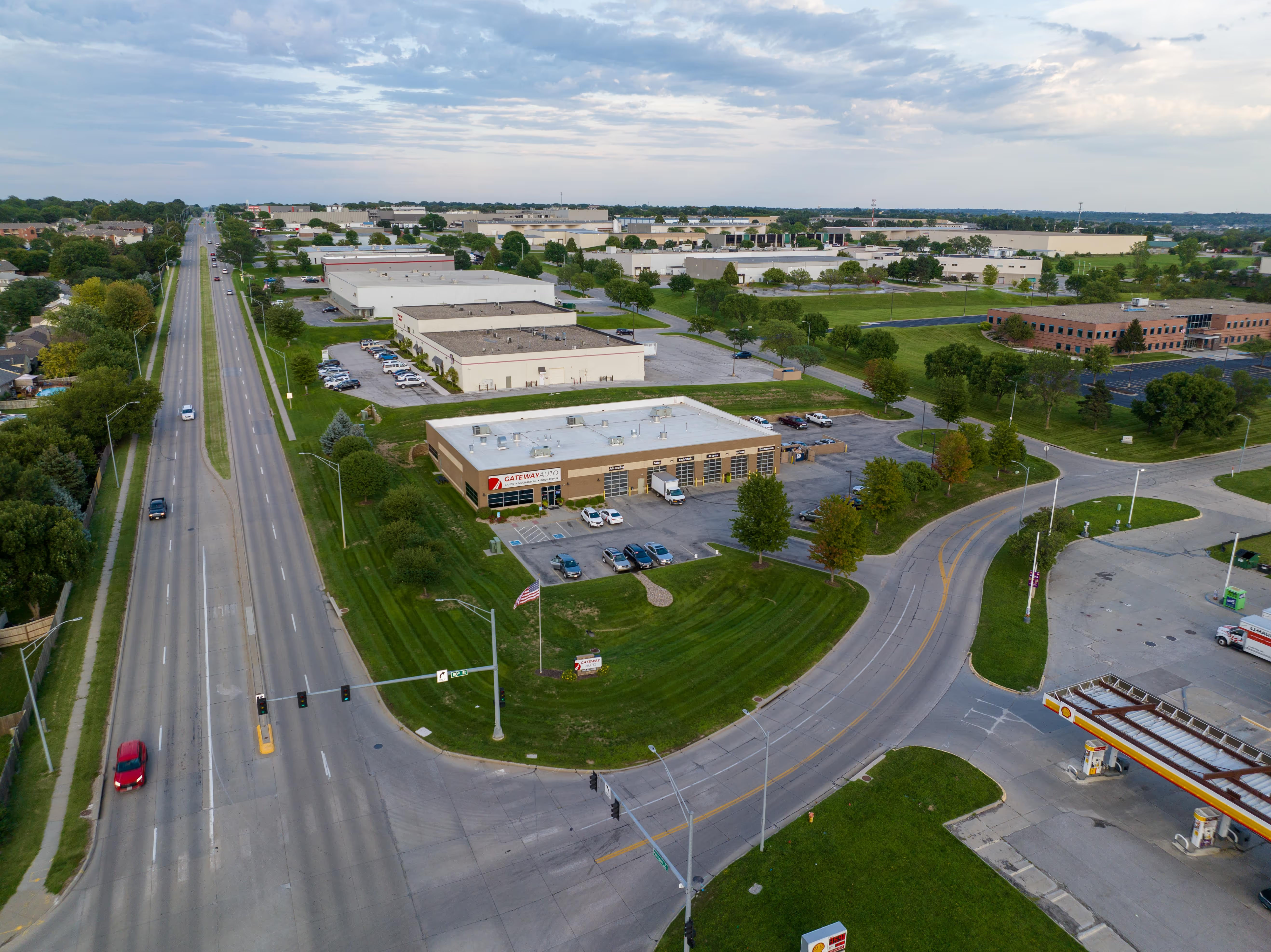
La Vista
110th & Harrison
Flagship. Mechanical service and the collision center under one roof.
10939 Harrison St, La Vista, NE 68128. 24 hour key drop.
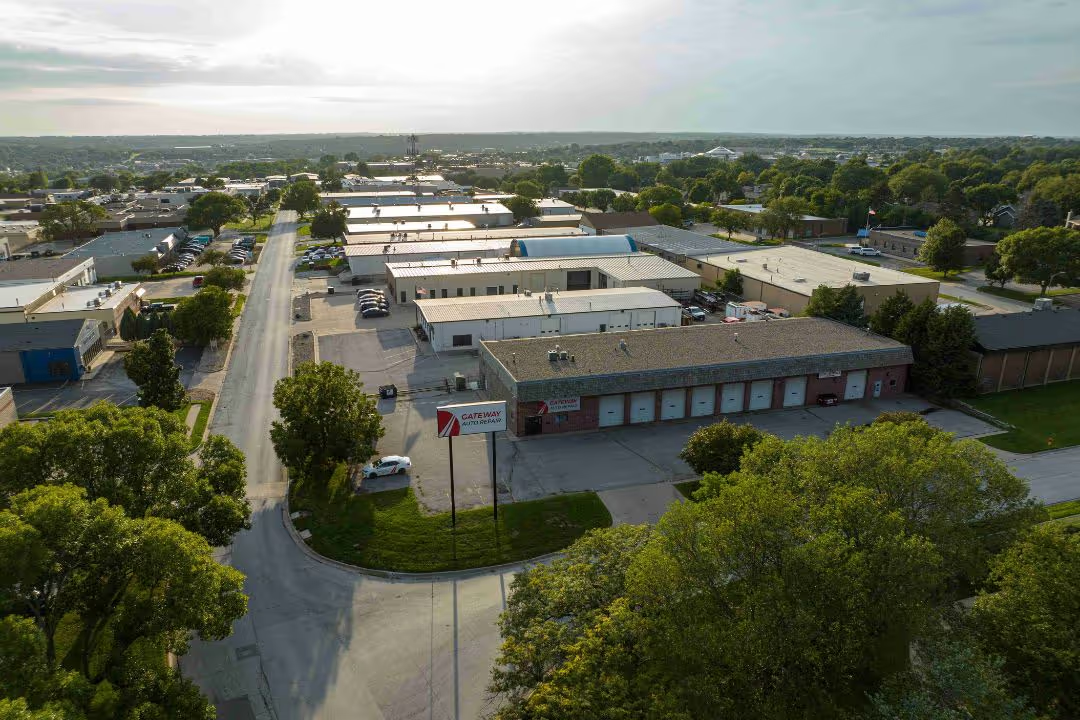
West Omaha
133rd & B Street
Standalone service center. Mechanical repair and maintenance, all makes and models.
13306 B St, Omaha, NE 68144. 24 hour key drop at the front of the building.