Don't Let a Fender Bender Break Your Heart or Your Car
Understanding the Reality of Modern Collision Damage
Collision dent repair is the process of restoring a vehicle's panels and structure after impact damage — ranging from a minor parking lot ding to a more serious fender bender.
Here's a quick breakdown of what it involves:
- What it is: Removing dents, reshaping metal, and restoring paint after a collision
- Two main methods: Paintless Dent Repair (PDR) for intact paint and minor dents; traditional bodywork for deeper damage, creased metal, or cracked paint
- When you need it: Any time a collision leaves a dent, crease, or structural deformation
- Why it matters: Unrepaired collision damage can lead to rust, weakened structure, and lower resale value
With around 6 million car accidents happening across the U.S. every year — according to data from the NHTSA — and roughly 1.7 million of those being fender benders, the odds are good that at some point, you'll be dealing with some kind of collision damage. And even a low-speed tap that looks minor on the surface can hide real problems underneath.
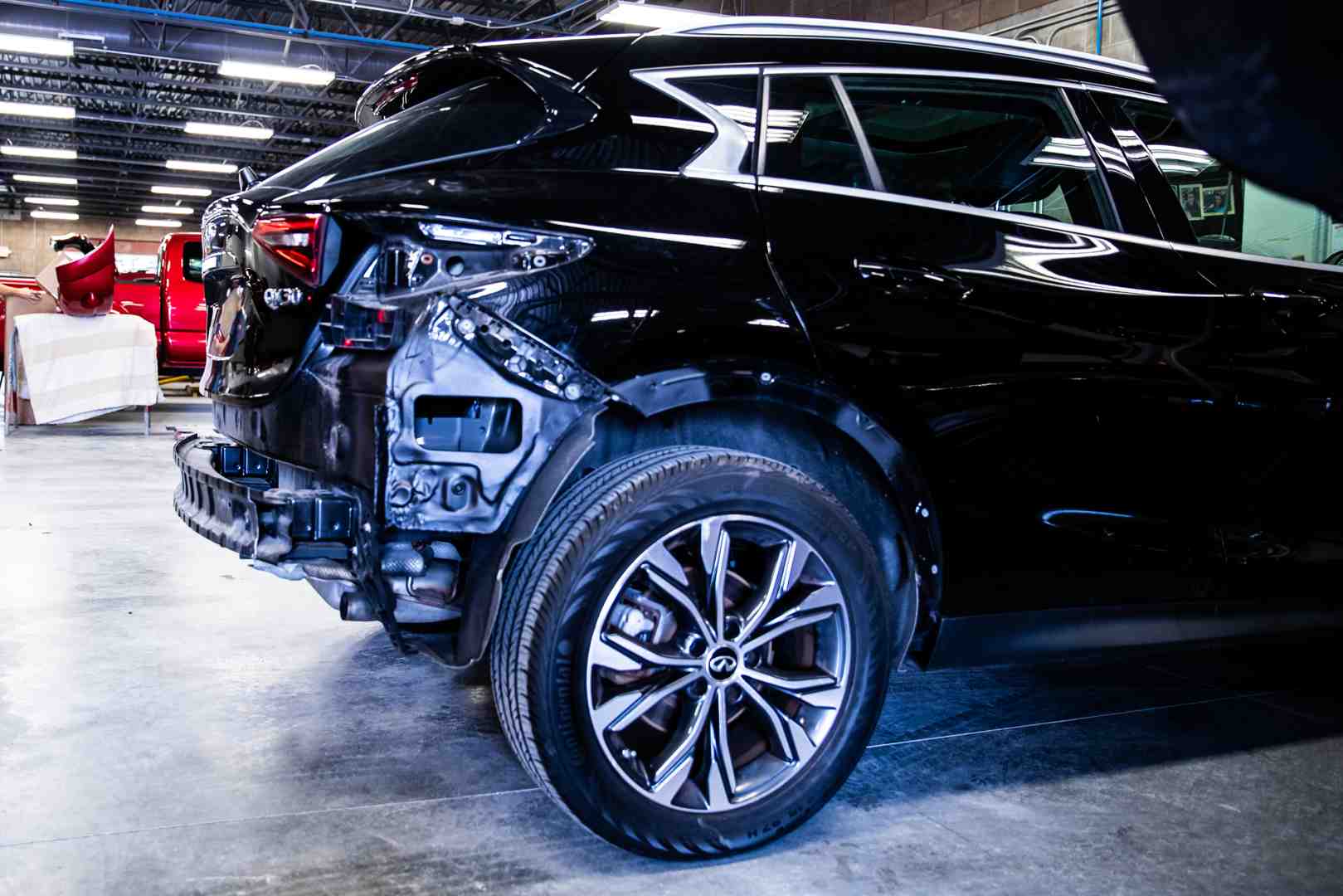
That's the part most people don't expect. What looks like a small dent to the eye might involve a crumpled bracket, a bent sensor mount, or a panel that's been pushed slightly out of alignment. Getting it properly assessed — not just eyeballed — is what separates a real fix from a cosmetic cover-up.
I'm Ben Toscano, co-founder of Gateway Auto, and I've been helping Omaha families navigate collision dent repair for over 20 years. In this guide, we'll walk you through everything you need to know to make a confident, informed decision about your vehicle.
When we see a minor fender bender in our Omaha shop, the first thing we explain to the owner is that modern cars are built differently than they were 30 years ago. Today's bumpers are sophisticated systems designed to absorb impact energy to protect the people inside. This means that even if a bumper looks like it "popped" back out, the internal foam or structural reinforcements may be compromised.
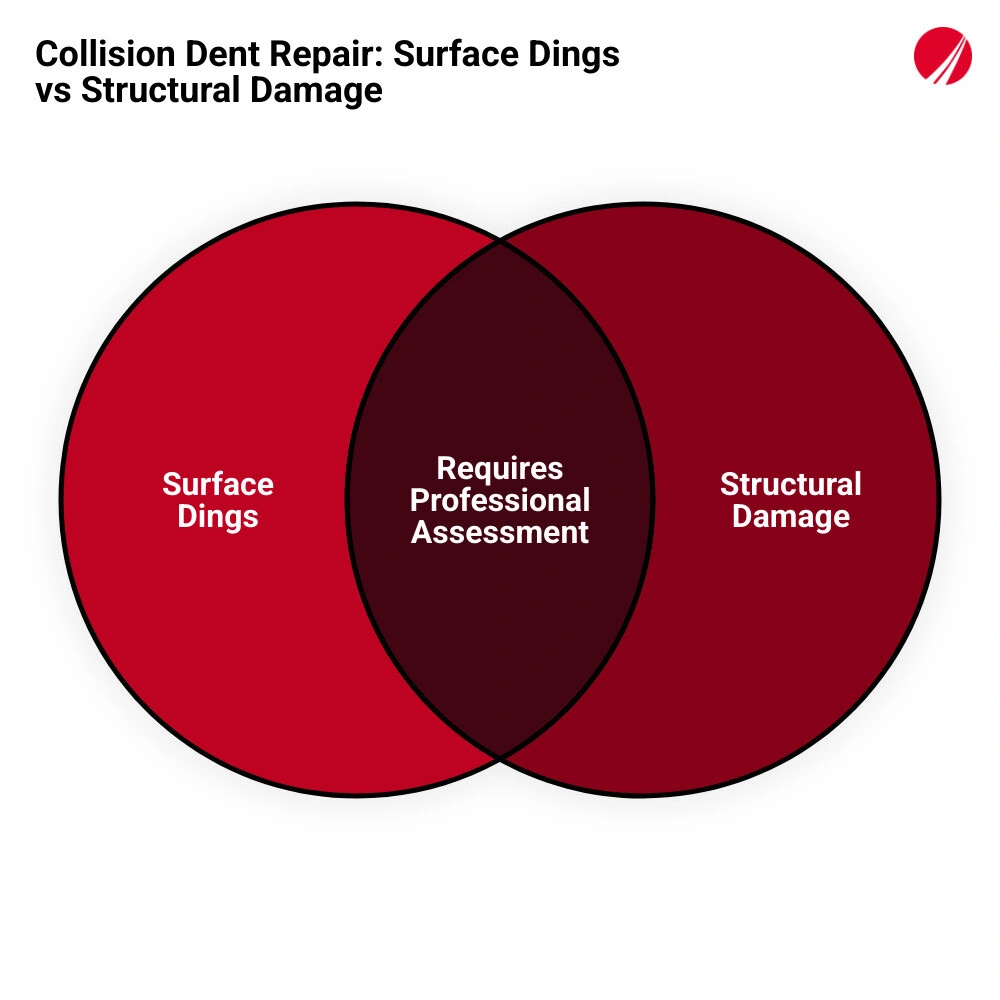
We often see "surface dings" that are purely cosmetic, but in a collision, we have to look for structural frame damage. If a hit is hard enough to bend the metal structure behind the plastic, it can affect how the car handles or how it would perform in a second accident.
The Primary Methods of Professional Dent Repair
Not every dent is created equal, and neither is every repair. Depending on the severity of the impact, we typically use one of two professional paths to get your car back to its pre-accident condition.
When Paintless Dent Repair (PDR) is Appropriate
If you've escaped the accident with your paint still intact, you might be a candidate for Paintless Dent Repair (PDR). This is a specialized technique where our technicians use high-strength steel tools to "massage" the metal from the backside.
Modern factory finishes are incredibly resilient and flexible, which allows us to push the metal back into its original shape without cracking the paint. This method is highly cost-effective because it eliminates the need for sanding, body filler, or expensive paint matching. It's the perfect solution for:
- Hail damage (those small, round "dimples")
- Door dings from parking lot mishaps
- Minor creases where the paint hasn't been stretched beyond its limit
Traditional Bodywork for Complex Damage
Sometimes, the impact is just too much for PDR. If the metal is stretched, the paint is cracked, or the dent is located on a sharp body line, we move to traditional collision repair.
In these cases, we carefully pull the dent out as much as possible, then use a high-quality body filler to smooth the surface. After professional sanding, we use computerized color matching to ensure the new paint blends perfectly with the rest of your car. We only use OEM-certified paints because we want your car to look like the accident never happened — and we want that finish to last for the life of the vehicle.
Key Factors That Influence the Repair Method
Choosing between PDR and traditional repair isn't a guess; it's a science. When we evaluate minor collision repair, we look at several technical factors:
- Dent Depth and Sharpness: A deep, "pointed" dent often stretches the metal beyond its "memory" point, requiring traditional work.
- Panel Material: Repairing aluminum is different than steel; aluminum doesn't have the same "memory" and often requires specialized heating tools.
- Sensor Calibration: This is huge in 2026. If a dent is near a blind-spot monitor or parking sensor, we have to ensure the repair doesn't interfere with those safety systems.
- Accessibility: If we can't get our PDR tools behind the panel (because of a brace or reinforcement), we may have to use traditional methods.
Navigating the Repair Process and Protecting Your Value
We know that being without your car is a major disruption. That's why we've spent two decades refining a process that is as transparent and efficient as possible.
The Step-by-Step Journey of Restoring Your Vehicle
Every repair at Gateway Auto follows a strict quality path:
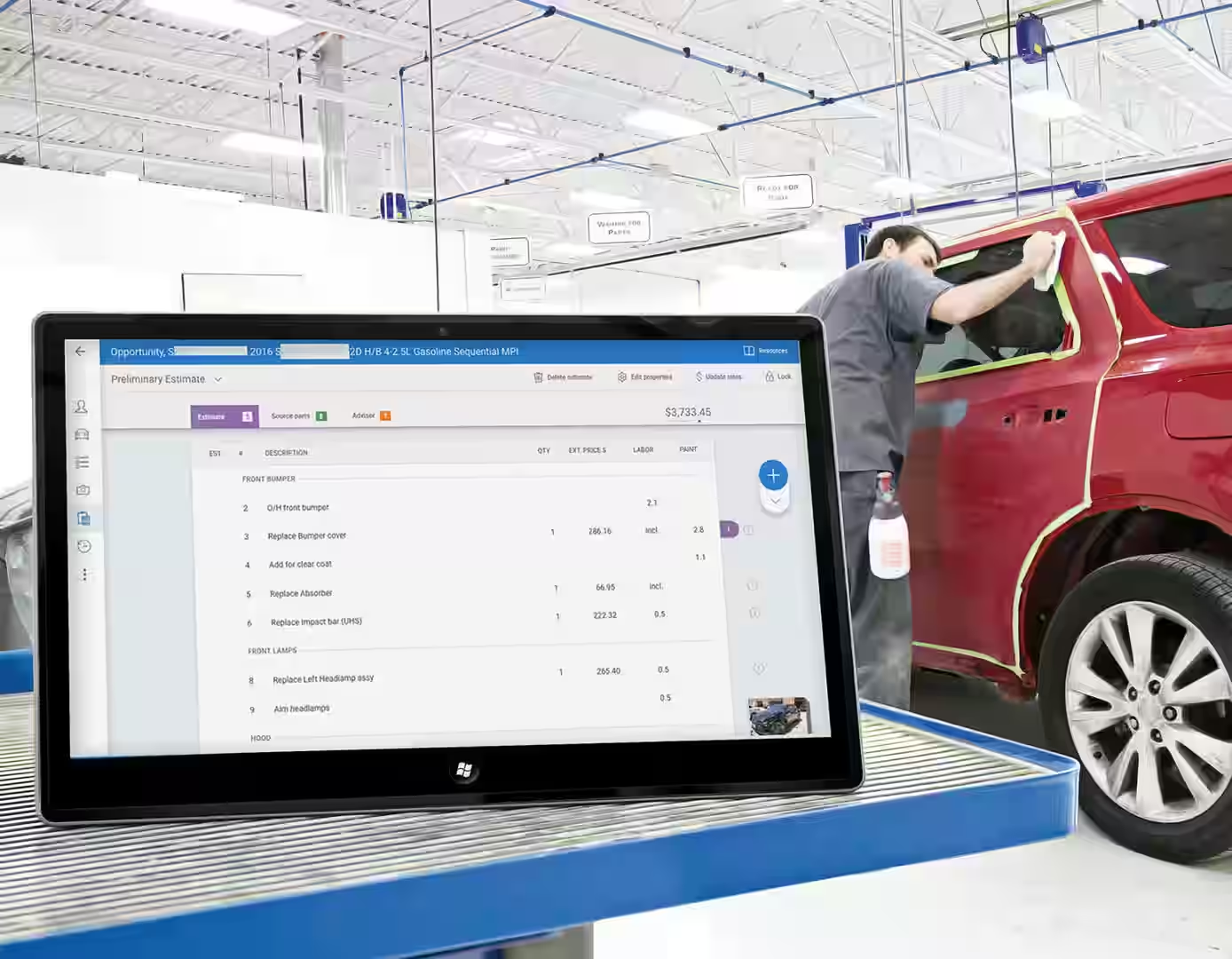
- The Estimate: We provide an honest, computerized estimate. We don't just look at the outside; we look for hidden damage behind the bumper cover.
- Disassembly: We remove the necessary panels to get a full view of the damage.
- Structural Alignment: If the hit was hard, we use our computerized frame alignment system to ensure the vehicle's "bones" are straight.
- The Bodywork: Whether it's PDR or traditional sanding and priming, this is where the shape is restored.
- Refinishing: Our paint team applies the base and clear coats in a controlled environment.
- Quality Control: Before you get your keys back, we perform a final inspection to ensure every sensor is calibrated and every gap is perfect.
During this process, we also help you navigate the collision repair insurance claim. We've worked with every major insurance provider in the Omaha and La Vista area, and we know how to ensure they have the documentation they need to cover the repair correctly.
Why Professional Restoration is Essential for Vehicle Safety
It's tempting to ignore a small dent, but professional repair is about more than just looks. Knowing what to do after a car accident includes understanding that even a small dent can lead to long-term rust if the clear coat has been compromised.
More importantly, your car's safety features — like crumple zones and Advanced Driver Assistance Systems (ADAS) — rely on the body panels being in their original shape. If a sensor is misaligned by even a fraction of an inch, your emergency braking or lane-keep assist might not work when you need it most.
By choosing professional collision dent repair, you are:
- Maintaining the structural integrity of the vehicle
- Protecting your resale value (no one wants to buy a car with "mystery" dents)
- Ensuring your lifetime warranty on collision work remains valid
Finding a Reliable Partner for Your Vehicle in Omaha
At the end of the day, you want to take your car to someone you trust. Gateway Auto has been family-owned for over 20 years, and we take pride in being a trusted collision repair shop in Omaha.
Our technicians are I-CAR Gold Class and ASE certified, which means they have the highest level of training in the industry. Plus, because we are an all-in-one shop, we can handle the bodywork and any mechanical issues (like a busted radiator or misaligned suspension) under one roof. No more towing your car from shop to shop.
We treat your car like it's our own because we know your vehicle is at the foundation of your family's daily life. If you've been in a fender bender, don't let it stress you out.
Schedule your collision repair assessment with us today, and let's get your car back to looking and driving exactly the way it should.
FAQs About Collision Dent Repair
How long does the repair usually take?It varies. A simple PDR fix can often be done in a few hours or a single day. However, traditional repairs involving paint and structural work typically take 3 to 5 days, and more severe collision damage can take 1 to 3 weeks depending on parts availability.
Is paintless dent repair a permanent fix?Yes. Once the metal is massaged back into its original shape, it stays there. PDR restores the factory integrity of the panel without the risk of filler shrinking or paint peeling later on.
Will my insurance cover the cost of dent repair?In most cases, yes, if you have collision or comprehensive coverage. We recommend checking your deductible first; for minor PDR work, the cost is often lower than your deductible, making it more practical to pay out of pocket to keep the claim off your vehicle's history.