Fleet Vehicle Maintenance: A Step-by-Step Guide for Managers
Why Fleet Vehicle Maintenance Determines Your Bottom Line
Fleet vehicle maintenance is the ongoing process of inspecting, servicing, and repairing a group of business vehicles to keep them safe, road-ready, and operating at the lowest possible cost.
Here's what every fleet manager needs to know upfront:
- Preventive maintenance costs a fraction of reactive repairs — a $50 oil change can prevent a $40,000 engine replacement
- Downtime is expensive — each vehicle out of service costs between $450 and $760 per day
- Structured programs deliver real results — fleets with formal PM programs see up to 25% fewer breakdowns
- Drivers are your first line of defense — daily walk-arounds and timely issue reporting stop small problems before they become big ones
- Technology helps, but process is the foundation — whether you use software or a spreadsheet, consistency is what keeps vehicles on the road
If your business depends on vehicles, maintenance isn't optional. It's how you protect your drivers, your customers, and your budget.
Running a fleet without a plan doesn't save money — it defers costs until they hit harder. One missed service interval can cascade into a tow, a repair bill, lost revenue, and a driver stranded on the side of the road. That's not a hypothetical. It happens to fleets every day.
I'm Ben Toscano, owner of Gateway Auto here in Omaha, and over more than 20 years of working with local businesses on fleet vehicle maintenance, I've seen what separates fleets that run well from ones that are always playing catch-up. This guide will walk you through exactly what it takes to build a program that holds up.

Building a Proactive Fleet Vehicle Maintenance Program
Building a maintenance program from scratch can feel like a lot to handle, but it really comes down to moving from a "fix it when it breaks" mindset to a "keep it from breaking" strategy. In our 20 years in Omaha, we’ve noticed that the most successful local fleets treat their vehicles as strategic assets rather than just overhead costs.
A proactive Fleet Maintenance: Key Steps, Challenges & Best Practices approach focuses on the total cost of ownership (TCO). When you look at the big picture, the purchase price of a van or truck is only one part of the equation. The real money is spent—or saved—in how you manage fuel efficiency and downtime reduction over the vehicle's life.
Reactive maintenance, or waiting for a breakdown to occur, typically costs 3 to 5 times more than preventive service. For example, a simple belt inspection might cost under $100, but a snapped belt on I-80 leads to a $2,500 roadside tow, emergency labor rates, and a day of lost revenue. By staying ahead of these issues, you aren't just "spending money on service"—you're buying insurance against catastrophic failure.
Establishing Preventive Fleet Vehicle Maintenance Intervals
The heart of any program is the schedule. We always recommend starting with the Original Equipment Manufacturer (OEM) guidelines, but as of April 2026, we know that real-world Omaha driving—with our humid summers and freezing winters—often requires more frequent "severe service" intervals.
A solid Fleet Preventive Maintenance Checklist: Complete Vehicle PM Guide should use a mix of triggers to ensure nothing slips through the cracks:
- Mileage-based triggers: The classic standard. Most modern fleets aim for oil changes and tire rotations every 5,000 to 7,500 miles depending on the oil type.
- Engine hours: This is vital for vehicles that spend a lot of time idling or running Power Take-Off (PTO) equipment, such as utility trucks or delivery vans in heavy traffic.
- Calendar-based: If a vehicle sits for long periods, seals can dry out and fluids can degrade. We recommend at least a basic inspection every six months regardless of mileage.
Key tasks to keep on your radar include brake inspections (measuring pad thickness), fluid pH testing for cooling systems, and battery health checks. In our experience, catching a weak battery during a routine shop visit is much better than getting a "won't start" call from a driver at 6:00 AM in January.
The Role of Drivers in Fleet Vehicle Maintenance
Your drivers are your eyes and ears on the road. They are the first people to notice a new vibration in the steering wheel or a faint squeak when the brakes are applied. Encouraging a "safety culture" where drivers feel empowered to report small issues is the best way to prevent big bills.
Daily walk-arounds are essential. These don't have to take an hour—a five-minute circle check of tire pressure, light functionality, and visible fluid leaks can prevent a DOT fine or an accident. For many businesses, maintaining Fleet Services compliance means strictly following Driver Vehicle Inspection Report (DVIR) protocols.
When drivers are trained to monitor fluid levels and tire wear, they become active participants in protecting the company’s bottom line. We’ve seen that when drivers know their vehicle is well-maintained, they tend to take better care of it, leading to fewer "fender benders" and lower overall wear and tear.
Streamlining Repairs and Reducing Downtime
Even with the best preventive plan, things will eventually wear out. This is where corrective maintenance comes in. The goal here is speed and accuracy. You need a workflow that moves a vehicle from "issue reported" to "back on the road" as quickly as possible.
Modern fleet managers often use telematics integration to get real-time data. If a "Check Engine" light pops on, the system can alert the manager immediately with a specific fault code. This allows us to have the necessary parts in stock before the vehicle even arrives at our shop, significantly cutting down on wait times.
Maintaining detailed service history records is also a legal and financial necessity. If you ever decide to sell a vehicle, a documented history of consistent maintenance can significantly increase its resale value. It also helps us spot patterns—if a specific van is constantly needing suspension work, we can investigate if it's being overloaded or driven on particularly rough routes.
Maximizing ROI and Long-Term Fleet Health
To truly master fleet vehicle maintenance, you have to look at the data. Successful managers track their cost-per-mile (CPM) to see exactly how much each asset is costing the business. If the CPM on a five-year-old truck starts to spike, it might be time to stop pouring money into it and look at a replacement.
Warranty tracking is another area where businesses leave money on the table. We make it a point to check for active warranties or open recalls on every fleet vehicle we service. There’s no reason for you to pay for a repair that the manufacturer should cover for free.
Tracking Key Performance Indicators (KPIs)
You can't manage what you don't measure. We suggest tracking these four KPIs to gauge the health of your program:
- PM Compliance Rate: This measures how many scheduled services were actually performed on time. Best-in-class fleets aim for 95% or higher.
- Unplanned Downtime: How often are your vehicles in the shop for things you didn't see coming? If this number is high, your preventive schedule needs an adjustment.
- Mean Time Between Failures (MTBF): This helps you understand the reliability of your fleet over time.
- Fuel Economy: Sudden drops in MPG across the fleet usually point to maintenance issues like clogged filters, poor tire pressure, or engine tuning problems.
Choosing an All-in-One Partner in Omaha
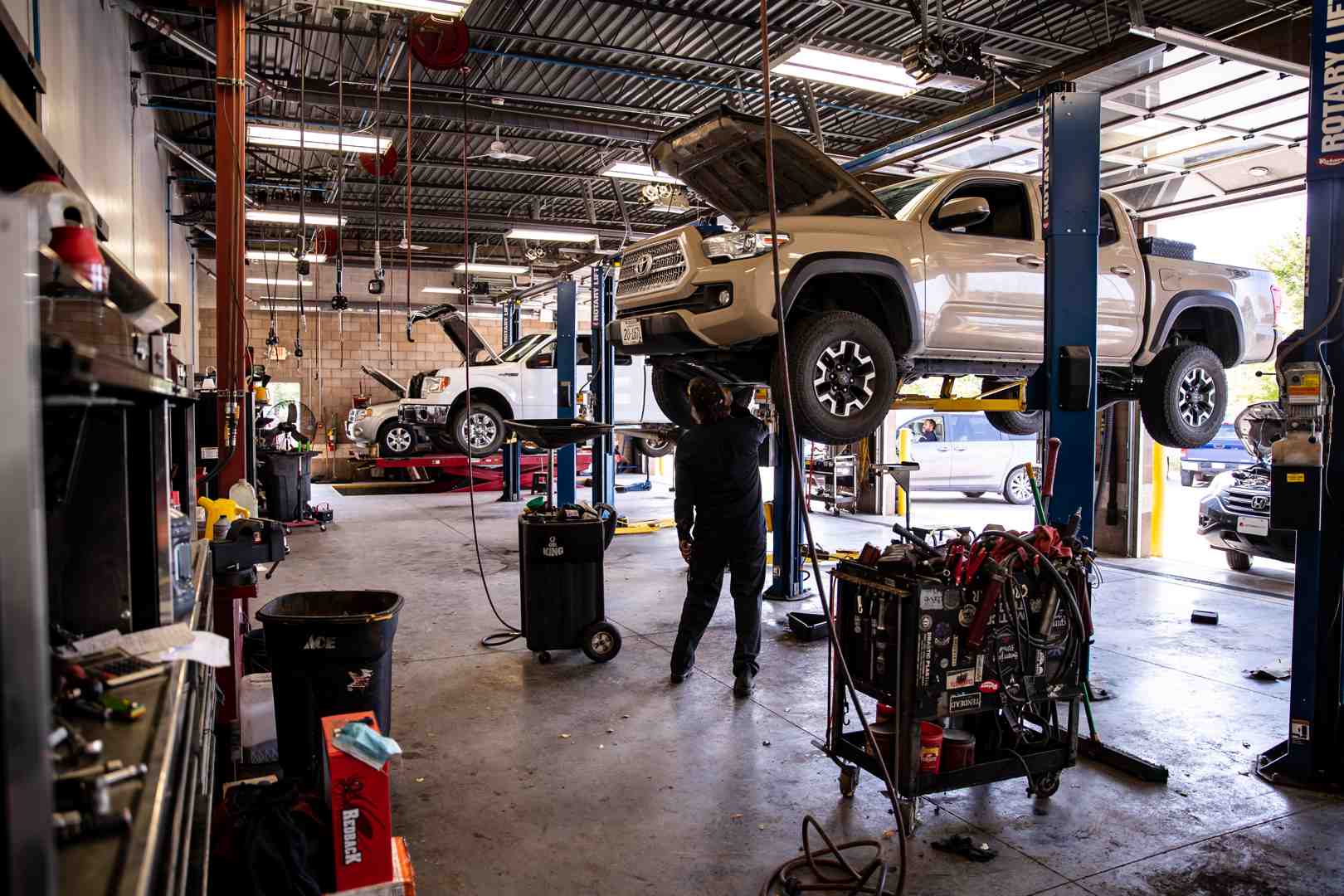
Most small to mid-sized businesses don't have the space or the staff to run a full-service garage in-house. Gateway Auto handles every aspect of your fleet's physical health.
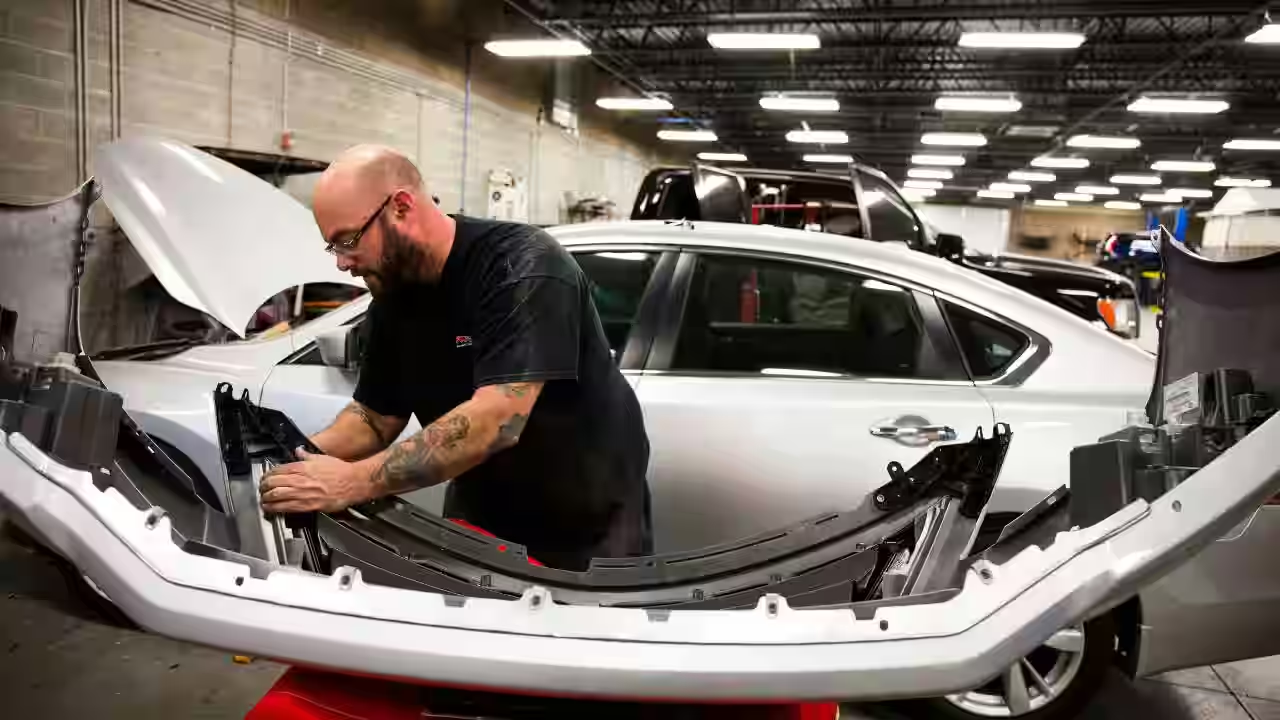
As an ASE-certified mechanical shop and an I-CAR Gold Class collision center, we provide both mechanical and body repairs. If a driver has a minor accident, we can handle the body repair and the mechanical safety checks under one roof.
We’ve been family-owned for over 20 years, and we pride ourselves on being straightforward. We back our collision work with a lifetime warranty and offer pre-purchase inspections, which are helpful when you're looking to add used vehicles to your fleet and want to know the vehicle's condition.
Common Fleet Maintenance Questions
What is the difference between fleet maintenance and fleet management?Think of maintenance as the "hands-on" part—the oil changes, tire rotations, and engine repairs. Management is the "big picture" strategy, including budgeting, fuel cards, driver training, and deciding when it's time to sell a vehicle. You need both to be successful.
How much does it cost to neglect maintenance?Beyond the $760-per-day downtime cost, neglect leads to liability. If a vehicle is involved in an accident and it’s discovered that the brakes were worn past the safety limit, your business could face "negligent entrustment" lawsuits. The cost of a brake job is pennies compared to the legal and reputational risk of a major accident.
Do I need to change my schedule for Omaha winters?Absolutely. Cold starts are hard on engines and batteries. We also recommend more frequent undercarriage washes during the winter to prevent road salt from corroding brake lines and frame components.