Will Your Wallet Dent After an Accident
What Does Body Work Actually Cost After an Accident?

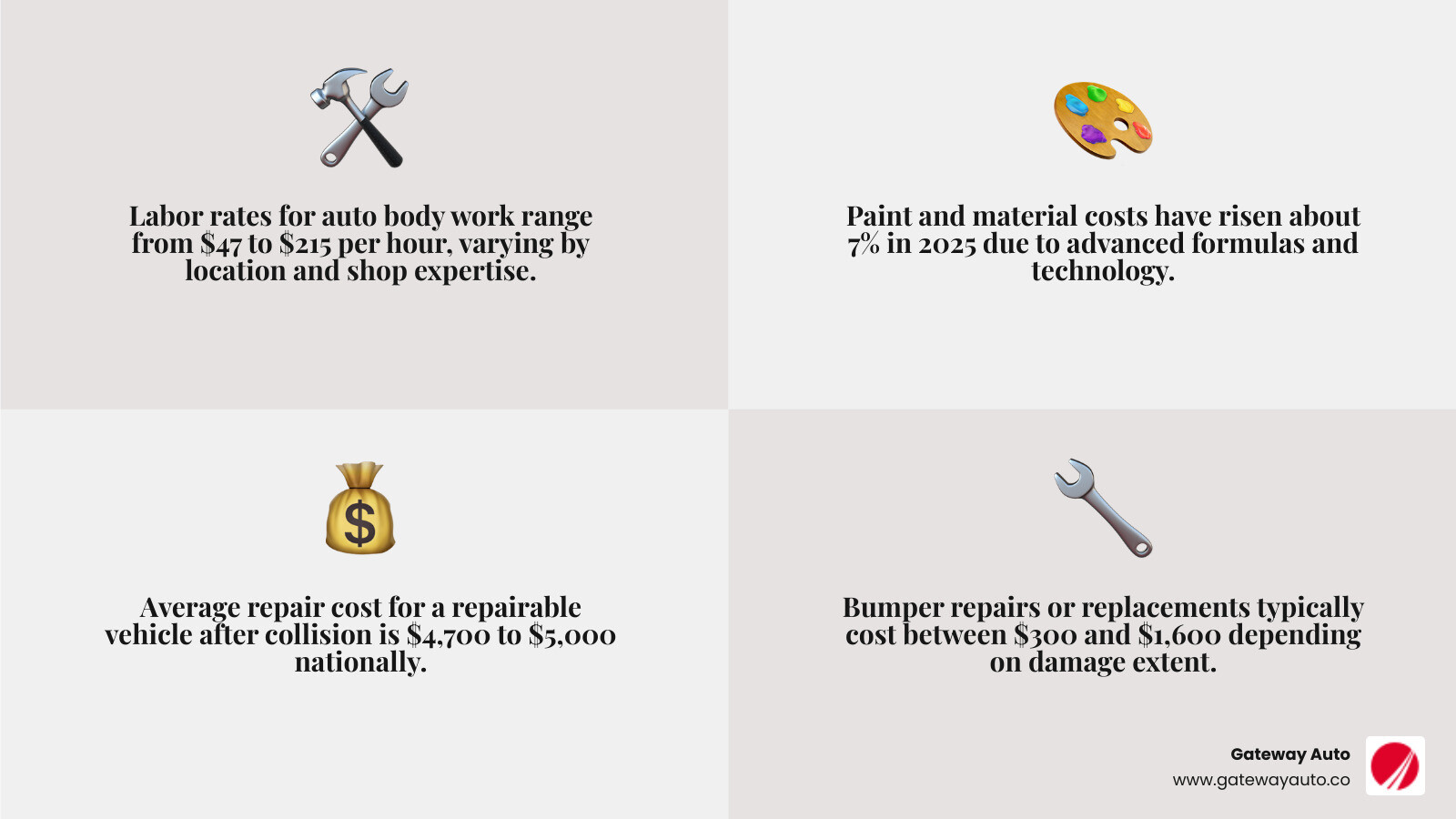
How much does body work cost is one of the first questions that runs through your mind after a fender bender — and the honest answer is: it depends. Minor scratches and small dents can run as little as $50 to $300. A bumper repair or replacement typically falls between $300 and $1,600. More serious collision damage — frame repairs, structural work, full panel replacements — can push well past $5,000. The average repair cost for a repairable vehicle in 2025 sits around $4,700 to $5,000.
Here's a quick look at what common repairs typically cost:
Common Auto Body Repair Cost Ranges (2025)
- Small scratches and paint touch-ups: $50 – $300
- Minor dents and dings (paintless dent repair): $50 – $600
- Bumper repair or replacement: $300 – $1,600
- Door and fender panel repairs: $500 – $2,500
- Windshield repair or replacement: $100 – $1,000
- Full paint job or respray: $1,000 – $5,000
- Frame and structural damage: $2,000 – $10,000+
These are national ranges. Your actual cost depends on your vehicle, the shop you choose, your location, and what the damage looks like once a technician gets eyes on it.
Accidents are stressful. On top of the hassle of dealing with insurance and getting back on the road, the repair bill can feel like a second punch. But knowing what to expect — and what drives those costs — puts you in a much better position to make smart decisions.
I'm Ben Toscano, co-founder of Gateway Auto here in Omaha, and we've been helping families navigate exactly these situations for over 20 years. Understanding how much does body work cost is something we walk customers through every day, so this guide reflects what we've actually seen — not just what the numbers say on paper.
Understanding how much does body work cost in 2025
When you receive an estimate, it isn't just a random number. It is a calculated total based on several moving parts: labor, parts, paint materials, and increasingly, technology. In 2025, we’ve seen paint and material costs rise by about 7%, while labor rates have grown by roughly 3%.
Labor is often the largest variable. According to AAA, labor rates can range anywhere from $47 to $215 an hour depending on the region and the shop’s specialization. In the Omaha and La Vista area, we focus on providing fair, transparent pricing that reflects our high standards of training.
At Gateway Auto, our technicians are I-CAR Gold Class certified. This is the highest role-relevant training achievement recognized by the collision repair industry. It means our team understands the specific welding, material, and safety requirements of modern vehicles. While a "shade tree" shop might offer a lower hourly rate, a certified shop ensures the repair is done to factory safety standards, which protects your vehicle's long-term value.
Modern cars are also rolling computers. Diagnostic scans now appear on nearly 90% of all repair estimates. Before we even turn a wrench, we often have to plug into the car's computer to see if internal sensors were triggered. You can learn more about our specialized collision repair services and how we handle these technical requirements.
Estimating how much does body work cost for common repairs
Most visits to a body shop involve "the usual suspects": bumpers, dents, and glass. Here is a deeper look at those specific categories:
Minor Dents and Dings: If the paint isn't cracked, we often recommend paintless dent repair. This process uses specialized tools to massage the metal back into place from behind the panel. It typically costs between $150 and $600 and is much faster than traditional body work.
Bumper Repair vs. Replacement: A plastic bumper scuff might cost $300 to $700 to refinish. However, if the plastic is cracked or the mounting tabs are broken, a replacement is necessary. With parts and labor, a standard bumper replacement usually lands between $800 and $2,500.
Windshields: A small chip can be filled for about $100. If the crack is longer than a credit card, you’re looking at a full replacement. For older cars, this might be $250. For a new vehicle with rain sensors and heads-up displays, it can easily reach $1,000.
Paint Blending: You rarely just paint one spot. To make the repair invisible, we often have to "blend" the paint into the neighboring panels. This ensures the color match is perfect under all lighting conditions, though it does add to the labor and material total.
Factors that drive up the price of auto body work
Why does a scratch on a luxury SUV cost three times more than the same scratch on a 10-year-old sedan? It usually comes down to what’s hidden beneath the surface.
- Advanced Technology: Modern bumpers are no longer just plastic covers. They house ultrasonic sensors, radar units for cruise control, and cameras. After a repair, these systems require "calibration" to ensure they are looking at the road correctly. Calibrations typically add $300 to $600 to the bill.
- Specialized Materials: Many newer vehicles use aluminum or carbon fiber to save weight. These materials require different tools and cleaner environments than traditional steel, which increases the repair cost.
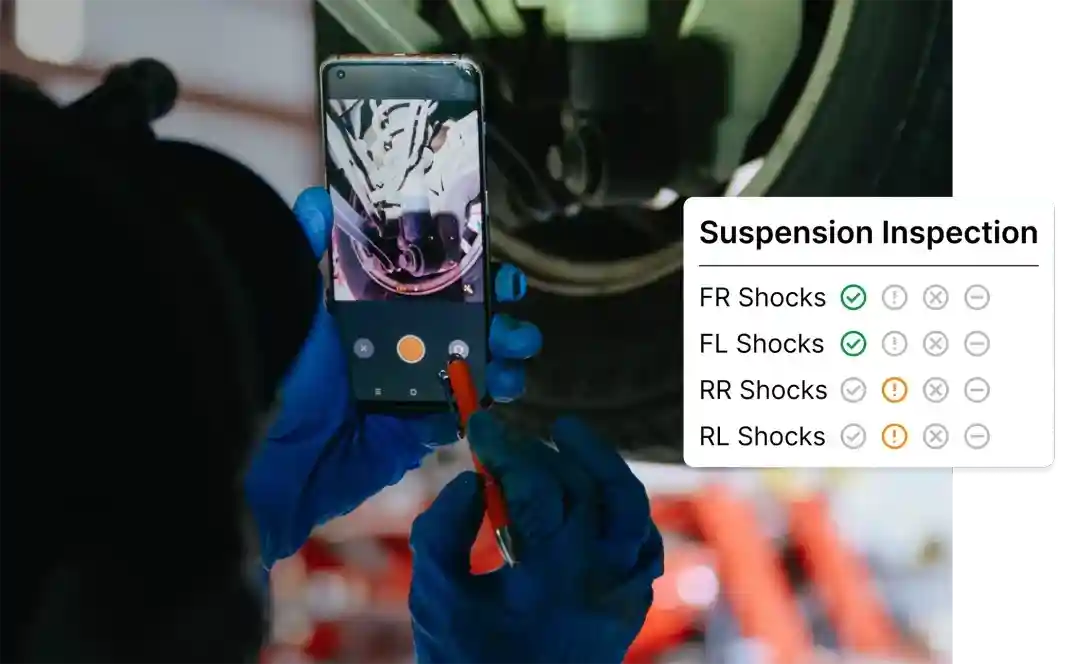
- Mechanical Overlap: A side impact doesn't just damage the door; it can bend suspension components. As Insurance.com notes, repairing parts like wheel alignments, ball joints, and shock absorbers can add $100 to $600 per component, with full suspension replacements reaching much higher.
Deciding between insurance claims and out-of-pocket payments
This is the most common dilemma our customers face. Should you file a claim or pay cash? A helpful rule of thumb is the "2x Deductible Rule." If the repair cost is less than twice your deductible, it often makes more sense to pay out-of-pocket.
For example, if you have a $500 deductible and the repair is $800, insurance only covers $300. However, filing that claim could raise your premiums by $200–$400 per year for the next three to five years. In the long run, paying the $800 yourself is cheaper.
As NerdWallet points out, having a clear understanding of the repair process helps you navigate these financial choices. If you do choose to go through insurance, we work with all major carriers to make the process as smooth as possible. You can read more in our insurance collision repair guide to understand how coverage types like "collision" versus "comprehensive" apply to your situation.
How to get an accurate estimate and choose a shop
The best way to avoid "sticker shock" is to get a detailed, itemized estimate. A professional estimate should break down exactly what you are paying for: OEM vs. aftermarket parts, labor hours for body work versus paint, and any necessary diagnostic fees.
When choosing a shop in Omaha or La Vista, look for certifications and warranties. At Gateway Auto, we offer a lifetime warranty on all collision work. This means if a part we replaced fails or the paint we applied starts to peel years down the road, we make it right. We also provide online estimates to give you a ballpark figure before you even drive down to see us.
Why a $2,400 bumper estimate might be realistic
We often hear from customers who are shocked that a "simple bumper scrape" resulted in a $2,400 estimate. While it looks like a cosmetic scuff, the "R&I" (Remove and Install) process is extensive.
To paint a bumper correctly, we have to remove the lights, trim, and sensors. If that bumper has blind-spot monitoring, we may need to perform a pre-repair scan, the repair itself, and then a post-repair calibration. Restoring a vehicle to "pre-accident condition" means ensuring every safety feature works exactly as the manufacturer intended, not just making it look pretty.
How much does body work cost for structural and frame damage?
Structural damage is the most serious type of body work. The "frame" is the skeleton of your car; if it's bent, the car won't track straight, and it won't protect you correctly in a second accident.
Frame straightening requires a heavy-duty machine that uses hydraulic tension to pull the metal back into alignment. These repairs typically start at $2,000 and can easily exceed $10,000. If the cost to repair the frame exceeds a certain percentage of the car's value (usually 70-80%), the insurance company will likely declare it a "total loss." You can find more details on this in our guide to car frame damage.
Saving money without cutting corners on quality
We know that unexpected repairs are a burden on the family budget. There are ways to save without compromising your safety:
- Opt for Recycled Parts: For older vehicles, using a high-quality "recycled" (used) door or bumper can save hundreds of dollars compared to a brand-new part from the dealership.
- Paintless Dent Repair (PDR): As mentioned, if the paint is intact, PDR is the most affordable collision repair method available.
- Early Intervention: Fixing a small scratch now prevents it from turning into a rust spot later. Rust repair is significantly more expensive because it often requires cutting out and welding in new metal.
Whether you need a quick dent fix or major structural work, we're here to help you make the best decision for your life and your vehicle. Our goal is to keep your car on the road and your family safe, all while providing the honest, straightforward service Omaha has trusted for over two decades.