
Brake Repair Omaha | Gateway Auto
Our ASE-certified technicians inspect the stopping system, document what they see, and explain your options before work begins. Service may include pad and rotor replacement, caliper repair, a hydraulic-fluid flush, or attention to hydraulic lines and related parts. You receive recommendations based on your vehicle's condition, driving needs, and priorities.
Gateway Auto has served the Omaha metro since 2002. With two repair locations on Harrison Street and B Street, online scheduling, courtesy transportation, and digital inspections, we make it easier to address a safety concern without losing control of your day.
.jpg)
Signs You Need a Brake Inspection
Changes in braking performance rarely look or sound exactly the same on every car. Some drivers first notice a high-pitched squeal. Others feel a pulse through the pedal or steering wheel. Even a small change deserves attention when it affects how the car stops.
Schedule a brake inspection if you notice any of the following:
- Squealing, scraping, or grinding when you apply the brakes
- A soft, spongy, or sinking brake pedal
- Vibration through the pedal or steering wheel while stopping
- The car pulling to one side during braking
- A brake warning or ABS light that stays on
- Longer stopping distance or the need for more pedal pressure
- A burning smell near a wheel or visible fluid under the car
Squealing can come from worn pads, but the sound alone does not confirm which component needs replacement. Grinding may mean the friction material has worn away and metal surfaces are contacting the rotor. Pulling can involve uneven wear, a sticking caliper, or even a tire or suspension concern. An inspection of your brake system helps separate the symptom from the cause.
If the pedal suddenly sinks toward the floor, stopping distance increases sharply, or the car no longer feels safe to control, stop driving when you can do so safely. Arrange professional help rather than trying to reach the shop with unreliable stopping response.
What Our Brake Inspection Covers
A useful inspection looks at the braking system as a group of connected components. Gateway Auto's technicians check the brake pads for remaining material and uneven wear. They also examine the rotors for grooves, heat damage, and thickness concerns. Calipers and hardware are checked for sticking, leaks, corrosion, and movement that could cause one pad to wear faster than another.
The inspection may also cover brake lines, flexible hoses, the parking brake, fluid level and condition, dashboard warnings, and pedal response. Your technician considers the symptoms you reported and the way they occur. A noise that appears only at low speed may point in a different direction than a vibration that shows up during highway braking.
Gateway Auto can send a digital inspection by text or email. Photos and video let you see your vehicle through the technician's eyes. Your advisor then reviews what needs attention now, what can be watched, and why a repair is being recommended.
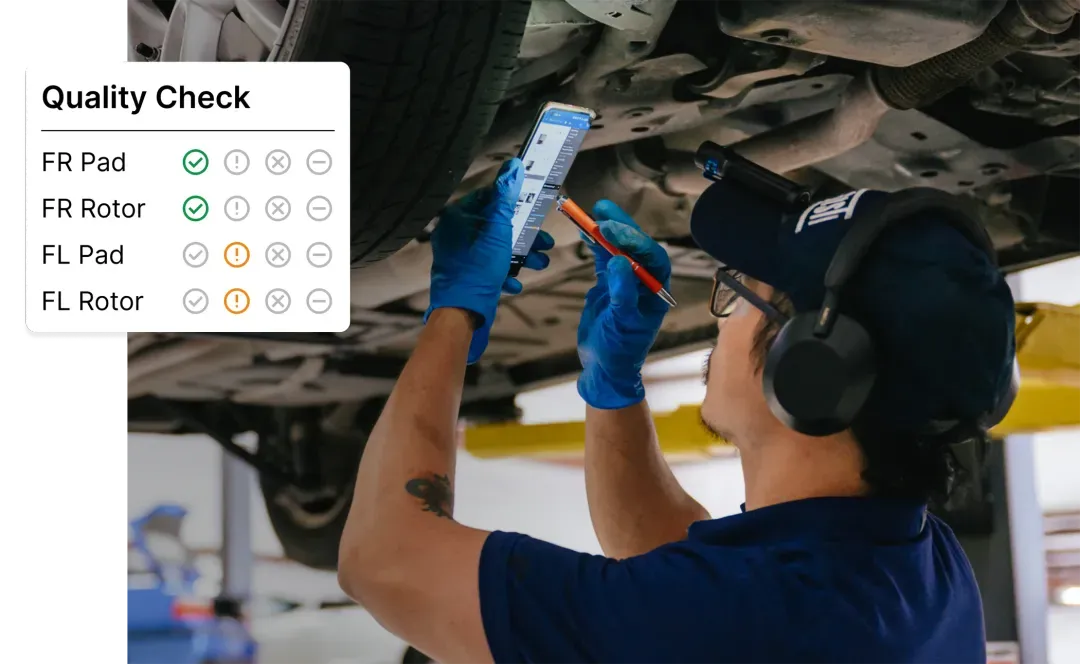
Brake Pad and Rotor Replacement
Pads are designed to wear as they create friction against the rotors. How quickly they wear depends on the car, pad material, traffic, towing, load, and driving habits. Frequent stop-and-go trips can affect them differently than long highway drives. There is no single replacement mileage that fits every car.
A worn pad may be the most visible issue, but installing new material without checking the rest of the system can leave the original problem unresolved. Uneven wear may point to a sticking caliper or worn hardware. Damaged rotors may cause vibration, noise, or inconsistent contact with the new pads.
Gateway Auto replaces pads and rotors when inspection shows that care is needed. The shop does not resurface rotors. Modern rotors often have less extra material available. Removing more can leave them below specification or more vulnerable to heat-related distortion. New rotors provide a sound contact surface and support smooth, consistent braking.
Your quote will reflect the components and labor needed for your vehicle. The cost can vary by make, model, axle, component condition, and whether calipers or other areas also need attention. Gateway Auto explains the scope before you approve the repair.
Brake Fluid and Hydraulic Brake Service
When you press the pedal, brake fluid carries hydraulic pressure through the system. It can absorb moisture over time. Contamination may affect pedal feel and contribute to corrosion inside hydraulic components. The right maintenance interval depends on the car manufacturer, fluid condition, and repair history.
Low fluid should be investigated instead of treated as a routine top-off. It may be related to normal pad wear, a leak, or another system concern. During service, technicians can check the reservoir, lines, hoses, calipers, and other hydraulic components. If a flush is recommended, the old fluid is removed and replaced with the correct type for the car.
What to Expect During Brake Repair
Gateway Auto's process is built around clear information and your approval. The goal is to help you choose the repair that fits your safety needs, schedule, and budget.
- Book your appointment. Schedule online or call the team to describe the noise, warning light, pedal change, or other concern.
- Choose your transportation plan. You can drop off the car, wait when appropriate, or reserve a courtesy car in advance. Pickup and drop-off may be available when courtesy cars are unavailable.
- Review the digital inspection. Technicians inspect the car and may share photos or video so you can see the findings.
- Authorize the repair. Your advisor explains the recommendation and pricing. Gateway Auto does not proceed without your authorization. If another issue appears during the job, the team contacts you before adding repairs.
- Receive the completed car. The repair receives a final check and a complimentary car wash. Covered mechanical repairs are backed by a 24-month, 24,000-mile nationwide warranty.
Unexpected repairs can place pressure on a household budget. Gateway Auto offers third-party financing options for qualifying customers. Ask the team about current terms if spreading the cost would make the repair easier to manage.
Before your visit, write down when the concern occurs and how the car responds. Note whether the sound happens during light or hard stops, whether vibration changes with speed, and whether the dashboard light is constant or intermittent. Recent repair records can also help. These details give the technician a clearer starting point, although they do not replace a hands-on inspection.
Why Omaha Drivers Choose Gateway Auto
Brake repairs require more than installing components. Drivers need accurate information, careful workmanship, and a shop that respects their decisions. Gateway Auto is a local, family-operated business that has served area drivers for more than 20 years. Its mechanical team includes ASE-certified professionals who handle a wide range of makes and models.
The shop's approach is straightforward. Technicians document the condition of the car. Advisors explain the options in plain language. You decide which repairs move forward. That open process can be especially helpful when several components show wear or when you need to separate an immediate safety repair from maintenance that can be planned later.
Gateway Auto also offers mechanical services, collision repair, fleet support, and used-car sales under the same local brand. These services come with practical benefits: modern diagnostic tools, digital inspections, transportation options, clear authorization, financing availability, and nationwide warranty coverage on qualifying mechanical repairs.
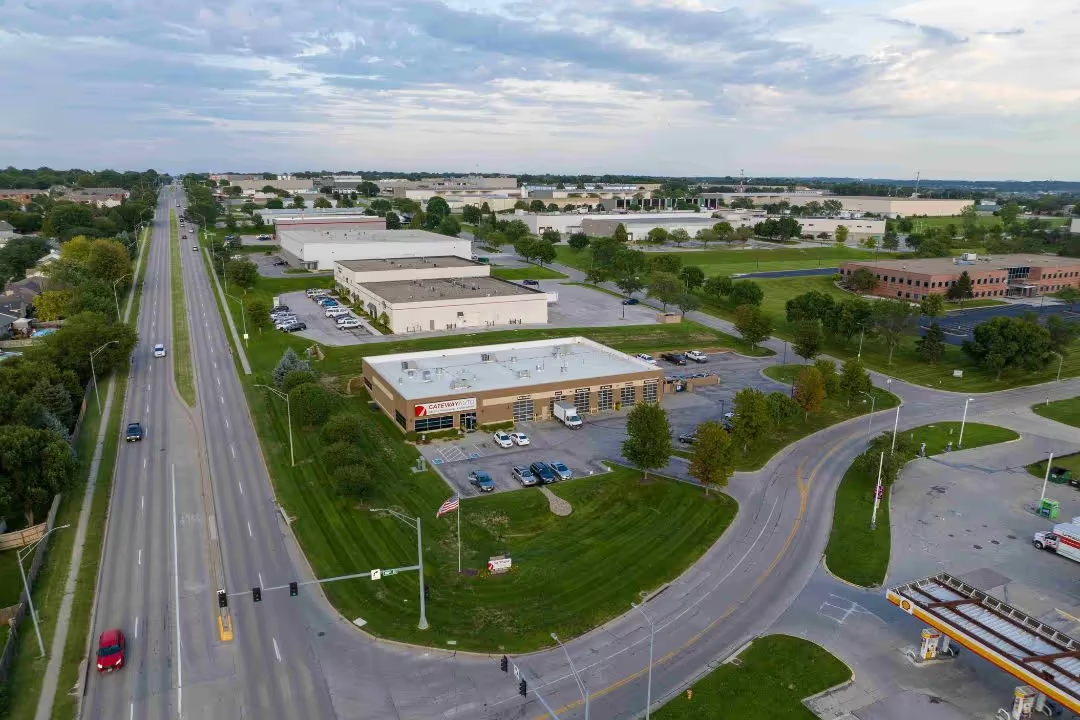
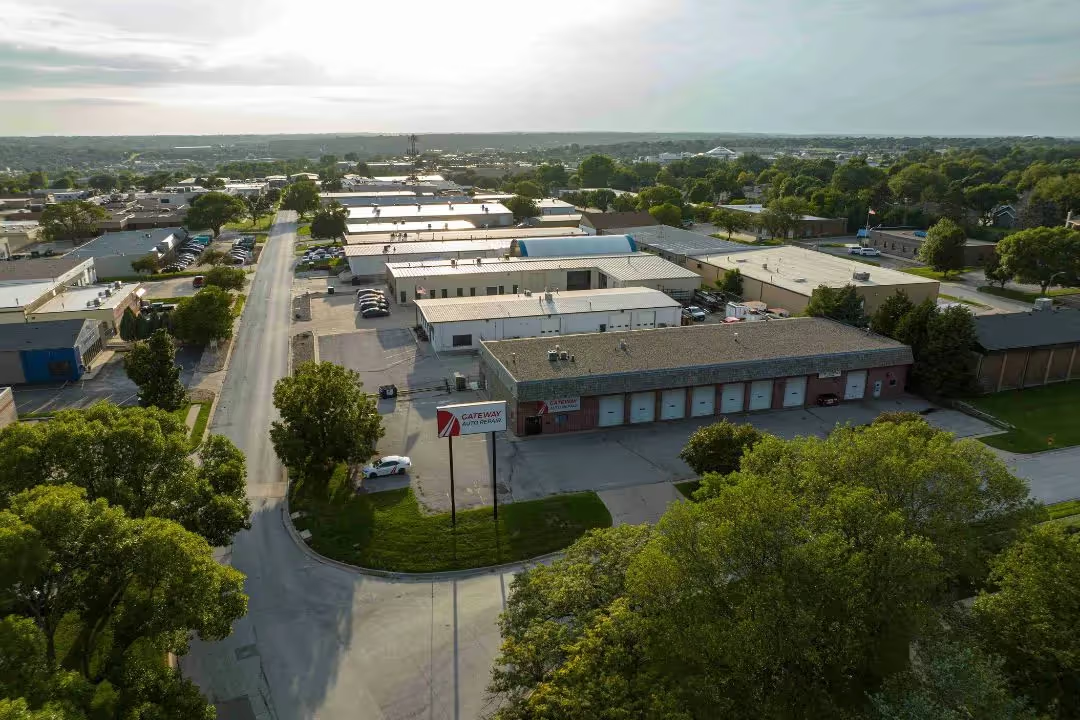
The two-location setup also gives Omaha-area customers a choice. The Harrison Street facility combines mechanical and collision capabilities, while the B Street shop focuses on automotive repair. If you are unsure where to book, the team can help match your needs to the right location and discuss transportation before you arrive.
Schedule Brake Service in Omaha
Do not wait for a minor concern to become a larger repair or a stressful drive. If your car squeals, grinds, vibrates, pulls, displays a warning light, or has a soft pedal, schedule service with Gateway Auto. The team will inspect the system, show you what it finds, and explain the next step before repairs begin.
Choose the Service & Collision Center at 10939 Harrison Street in La Vista or the B Street shop at 13306 B Street in Omaha. Book online or call Gateway Auto to arrange your appointment and transportation needs.
Frequently Asked Questions
What does a full brake job include?
The scope depends on inspection findings. It may include pads and rotors on one or both axles, hardware, caliper repair, and a hydraulic-fluid flush. Damaged lines or hoses may also need attention if they are leaking. Gateway Auto identifies the affected components and provides an estimate before repairs begin.
How much does brake repair cost?
Pricing varies by car, axle, components, labor, and the condition of the braking system. A pad-and-rotor job will cost differently from a repair that also requires calipers or hydraulic attention. Gateway Auto's inspection allows the team to provide a car-specific estimate instead of a broad price that may not match the repair.
Can I drive with squeaking or grinding brakes?
Persistent squeaking should be inspected. Grinding may indicate that pad material is gone and metal surfaces are contacting the rotor. If stopping response has changed, the pedal sinks, or the car feels unsafe, stop driving when it is safe to do so and arrange professional service.
Do new brake pads always require new rotors?
Gateway Auto replaces pads and rotors rather than resurfacing worn rotors. The technician will inspect the system and explain what the car needs. Replacing the rotor gives the new pad a proper contact surface and avoids removing more material from a rotor that may already be near its minimum thickness.
How often should brake fluid be changed?
Follow the manufacturer's guidance and consider the fluid's condition and maintenance records. It absorbs moisture over time, so an inspection or test may show that a flush is due. Gateway Auto can check the fluid and make a recommendation based on the car rather than a one-size-fits-all interval.
Will I see the inspection before approving repairs?
Gateway Auto can send a digital inspection with photos or video by text or email. An advisor reviews the findings, explains the recommended repairs, and answers questions. No repair is authorized without your approval.
All your automotive needs under one roof
Gateway Auto offers service, collision, fleet and quality vehicle sales under the same trusted brand to ensure you stay on the road with a team by your side.
Service locations
Click each location tab for more information.
.svg)
.svg)