Don't Get Flat: Where to Find Tire Repair in Omaha
Why Quick, Reliable Tire Repair Matters in Omaha
Tire repair Omaha services are essential when you experience a flat or damaged tire. For drivers in the area, a typical repair costs around $45, and you can expect fast help, as 75% of shops offer same-day service. The most common issue is a simple puncture from nails or road debris. You'll know it's time for a professional look if your TPMS warning light is on, you see damage, the tire keeps losing air, or you feel unusual vibrations while driving.
A flat tire is more than an inconvenience—it can derail your entire day. With approximately 15,000 tire repair inquiries in Omaha each year, you're not alone in facing this frustration. Whether you've picked up a nail on Dodge Street or noticed your tire losing pressure after hitting a pothole on West Center Road, finding fast and reliable tire repair is crucial to getting back to your daily routine.
The good news? Omaha has numerous quality tire repair shops ready to help. The challenge is knowing what to look for, when repair is possible versus when replacement is necessary, and how to avoid getting stuck with a temporary fix that won't last.
I'm Ben Toscano, and I've been helping Omaha families with their automotive needs since founding Gateway Auto in 2002. Over two decades of providing tire repair Omaha services has taught me exactly what drivers need to know when facing tire trouble—and I'm here to share that knowledge with you.
Know the Signs: When Does Your Tire Need Repair?
Sometimes, a tire issue is obvious, like a completely flat tire. Other times, your tire might be trying to tell you it needs attention in more subtle ways. Ignoring these warning signs can lead to more severe damage, compromise your safety, and even leave you stranded. We've seen it all, and we want to help you catch these issues early.
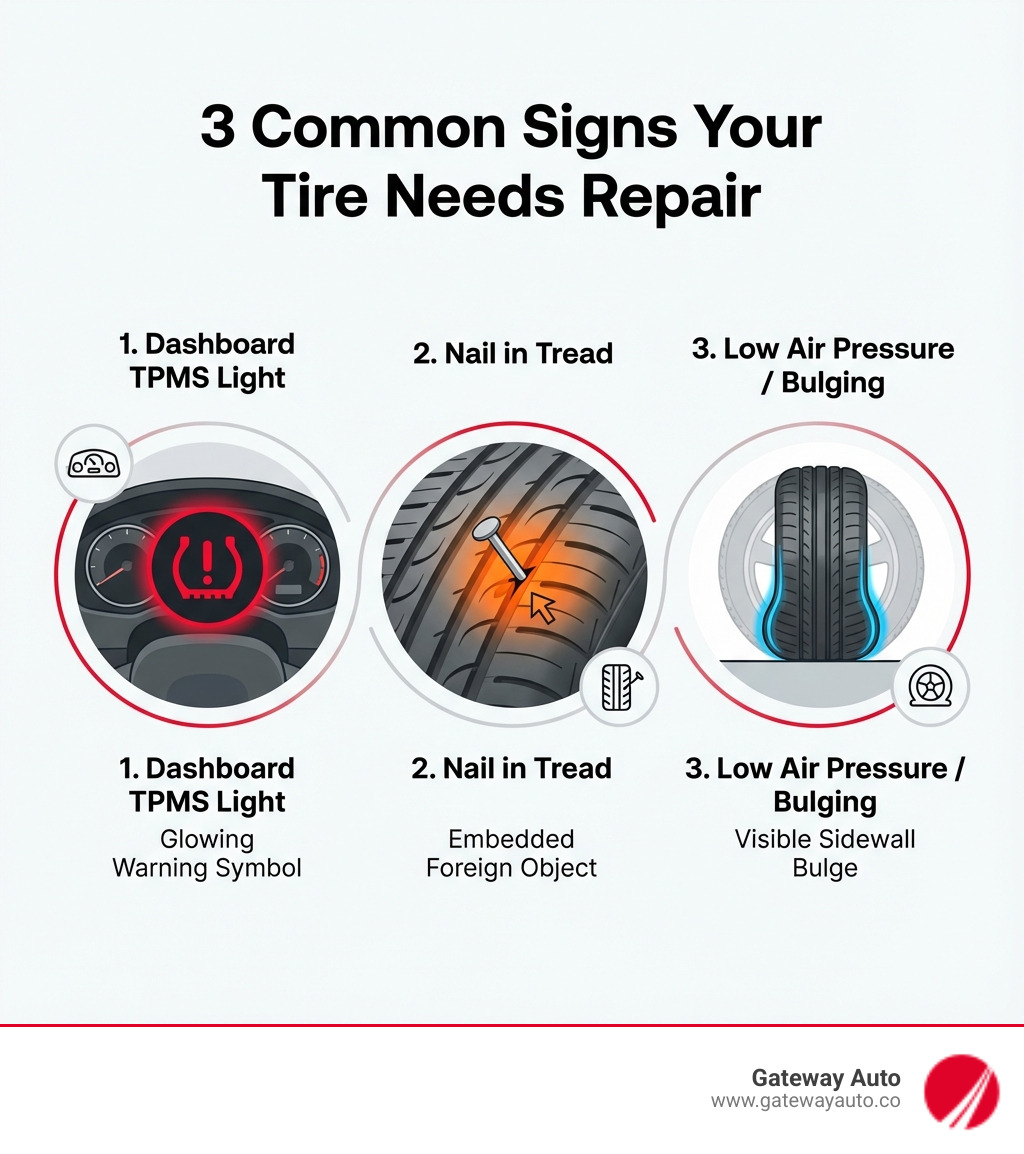
Here are the most common indicators that your tire needs professional repair:
- TPMS Warning Light

Your vehicle's Tire Pressure Monitoring System (TPMS) light illuminates when one or more of your tires are significantly underinflated. This is your car's way of sounding an alarm. Even if the tire doesn't look flat, low pressure can affect handling, fuel economy, and tire lifespan. It's a clear signal to get your tires checked immediately.Visible Damage (Nails, Screws, Cuts)This is often the easiest sign to spot. If you see a nail, screw, or any other foreign object lodged in your tire tread, or if you notice a cut or gouge, it's time for a professional inspection. Even a small puncture can lead to a slow leak and eventually a flat.
Constant Air LossDo you find yourself adding air to the same tire every few days or weeks? This is a classic sign of a slow leak. Slow leaks can be caused by a small puncture, a compromised valve stem, or a leak where the tire bead meets the rim. Don't just keep refilling; get it checked out.
Vehicle Pulling to One SideIf your car constantly drifts or pulls to one side when you're trying to drive straight, it could indicate a tire issue, such as uneven tire pressure, uneven wear, or even a damaged tire. While alignment issues can also cause this, it's always wise to rule out tire problems first.
Unusual Vibrations or NoisesAny new or unusual vibration while driving, especially at certain speeds, could point to a tire problem. This might include issues like an unbalanced tire, a separated tread, or internal damage. Similarly, strange noises like thumping, flapping, or a consistent hiss could indicate a flat spot, a foreign object, or a leak.
Recognizing these signs early can save you from bigger headaches down the road. Vehicle Maintenance Ensures Road Safety, and your tires are a critical part of that safety equation.
Common Tire Damage and Professional Repair Methods
When you bring your vehicle in for tire repair Omaha, our experienced technicians are looking for specific types of damage and applying industry-standard repair techniques. Based on our local experience and industry statistics, patching a puncture is the most common tire repair needed in Omaha.
Here's a closer look at the types of damage we frequently see and how we address them:
- Punctures: These are the most frequent culprits, often caused by nails, screws, or sharp debris found on Omaha's roads. Punctures typically occur in the tread area of the tire.
- Bead Leaks: The tire bead is the edge of the tire that seals against the wheel rim. If this seal is compromised due to corrosion on the rim, a bent rim, or improper tire mounting, it can lead to air slowly escaping.
- Valve Stem Issues: The valve stem is where you add air to your tire. Over time, these can crack, corrode, or become loose, allowing air to escape.
- Slow Leaks: As mentioned earlier, slow leaks can be caused by any of the above, or sometimes by very small, hard-to-find punctures.
Different Methods Used for Tire Repair
Not all tire repairs are created equal. For your safety and the longevity of your tires, professional repair is crucial. Here are the methods we use:
- Plugs (Temporary, for Emergency Use Only): Tire plugs are rubber-coated cords that are inserted into the puncture from the outside of the tire. While they can stop a leak quickly, they are considered a temporary fix. They don't involve removing the tire from the rim, so internal damage cannot be assessed. We strongly advise against relying on plugs as a permanent solution. They're good for getting you to a repair shop, but that's it.
- Patches (Internal, Professional Method): This is the gold standard for tire repair. A patch involves removing the tire from the wheel, inspecting the inside for damage, cleaning and preparing the area around the puncture, and then applying a rubber patch to the inner liner of the tire. This method creates a permanent, airtight seal.
- Patch-Plug Combination (Best Practice, Performed by Professionals): Often considered the best practice, this method combines the benefits of both. A plug is inserted through the puncture channel from the inside out, sealing the hole, and then a patch is applied over the internal opening. This ensures the entire puncture channel is sealed and the tire's internal structure is reinforced. This is the method we prefer for suitable punctures, as it offers the highest level of safety and durability.
The importance of professional Tire Repair for safety and vehicle performance cannot be overstated. An improperly repaired tire can lead to further air loss, uneven wear, or even a catastrophic blowout, putting you and others on the road at risk. Our ASE-certified technicians take the time to properly inspect and repair your tires, ensuring they meet safety standards and perform as they should.
Repair or Replace? Making the Right Call for Your Tires
One of the most common questions we hear is, "Can this tire be repaired, or do I need a new one?" It's a critical decision that balances safety, performance, and cost. While a repair is often possible, there are clear guidelines for when a tire is simply beyond saving.
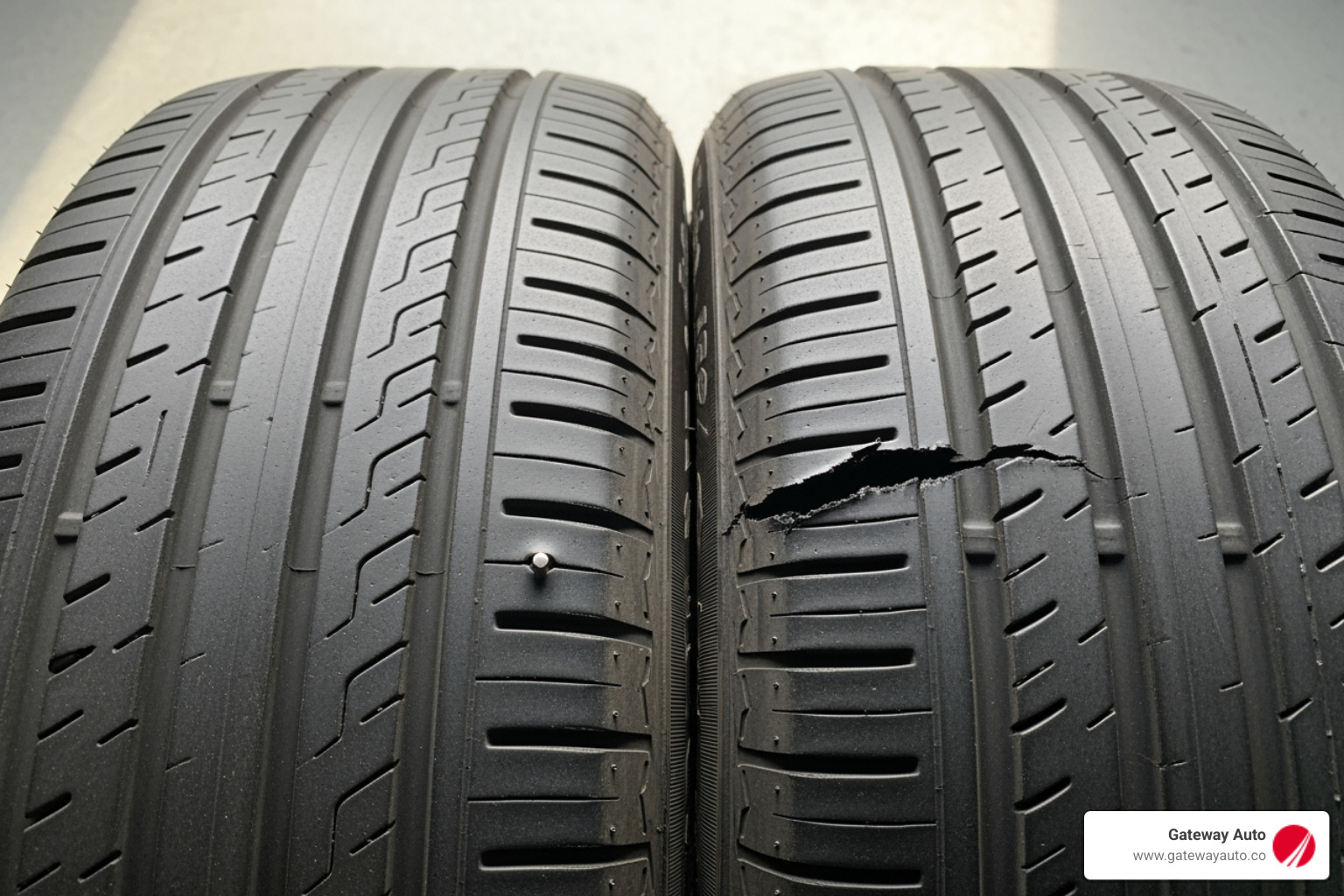
When to Repair:
A tire is typically a good candidate for repair if:
- Puncture in the Tread Area: The damage is located within the main tread area of the tire, roughly between the major grooves on the top surface.
- Puncture is Less Than 1/4 Inch in Diameter: Small punctures, usually from nails or screws, are generally repairable. Anything larger compromises the tire's structural integrity too much for a safe repair.
- No Other Damage: The tire has not been driven on while severely underinflated or flat, which can cause internal damage not visible from the outside. There should be no signs of previous improper repairs, belt separation, or other structural issues.
When to Replace:
It's more cost-effective—and certainly safer—to replace a tire rather than repair it if:
- Damage to the Sidewall or Shoulder: Any puncture, cut, or injury to the sidewall (the smooth vertical part) or shoulder (the curved area where the tread meets the sidewall) means the tire cannot be safely repaired. This area flexes too much for a patch to hold securely, and the structural integrity is severely compromised, leading to a high risk of blowout.
- Puncture is Larger Than 1/4 Inch: As mentioned, larger punctures cannot be adequately sealed or structurally reinforced.
- Multiple Previous Repairs: While there's no strict limit, a tire with too many repairs in close proximity or scattered across the tread may indicate weakened integrity. We'll assess this on a case-by-case basis, but sometimes it's just not worth the risk.
- Excessive Tread Wear: If the tire tread is worn down to the wear bars (typically 2/32nds of an inch), even a small puncture means it's time for a new tire. A worn tire already lacks grip and performance, and repairing it won't restore its safety features.
- Exposed Cords or Belts: If you can see the internal fabric or steel cords of the tire, it's definitely time for a replacement.
- Cracks, Bulges, or Separations: These are all signs of severe internal damage or aging, making the tire unsafe to use.
Making the right call between repair and replacement is crucial for your safety and your vehicle's performance. Our technicians will always provide an honest assessment and explain your options. Sometimes, the peace of mind that comes with a new tire is well worth the investment. For More info about our tire services, check out our dedicated page.
What to Expect from Tire Repair Omaha Services
When you're dealing with a tire issue, you want a straightforward solution from a team you can trust. Finding a trustworthy shop for tire repair Omaha doesn't have to be a guessing game. We believe in transparency, quality work, and getting you back on the road safely and efficiently.
How much does tire repair in Omaha cost?
The average cost for a tire repair in Omaha, NE, is around $45. However, this can vary depending on a few factors:
- Type of Repair: A simple patch-plug combination for a small puncture will typically fall within this average. More complex issues, like diagnosing a bead leak that requires significant cleaning of the rim, might cost slightly more due to the labor involved.
- Tire Size/Type: While less common for simple repairs, some very large or specialized tires (e.g., performance, run-flat) might have slightly higher repair costs due to their construction or handling requirements.
- Additional Services: Sometimes, a repair might be combined with other services like tire rotation or balancing, which would add to the overall cost but are often beneficial for tire longevity.
The good news is that 75% of tire repair shops in Omaha, NE, offer same-day service. This means you can often get your tire fixed and be on your way without significant delay, minimizing the disruption to your day.
What makes a great shop for tire repair in Omaha?
Choosing the right place for your tire repair Omaha needs is about more than just price. It’s about trust, expertise, and comprehensive care. Here’s what we believe sets a great tire repair shop apart:
- ASE-Certified Technicians: Look for shops staffed with Automotive Service Excellence (ASE) certified technicians. This certification means they've met rigorous standards for automotive knowledge and skills, ensuring your vehicle is in capable hands. Our team is proud to hold these certifications.
- Positive Customer Reviews: Word-of-mouth and online reviews are powerful indicators. Shops with consistently positive feedback often demonstrate a commitment to quality service, honesty, and customer satisfaction.
- Service Warranties: A reputable shop stands behind its work. Ask about warranties on parts and labor for your tire repair. This provides peace of mind that if an issue arises, you're covered.
- Comprehensive Services: A great tire shop doesn't just fix flats; it offers a full range of tire and related automotive services. This includes:
- Tire Rotation: Crucial for promoting even tread wear and extending the life of your tires. Did you know 90% of tire repair shops in Omaha, NE, offer tire rotation services? It's a standard practice for a reason.
- Wheel Alignment: Proper alignment prevents uneven tire wear, improves handling, and improves fuel efficiency.
- Tire Balancing: Ensures smooth driving by distributing the weight of the tire and wheel assembly evenly.
- New Tire Sales: Sometimes a repair isn't possible, and you need a replacement. A good shop will have a wide selection of quality tires and help you choose the right ones for your vehicle and driving style.
At Gateway Auto, we pride ourselves on being an all-in-one automotive center. We offer not just tire repair but also mechanical repair, collision services, used car sales, and detailing. This means we can provide comprehensive care under one trusted roof. For An overview of auto repair in Omaha, you can check out our detailed guide.
Frequently Asked Questions about Tire Repair
We often get a lot of questions about tire repair, and we're always happy to provide clear, straightforward answers. Here are some of the most common ones:
Are DIY tire plug kits a safe, permanent solution?
No, absolutely not. DIY tire plug kits, while widely available and seemingly convenient, are designed for temporary, emergency use only. Think of them as a band-aid to get you off the side of the road and to a professional repair shop.
Here's why they are not a permanent solution:
- No Internal Inspection: When you use a DIY plug, you're inserting it from the outside. This means you can't see what's happening inside the tire. Driving on a severely underinflated tire, even for a short distance, can cause invisible internal damage that a plug won't address.
- Compromised Seal: A plug alone may not create a truly airtight, permanent seal. Over time, it can leak or even fail, especially under the stresses of driving.
- Safety Risk: Relying on a DIY plug as a permanent fix can lead to sudden tire failure, which is extremely dangerous.
If you've used a DIY plug, bring your vehicle to us as soon as possible. We'll remove the tire, inspect it thoroughly for any internal damage, and perform a proper, permanent patch or patch-plug repair if the tire is still salvageable.
Can a tire with sidewall damage be repaired?
This is a firm no. A tire with any damage to its sidewall or shoulder (the curved area where the tread meets the sidewall) cannot be safely repaired.
Here's why replacement is necessary:
- Structural Integrity Compromised: The sidewall is designed to flex and bear significant load. A puncture or cut in this area severely compromises the tire's structural integrity.
- High Risk of Blowout: Because the sidewall flexes so much, a patch would not hold securely, and the weakened area is highly susceptible to a catastrophic blowout, especially at highway speeds.
- Manufacturer Guidelines: All major tire manufacturers and industry safety standards explicitly state that sidewall damage renders a tire unrepairable.
If your tire has sidewall damage, the only safe option is replacement. We understand this can be an unexpected expense, but your safety is always our top priority.
How often should I get my tires rotated?
We recommend getting your tires rotated every 5,000 to 7,500 miles, or as specified in your vehicle's owner's manual. This is a simple but incredibly effective maintenance step.
Why is regular tire rotation important?
- Promotes Even Tread Wear: Front and rear tires, as well as those on the left and right sides of your vehicle, wear differently due to variations in weight distribution, braking, and steering. Regular rotation ensures that each tire wears evenly over its lifespan.
- Extends Tire Life: By distributing wear evenly, you maximize the usable life of all four tires, saving you money in the long run.
- Improves Handling and Performance: Evenly worn tires contribute to more consistent traction, better handling, and a smoother ride.
- Often Done with Oil Changes: Many drivers find it convenient to schedule tire rotations to coincide with their routine oil changes, making it easy to remember and stay on top of maintenance.
Tire rotation is often an overlooked service, but it's a key part of maintaining your tires and ensuring your vehicle remains safe and efficient on Omaha's roads.
Conclusion: Get Back on the Road Safely in Omaha
Dealing with a damaged tire is never fun, but knowing the signs, understanding your repair options, and choosing a reliable service provider can make all the difference. We've covered the common types of damage, the professional repair methods that ensure your safety, and the crucial decision of when to repair versus when to replace. We also looked at what makes a great tire repair Omaha shop, emphasizing expertise, transparency, and comprehensive care.
For comprehensive care, from tire services to full vehicle maintenance, trust an all-in-one center like Gateway Auto. We're here to be your partners in vehicle ownership, offering peace of mind with our ASE-certified technicians and commitment to complete vehicle care. Whether it's a simple puncture or a more complex automotive issue, we've got you covered.
Don't let a flat tire deflate your day. If you're in Omaha or La Vista and need expert tire repair or any other automotive service, we're here to help. Schedule your auto repair service today and let us get you back on the road safely and efficiently.