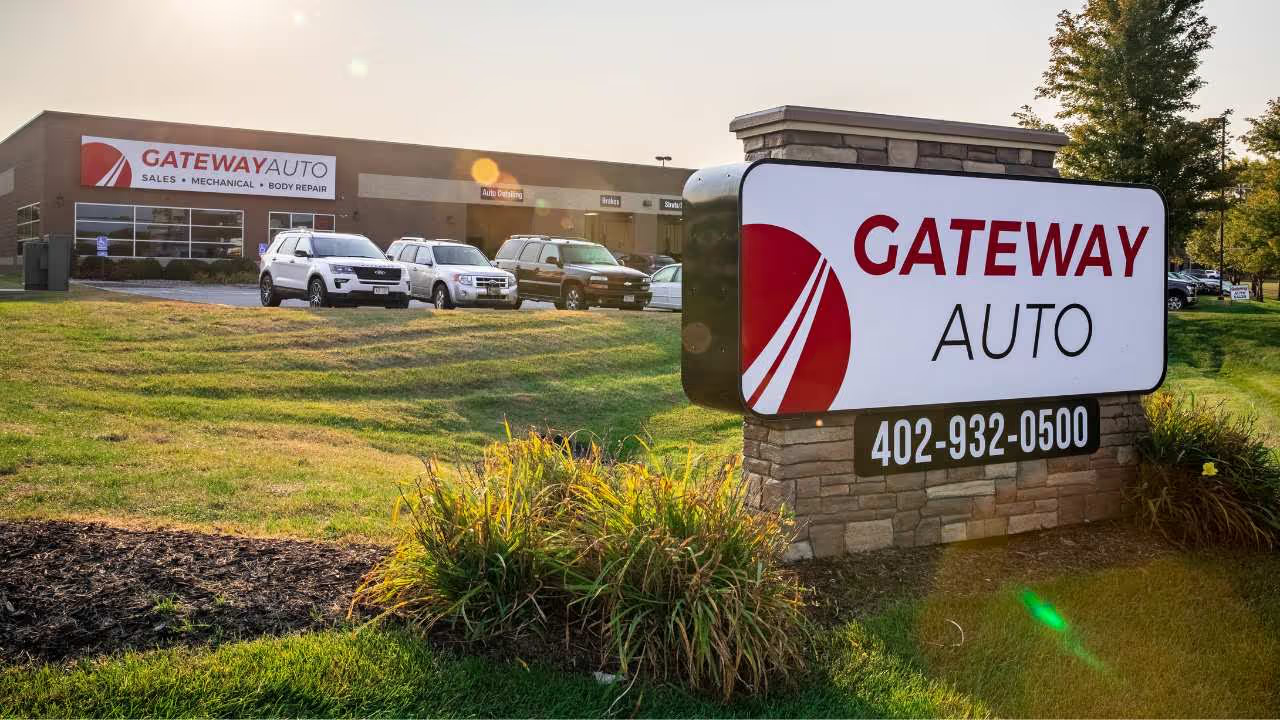
Get Hail Damage from the recent storms?

Don't wait 6 months to get it fixed, our collision center is ready and available to help!

Your Car's Best Friend: Navigating the World of Automotive Repair

automotive repair shopsautomotive repair shops
Published on
January 31, 2026

Why Choosing the Right Automotive Partner Matters

automotive repair shop - automotive repair shops

Automotive repair shops are essential service providers that maintain, diagnose, and fix vehicles to keep them safe and reliable on the road. Understanding the different types of repair facilities, what to look for in a quality shop, and how to communicate effectively with mechanics can save you time, money, and stress while ensuring your vehicle receives proper care.

Key factors to consider when selecting an automotive repair shop:

  • Type of facility - Full-service centers, locally-owned shops, or convenient chains each offer different advantages
  • Certifications - Look for ASE-certified technicians and manufacturer training
  • Warranties - Minimum 12-month/12,000-mile guarantees on repairs
  • Reputation - Check online reviews, Better Business Bureau ratings, and ask for recommendations
  • Communication - Clear estimates, transparent pricing, and willingness to explain repairs
  • Services offered - Ensure they can handle your specific vehicle's needs

The U.S. automotive repair and maintenance market is projected to reach $450 billion by 2027, serving approximately 350,000 repair facilities nationwide. With so many options available, finding a trustworthy partner who prioritizes your vehicle's health and your peace of mind is crucial.

Your vehicle is likely one of your most important investments, getting you to work, school, appointments, and everywhere else you need to go. When something goes wrong, you need a repair shop that treats your car with the same care you do—not just another transaction.

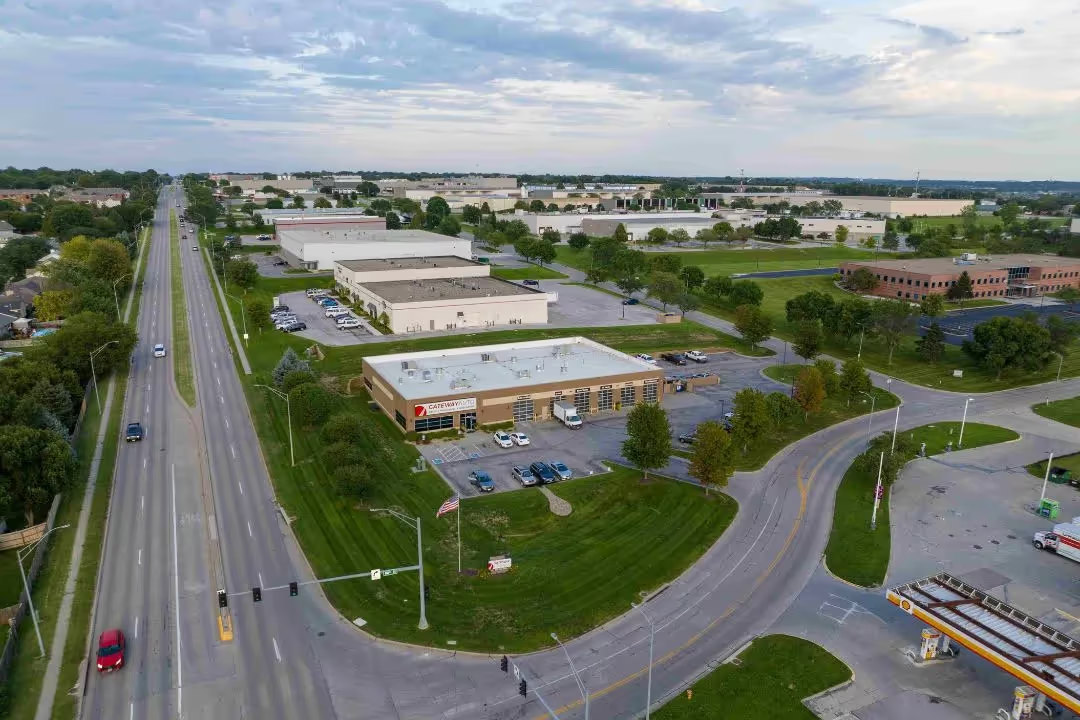
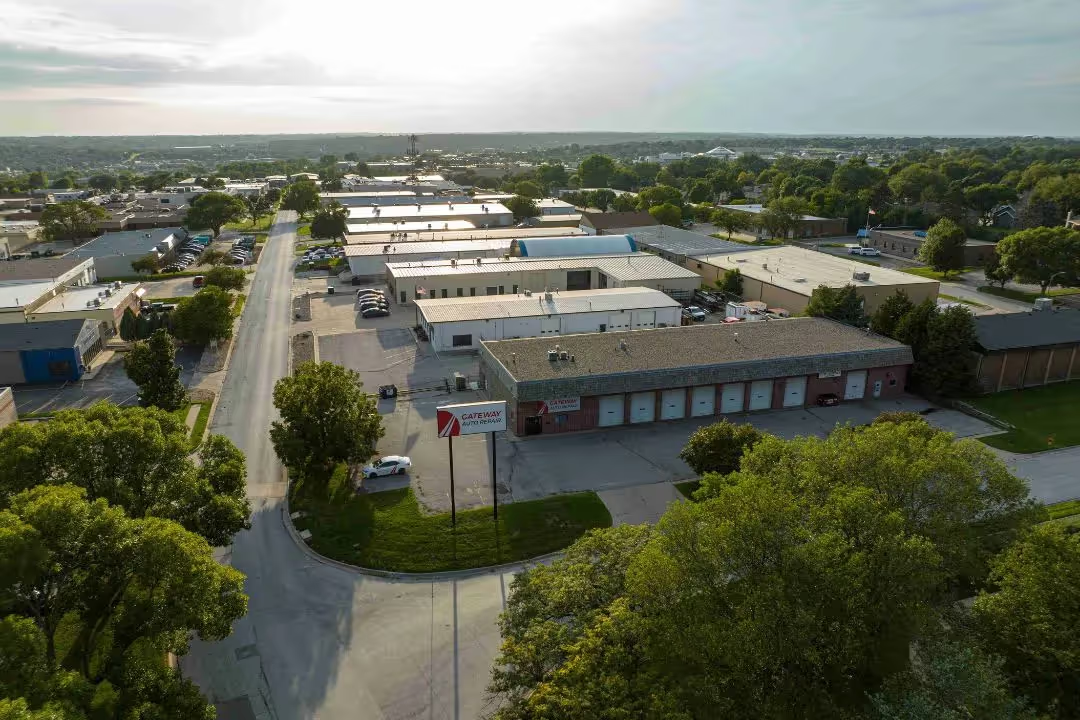
I'm Ben Toscano, and I've been helping Omaha families find reliable solutions at automotive repair shops since founding Gateway Auto in 2002. Our family-owned business has built lasting relationships with customers who trust us to keep their vehicles running safely for over two decades.

Infographic showing the decision-making process for choosing an automotive repair shop, including steps: 1) Research online reviews and ask for recommendations, 2) Verify ASE certifications and technician qualifications, 3) Compare written estimates and warranty terms, 4) Test the shop with smaller services first, 5) Evaluate communication and transparency - automotive repair shops infographic infographic-line-5-steps-blues-accent_colors

Quick automotive repair shops terms:

Understanding the Landscape: Types of Automotive Repair Facilities

When your car needs attention, the first question often is: "Where do I take it?" The world of automotive repair shops isn't one-size-fits-all. We have different types of facilities, each with its unique strengths and weaknesses. Understanding these can help you make an informed decision for your vehicle's specific needs, whether you're in Omaha, La Vista, or anywhere in Nebraska.

modern well-equipped service center - automotive repair shops

Full-Service Automotive Repair Centers

These are comprehensive facilities, often associated with dealerships or large independent shops, that can handle almost any repair or maintenance task your vehicle might need.

These centers offer several advantages, including factory-trained technicians who are familiar with your vehicle's specific make and model. They also invest in advanced diagnostic tools for complex electronic issues and are the go-to for warranty work and recall repairs. You can expect comprehensive services, from oil changes to engine overhauls, often using Original Equipment Manufacturer (OEM) parts for a perfect fit. We at Gateway Auto pride ourselves on offering a wide range of services, including European Service, ensuring comprehensive care.

On the downside, the specialized training and equipment can lead to higher labor rates, which can be at the higher end of the $110 national average. Additionally, the service in these larger operations might feel less personalized, as you may not always interact with the same staff.

Locally-Owned and Community-Focused Shops

These are the backbone of the automotive repair industry, representing approximately 70% of all auto repair shops in the United States. These are often the shops that become a trusted part of your community, like us here at Gateway Auto in Omaha.

The main advantages of these shops include personalized service, as they often build long-term relationships with customers, fostering a sense of trust. They typically have lower labor rates due to lower overheads and may be more willing to negotiate on price, according to Consumer Reports. This approach leads to high customer satisfaction, with an average rate of 85%. As community-focused businesses, they rely on their local reputation and offer flexibility with parts, providing both OEM and aftermarket options to save you money.

However, there are some potential downsides. Some independent shops may not have the highly specialized, manufacturer-exclusive diagnostic equipment found at dealerships. Additionally, their warranties might be shop-specific rather than nationwide, although many do participate in larger warranty networks.

If you're looking for a reliable, community-focused shop, we've got you covered on How to Find a Reputable Auto Shop Near You.

Convenient Service Providers

This category includes chain repair facilities and quick-lube establishments. They are designed for speed and accessibility, often focusing on common, routine services.

The benefits of these providers are their accessible locations, extended hours, and standardized pricing for common services. Many also offer nationwide warranties on their work, which provides peace of mind. They are an excellent choice for quick, common repairs like oil changes and tire rotations.

On the other hand, the experience level of technicians can vary significantly between locations. These facilities may also have a limited scope, as they are not always equipped for complex diagnostics or specialized repairs. Additionally, some consumers have reported feeling pressured into accepting additional, unnecessary services.

How to Find Trustworthy and High-Quality Automotive Repair Shops

Finding a trustworthy automotive repair shop is akin to finding a good doctor – it’s about building a relationship based on trust, expertise, and clear communication. With so many options available in Omaha and beyond, how do you sift through them to find your car's best friend?

person reading online reviews for a mechanic on a smartphone - automotive repair shops

Start with Research and Recommendations

We always recommend starting your search with a little detective work.

  • Word-of-mouth: Ask your friends, family, and colleagues in Omaha or La Vista for their recommendations. Personal experiences are invaluable. A shop that consistently satisfies your trusted circle is a great starting point.
  • Online reviews: Online reviews are a goldmine. Over 60% of consumers check reviews before selecting a repair shop. Look at platforms like Google, Yelp, and even specialized automotive review sites. Pay attention not just to the star rating, but also to the content of the reviews. Do they mention honesty, quality of work, communication, and fair pricing? A shop with consistently positive reviews highlighting transparency and expertise is a strong candidate.
  • Specialty shops: If you drive a specific make (like a European luxury car) or a specialized vehicle (like an EV), consider shops that specialize in that brand or technology. They are more likely to have the specific tools and training required.
  • Check a shop's reputation: The Better Business Bureau (BBB) is an excellent resource to check for any unresolved complaints against a shop. Auto repair shops, unfortunately, rank 16th on the BBB's list of companies that receive complaints, so this step is crucial. You can check a shop's reputation on the BBB website.
  • Proximity and convenience: While quality is paramount, convenience matters. Customers are willing to travel an average of 5 miles to visit a trusted auto repair shop. Consider the shop's location relative to your home or work, their hours of operation, and whether they offer amenities like shuttle services or loaner cars.

Look for Key Qualifications and Certifications

A shop's credentials speak volumes about its commitment to quality and professionalism.

  • ASE certification: This is the gold standard for automotive technicians. ASE (Automotive Service Excellence) certification means a technician has passed rigorous tests and has at least two years of relevant work experience. Technicians must retest every five years to maintain their certification, ensuring they stay current with evolving automotive technology. We're proud to say that ASE-certified technicians are employed by over 80% of auto repair shops, including ours. You can learn about ASE standards here.
  • Manufacturer training: For some complex systems, especially in newer vehicles, technicians with manufacturer-specific training can be a huge asset.
  • Shop cleanliness and organization: In addition to repair quality, a clean, well-organized shop often indicates a professional operation that pays attention to detail.
  • Modern equipment: As cars become more technologically advanced, shops need to invest in the latest diagnostic and repair equipment. Don't be afraid to ask about the tools they use.

The Importance of Warranties and Guarantees

A reputable automotive repair shop stands behind its work. A strong warranty policy is a clear indicator of their confidence in their services and parts.

  • Minimum 12-month/12,000-mile warranty: A good shop will offer at least a 12-month or 12,000-mile warranty on most repairs, sometimes even longer. This covers both parts and labor. For example, AAA Approved Auto Repair facilities offer a 24-month/24,000-mile warranty, which is a great benchmark.
  • Parts and labor coverage: Ensure the warranty clearly states it covers both the replacement part and the labor to install it, should an issue arise.
  • Peace of mind: Knowing your repair is guaranteed provides significant peace of mind. It shows the shop is committed to fixing the problem right the first time.
  • Shop's confidence: A generous warranty signals that the shop uses quality parts and employs skilled technicians. It’s their way of saying, "We trust our work, and you should too."

Understanding your rights regarding auto repair warranties is also important. The FTC provides valuable information on understanding auto warranties.

Decoding the Repair Process: Communication and Costs

Once you’ve found a promising automotive repair shop, the next step is navigating the repair process itself. This largely comes down to effective communication and understanding what you’re paying for.

How to Effectively Communicate with Your Mechanic

Clear communication is key to a successful repair and avoiding misunderstandings. Think of your mechanic as a detective, and you’re providing the clues.

  • Describe symptoms clearly: Be as detailed as possible about what you're experiencing. When does the noise happen? What does it sound like? When did the problem start? Is there a specific smell? The more information you provide, the easier it is for our technicians to diagnose the issue accurately. For instance, if you hear a strange noise, our blog post Don't Ignore Your Car After Hearing These 7 Engine Noises might help you categorize it.
  • Avoid self-diagnosis: While it's tempting to tell your mechanic what you think is wrong, it's best to stick to describing the symptoms. Offering a diagnosis can sometimes mislead the technician or even make you liable for repairs based on your incorrect assessment. Trust their expertise!
  • Ask for a road test: If the problem only occurs under specific driving conditions (e.g., at certain speeds, during braking, or turning), ask the mechanic to take a road test with you. This can help them experience the issue firsthand.
  • Request to see old parts: A reputable shop should be willing to show you the worn or broken parts they replaced. This provides tangible evidence of the necessary repair.

Understanding Your Repair Estimate

Before any work begins, you should receive a clear, written estimate. This document is your roadmap for the repair journey.

  • Written estimates: Always insist on a written estimate. This should detail the projected costs for both parts and labor. It helps prevent surprises and ensures you and the shop are on the same page.
  • Parts and labor breakdown: The estimate should clearly separate the cost of parts from the labor charges. This allows you to see exactly where your money is going. The average hourly labor rate for auto repair services in the U.S. is $110, so understanding this breakdown is crucial for assessing fairness.
  • Authorization for extra work: A trustworthy shop will contact you for authorization if they find additional necessary repairs that exceed the original estimate, especially if the cost difference is significant (e.g., more than 10%). This is a best practice we adhere to.
  • Fair pricing: Don't hesitate to compare estimates, especially for larger repairs. Consumer Reports notes that independent shops are often more likely to negotiate on price. We believe in transparent pricing at Gateway Auto. For more insights into what goes into your bill, check out More on Vehicle Repair Cost. You can also get a free estimate from us to help you budget and understand potential costs.

Common Services Offered by Automotive Repair Shops

Modern vehicles are complex machines, requiring a variety of services to keep them running optimally. Here at Gateway Auto in Omaha, we offer a full spectrum of services to address everything from routine upkeep to major repairs.

Routine Maintenance and Inspections

Preventative maintenance is the best way to extend your vehicle's lifespan and avoid costly breakdowns. Think of it as your car's regular check-up.

  • Oil Changes: The lifeblood of your engine, regular oil changes are perhaps the most fundamental maintenance task. Following your manufacturer's recommendations, adjusted for your driving habits, is key.
  • Tire Repair and Services: This includes tire rotations, balancing, pressure checks, and repairs for punctures. Proper tire maintenance ensures safety, fuel efficiency, and extends tire life.
  • Fluid checks and exchanges: Beyond oil, your car relies on various fluids: transmission fluid, brake fluid, coolant, power steering fluid, and windshield washer fluid. Regular checks and timely exchanges keep these systems operating smoothly.
  • Factory Scheduled Maintenance: Your car's manufacturer provides a detailed maintenance schedule designed to keep your vehicle in top condition. Adhering to this schedule is crucial for performance and warranty validity.
  • Pre-Purchase Inspections: Before buying a used car, a thorough inspection can save you from inheriting someone else's problems. It's a small investment that can prevent major headaches down the road.

System-Specific Repairs

When something goes wrong with a particular system, specialized repairs are needed.

  • Brakes: Essential for safety, brake services include pad replacement, rotor resurfacing or replacement, fluid flushes, and caliper repairs. Squealing, grinding, or a soft pedal are all signs to get them checked.
  • Engine Repair: From minor tune-ups to complex internal engine work, these repairs address issues affecting your car's power, efficiency, and overall performance.
  • Transmissions: The transmission is a vital component that transfers power from the engine to the wheels. Repairs can range from fluid changes to complete rebuilds or replacements.
  • Suspension and Steering Repair: These systems ensure a smooth ride, good handling, and proper steering control. Services include shock and strut replacement, alignment, and power steering repairs.
  • Air Conditioning Service & Repair: Keeping you cool in the summer and defrosted in the winter, AC systems require regular maintenance like refrigerant recharges and component repairs.

Diagnostic Services

Modern cars often communicate problems through dashboard warning lights or subtle changes in performance. Diagnostic services help translate these signals into actionable repairs.

  • Check Engine Light: This light can indicate a vast range of issues, from a loose gas cap to a serious engine problem. Diagnostic tools are used to read error codes and pinpoint the underlying cause.
  • Engine Electrical System: Issues with your battery, alternator, starter, or wiring can cause starting problems, dim lights, or system malfunctions.
  • Performance issues: If your car is hesitating, losing power, or experiencing poor fuel economy, diagnostic services can identify problems with fuel delivery, ignition, or exhaust systems.
  • Noises and vibrations: Strange noises (squeals, grinding, clunks) or vibrations often point to mechanical issues that require expert diagnosis to locate and resolve.

Know Your Rights as a Car Owner

As a vehicle owner in Omaha, La Vista, or anywhere in Nebraska, you have certain rights when it comes to vehicle maintenance and repair, especially concerning factory warranties. Understanding these rights can protect you from unnecessary expenses and ensure fair service.

The Magnuson-Moss Warranty Act

This federal law is a powerful ally for consumers. It essentially protects you from manufacturers trying to force you into using their specific dealerships or parts for service.

  • Right to choose your repair shop: The Act states that a manufacturer cannot void your warranty simply because you had routine maintenance or repairs performed by an independent shop or used aftermarket parts. This means you can get your oil changed or brakes serviced at Gateway Auto without fear of losing your factory warranty.
  • Using aftermarket parts: Similarly, using high-quality aftermarket parts for repairs generally does not void your warranty, unless the manufacturer can prove that the aftermarket part caused the failure.
  • Voiding warranties: A warranty can only be voided if there is evidence of abuse, neglect, or improper maintenance or repair that directly caused the component failure.
  • Lease agreements: Be aware that lease agreements may have different requirements regarding where you must have your vehicle serviced or what types of parts you can use. Always check your lease contract carefully.

Handling Repair Disputes

Even with the best intentions, disputes can sometimes arise. Knowing how to handle them effectively can save you stress and money.

  • Documentation: Keep meticulous records of all repairs, estimates, invoices, and communications with the shop. This documentation is your strongest asset in a dispute.
  • Communicating with management: If you have an issue, first try to resolve it directly with the service manager or owner of the automotive repair shop. Often, a misunderstanding can be cleared up or a solution reached at this level.
  • Consumer protection agencies: If direct communication doesn't resolve the issue, you can contact your local consumer protection agency or the Better Business Bureau (BBB). They can often mediate disputes.
  • Mediation: Some states offer mediation or arbitration services specifically for auto repair disputes. These can be less costly and time-consuming than legal action.

Frequently Asked Questions about Automotive Repair

We often hear similar questions from our valued customers in Omaha and La Vista. Here are some of the most common ones, along with our expert advice.

How often should I take my car for maintenance?

This is one of the most common questions we get! The best answer is to follow your vehicle manufacturer's schedule as outlined in your owner's manual. This schedule is specifically designed for your car's make and model.

However, it's also important to adjust for driving habits. If you do a lot of stop-and-go city driving, frequently tow heavy loads, or drive in extreme temperatures, you might need more frequent maintenance. These are considered "severe driving conditions," and your manual will usually have a separate, more rigorous schedule for them. Regular preventive maintenance is crucial for your vehicle's longevity and safety. To learn more, read Why Is Preventive Auto Maintenance Important?.

Is it cheaper to go to a locally-owned shop than a full-service center?

Generally, yes, it can be cheaper. Locally-owned automotive repair shops like Gateway Auto often have lower overhead costs compared to large dealerships or chain service centers. This can translate to lower labor rates for customers.

Independent shops also tend to have more flexibility in sourcing parts, allowing them to offer a choice between OEM and high-quality aftermarket options, which can further reduce costs. Our focus is on providing excellent value and quality to our community, ensuring you get the best service for your dollar. For a more comprehensive look at local options, see our Auto Repair Omaha: Complete Guide.

What should I do if my check engine light comes on?

Don't panic, but also don't ignore it! The check engine light is your car's way of telling you that something is wrong, even if you don't immediately notice a performance issue.

First, check your gas cap. A loose or faulty gas cap is a surprisingly common reason for the check engine light to illuminate. Tighten it securely, drive for a bit, and see if the light goes off. If not, it's time to seek professional diagnosis. While it could be a minor issue, it could also signal a more serious problem that affects your vehicle's emissions, fuel economy, or even lead to costly damage if left unaddressed. We have more detailed information on Check Engine Light diagnosis and common causes.

Conclusion

Navigating automotive repair shops can seem daunting, but with the right knowledge and a clear understanding of your options, it becomes much simpler. We've explored the different types of facilities, from comprehensive full-service centers to the personalized touch of locally-owned shops, and discussed how to identify a trustworthy partner through research, certifications, and strong warranty policies.

Effective communication with your mechanic and a clear understanding of repair estimates are crucial for a smooth and fair service experience. We've also highlighted the extensive range of services available, from routine oil changes and tire care to complex engine and transmission repairs, ensuring your vehicle remains safe and reliable on the roads of Omaha, La Vista, and beyond.

Your vehicle is a significant investment that deserves expert care. By understanding your rights as a car owner and knowing what to look for in a repair facility, you empower yourself to make informed decisions. At Gateway Auto, we are committed to being your vehicle's best friend—your trusted partner for all its needs.

We offer mechanical repair, collision services, used car sales, and detailing, all under one trusted roof. This comprehensive approach ensures that whether your car needs a routine check-up or a major overhaul, we have the expertise and dedication to provide top-notch service.

We invite you to explore our full range of auto repair services and experience the Gateway Auto difference.

Need car help in Omaha?

From quality used cars, to honest service & collision repair. Gateway Auto does it all right here in Omaha, NE.

All your automotive needs under one roof

Gateway Auto offers service, collision, fleet and quality vehicle sales under the same trusted brand to ensure you stay on the road with a team by your side.