



Why Driveshaft Carrier Bearing Symptoms Are Easy to Miss — Until They're Not
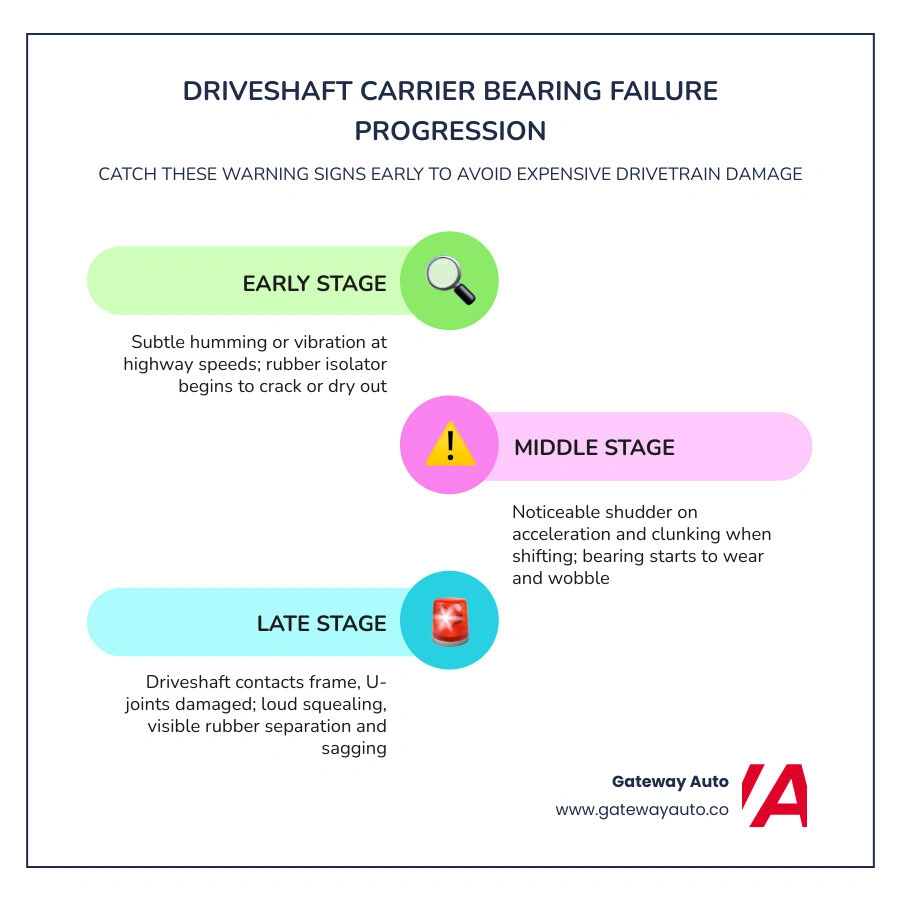
Driveshaft carrier bearing symptoms can be subtle at first — a faint hum at highway speed, a slight shudder when pulling away from a stop. Then, over weeks or months, they get harder to ignore.
Here's a quick look at the most common signs your carrier bearing may be failing:
- Vibration that worsens at higher speeds, felt through the floorboard or center console
- Humming or droning noise from under the vehicle that increases with speed
- Shudder on acceleration from a stop
- Clunking sound when shifting between drive and reverse
- Squeaking or squealing at low speeds that may quiet down once the vehicle warms up
- Visible rubber damage — cracking, sagging, or separation around the bearing mount
- Driveshaft wobble visible during an under-vehicle inspection
These symptoms don't always mean the bearing itself has failed. Often, the rubber isolator surrounding it deteriorates first — and that's still a problem worth catching early.
Ignoring it can lead to damaged U-joints, driveshaft wear, and in the worst cases, a driveshaft that contacts the underside of your vehicle. What starts as a relatively inexpensive repair can turn into a much bigger bill.
I'm Ben Toscano, founder of Gateway Auto, and in over 20 years of diagnosing drivetrain problems for Omaha-area drivers, I've seen plenty of driveshaft carrier bearing symptoms that were written off as tire noise or road vibration until real damage had already set in. This guide will walk you through exactly how to identify, test, and address the problem before it gets worse.
Recognizing Driveshaft Carrier Bearing Symptoms Under Your Vehicle
To understand why a carrier bearing fails, it helps to know what it actually does. On longer-wheelbase trucks, SUVs, and some all-wheel-drive cars, a single, long driveshaft would bend or vibrate excessively at high speeds. To prevent this, manufacturers use a two-piece driveshaft supported in the middle by a carrier bearing (also known as a center support bearing).
This assembly consists of a rolling ball bearing pressed onto the shaft, housed inside a heavy-duty rubber isolator bracket bolted to the vehicle's frame. This design allows the driveshaft to rotate smoothly while accommodating suspension movement and absorbing vibrations.
Over time, environmental factors and physical stress wear down these components. According to the technical guide on 7 Symptoms of a Bad Carrier Bearing (And Replacement Cost in 2026), the rubber isolator often degrades, dry-rots, or tears long before the internal metal bearing actually fails. When the rubber loses its structural integrity, the driveshaft begins to wobble, leading to a cascade of speed-related vibrations and noises.
Common Driveshaft Carrier Bearing Symptoms You Can Feel
When a carrier bearing or its rubber mount begins to fail, the physical sensations inside the cabin are hard to ignore. The most common physical indicators include:
- Acceleration Shudder: You will often feel a violent, low-frequency shudder or shaking right as you accelerate from a complete stop. This occurs because the initial torque twists the driveshaft, and without a solid rubber mount to hold it steady, the shaft thrashes within the bracket.
- Highway-Speed Vibration: As you speed up, a high-frequency vibration may develop, typically felt directly through the floorboards, center console, or seats rather than the steering wheel.
If you are experiencing these physical sensations, it is crucial to have your drivetrain evaluated. You can learn more about how we diagnose and repair these issues on our Driveshaft, CV Joint and Axle Repair page.
Auditory Driveshaft Carrier Bearing Symptoms to Listen For
A failing center support bearing also makes its presence known through distinct noises that change depending on your vehicle's speed:
- Howling or Whining: A dry or worn-out bearing will emit a continuous howling, droning, or growling noise. This sound is often mistaken for loud mud tires or a bad wheel bearing, but it originates from directly beneath the center of the cabin.
- Low-Speed Squeaking: At very low speeds (like rolling through a parking lot), you might hear a high-pitched, rhythmic squeaking. This is the sound of dry, unlubricated metal bearings rubbing together. Sometimes, this noise temporarily quiets down as the bearing spins and warms up, but the underlying damage remains.
- Metallic Clunking: If the rubber isolator has completely torn, the driveshaft will bang against the metal bracket. This causes a distinct metallic clunk when you shift from Drive to Reverse, or when you suddenly step on or off the gas pedal.
For a deeper dive into isolating these sounds, check out the diagnostic tips in this guide on How to Find the Cause of Your Carrier Bearing Noise - Super ATV.
What Causes a Carrier Bearing to Fail?
Carrier bearings are highly durable components, but they are not indestructible. Several factors accelerate their wear:
- Age and Mileage: Most factory carrier bearings last between 80,000 and 150,000 miles. However, Omaha's harsh seasonal temperature swings and winter road salt accelerate the dry-rotting of the rubber isolator.
- Suspension Lift Kits: Modifying your truck's suspension height changes the working angles of the driveshaft. This puts constant, unintended lateral pressure on the center support bearing, causing it to wear out prematurely.
- Moisture and Contamination: Driving through deep water, mud, or rough off-road terrain can wash away the bearing's factory grease or introduce abrasive dirt into the seal.
Because suspension geometry plays such a massive role in driveline longevity, we always recommend checking your alignment and suspension components alongside any drivetrain work. You can read more about how we handle these systems on our Suspension and Steering Repair page.
How to Test and Diagnose a Bad Center Support Bearing
If you suspect your vehicle is exhibiting driveshaft carrier bearing symptoms, a systematic diagnostic approach is the best way to confirm your suspicions before ordering replacement parts. For a comprehensive look at bearing designs and engineering, refer to The Ultimate Guide to Driveshaft Carrier Bearing | BYWB Bearing.
Step-by-Step DIY Inspection and Wiggle Test
You can perform a basic preliminary inspection at home with a few standard safety tools.
- Safety First: Park your vehicle on a flat, level surface. Place heavy wheel chocks in front of and behind the tires. Raise the vehicle using a high-quality floor jack and secure it safely on heavy-duty jack stands. Never crawl under a vehicle supported only by a hydraulic jack.
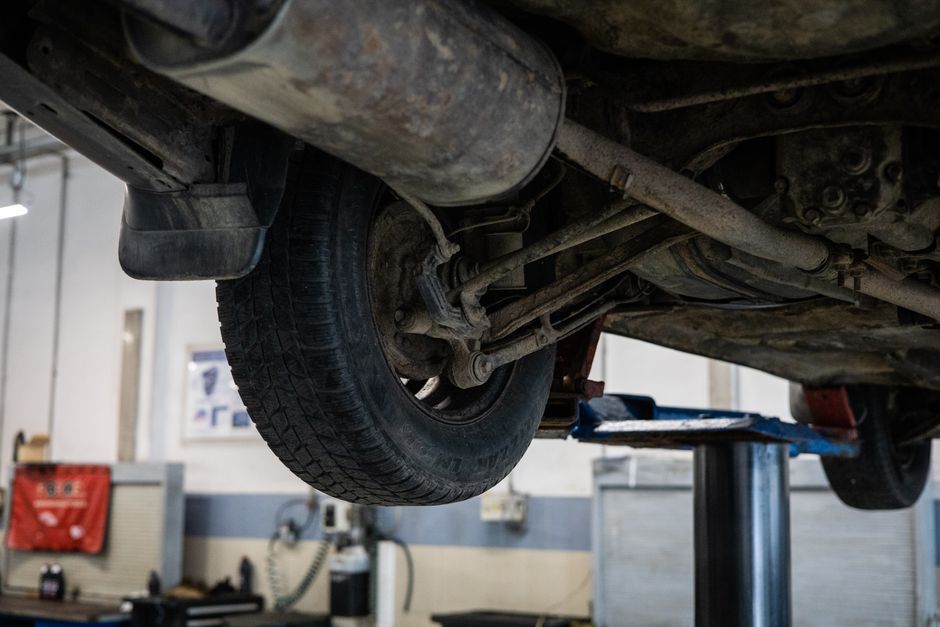
- The Visual Inspection: Locate the carrier bearing near the middle of the vehicle's underside. Use a flashlight to inspect the rubber surrounding the bearing. Look for dry rot, deep cracks, tears, or areas where the rubber has completely separated from the metal bracket.
- The Wiggle Test: Firmly grab the driveshaft on either side of the carrier bearing assembly. Push and pull the shaft up, down, left, and right. While a tiny amount of play is normal due to the flexibility of the rubber, the driveshaft should not clunk, bounce around loosely, or hit the metal bracket.
- The Spin Test: Place the vehicle's transmission in Neutral (ensuring the drive wheels are safely off the ground). Spin the driveshaft by hand. It should rotate smoothly and silently. If you hear grinding, clicking, or feel rough resistance as it spins, the internal ball bearing has failed.
If you aren't comfortable climbing under your vehicle to perform these checks, we can handle it for you. Learn more about our comprehensive inspection process on our Vehicle Inspection Omaha page.
Differentiating Carrier Bearings from U-Joints and Tires
Because many driveline components share similar symptoms, misdiagnosis is common. Here is how to tell them apart:
- Universal Joints (U-Joints): Worn U-joints also cause vibrations and clunking. However, a bad U-joint will typically produce a high-pitched squeak that matches wheel speed exactly, and you can visually spot rust dust escaping from the joint seals. To test, hold the driveshaft and try to twist the joint; there should be absolutely zero rotational play.
- Unbalanced Tires: Tire vibrations are highly speed-specific (often starting around 55–60 mph) and will almost always shake your steering wheel or the entire cabin consistently. A carrier bearing vibration is more likely to cause a distinct shudder specifically during low-speed acceleration.
- Wheel Bearings: A failing wheel bearing produces a growl or hum that changes in volume when you gently sway the vehicle left and right while driving. A carrier bearing's noise remains constant regardless of steering input.
Understanding these differences is key to avoiding unnecessary repairs. For a broader look at vehicle troubleshooting, read our Auto Repair Complete Guide.
Replacement Costs and Upgraded Options
If your diagnosis confirms that the center support bearing is shot, you have a few options.
For a standard passenger vehicle or light truck, a replacement carrier bearing part typically costs between $40 and $200. Professional labor usually ranges from $200 to $400, bringing the total average repair cost to $300 to $600. In some cases, the total cost can be higher, particularly if the manufacturer only sells the carrier bearing as part of a complete, pre-assembled driveshaft assembly.
Is it a DIY job? Replacing a carrier bearing requires separating the two-piece driveshaft. It is absolutely critical to mark the alignment (phasing) of the shafts before pulling them apart. If they are reassembled even one spline out of alignment, the driveshaft will be severely unbalanced, causing violent vibrations that can ruin your transmission or differential. Because of this, and the need for a hydraulic press to install the new bearing, most drivers prefer to hand this job off to professionals.
For truck owners—especially those driving lifted Toyota Tacomas—there are heavy-duty aftermarket upgrades worth considering. A popular modification is swapping the weak factory carrier bearing for a more robust Ford Ranger-style carrier bearing, which offers a much stronger rubber isolator designed to survive harsher driveshaft angles.
At Gateway Auto, our ASE-certified technicians have spent more than two decades helping Omaha and La Vista drivers keep their vehicles running smoothly. We pride ourselves on honest diagnostics, clear communication, and fixing it right the first time.
If you are noticing unusual vibrations, strange hums, or suspect your vehicle is showing driveshaft carrier bearing symptoms, don't wait for a minor issue to become an expensive breakdown. Schedule an appointment with our team today on our Trusted Auto Repair Omaha page, or visit our specialized Driveshaft, CV Joint and Axle Repair department to get your vehicle back on the road safely.
.avif)

