


Belts, Hoses & Fluid Service in Omaha
Belts, Hoses & Fluids

Warning signs
- Squealing from the engine on startup or when you turn the wheel
- Visible cracks, fraying, glazing or missing ribs on the belt
- Battery warning light together with overheating and heavy steering
- Coolant hoses that feel hard and stiff instead of flexible
- Bulging or soft spots in a hose, or leaks at the connections
- Fluid that is dark, smells burnt, or has particles in it
What we do
- Book your appointment. Schedule online or call and tell us about the squeal, the leak, or the mileage service you are due for.
- Choose your transportation plan. You can drop the car off, wait when appropriate, or reserve a courtesy car in advance.
- Inspection. The technician checks belt condition and tension, checks the pulleys for wobble or roughness, looks over the hoses for cracks, bulges, and soft spots, and checks your fluids.
- Review and approve. Your advisor explains what is worn, what is due by the manufacturer's interval, and what it costs. Gateway Auto does not start a repair without your authorization.
- Replacement and testing. Belts, hoses, and fluids are replaced to manufacturer specifications. Hose work is pressure tested for leaks, and the accessories are checked before the car goes back to you.
What it costs
Honest ranges for the most common jobs. Run your vehicle and the repair through the estimator for a real number, then we confirm it in writing after the inspection.
Hoses run $50 to $150 each, and a timing belt service runs $600 to $1,200 and up depending on the engine and whether the water pump is included. You approve the number before any work starts.
24 months or 24,000 miles on parts and labor, honored at shops across the country, with roadside assistance.
In depth
Belts, hoses, and fluids are the circulatory system of your vehicle. They wear out, break down, and need regular replacement to prevent catastrophic failures. We service all belts, hoses, and fluids to keep your vehicle running reliably.
Serpentine Belt Replacement
What it does: The serpentine belt (also called drive belt or accessory belt) drives multiple components:
- Alternator (electrical charging)
- Power steering pump (hydraulic assist)
- AC compressor (air conditioning)
- Water pump (cooling system on some vehicles)
One belt powers everything. When it breaks, you're stranded.
Signs of worn serpentine belt:
- Squealing noise from engine (especially when starting or turning wheel)
- Visible cracks or fraying on belt
- Glazing or shiny appearance
- Pieces missing from ribs
- Battery warning light (alternator not turning)
- Overheating (water pump not turning)
- No AC (compressor not turning)
When to replace:
- Typical lifespan: 60,000-100,000 miles
- Inspect every oil change
- Replace at first sign of wear (don't wait for failure)
Our serpentine belt service:
- Inspect belt condition and tension
- Check all pulleys for wobble or roughness
- Replace belt
- Check belt tension (many modern vehicles use automatic tensioners)
- Verify all accessories operate properly
Belt tensioner: The spring-loaded tensioner maintains proper belt tension. Failed tensioners cause belt slip or rapid belt wear. We replace tensioners when they show wear or during belt replacement on high-mileage vehicles.
Timing Belt Replacement
What it does: The timing belt synchronizes crankshaft and camshaft rotation so valves open and close at precisely the right time.
Critical distinction: Interference vs. Non-Interference Engines
Interference engines: If timing belt breaks, pistons hit valves. This destroys valves, damages pistons, and can total your engine. Repair costs: $3,000-$5,000+
Non-interference engines: If timing belt breaks, engine stops but no internal damage occurs. You need a tow and belt replacement but avoid catastrophic damage.
Most modern engines are interference design. Timing belt failure is catastrophic.
Replacement interval:
- Check your owner's manual
- Typical intervals: 60,000, 90,000, or 105,000 miles
- Never exceed manufacturer interval
- Age matters too - replace belts older than 10 years even if mileage is low
Our timing belt service includes:
- Replace timing belt
- Replace timing belt tensioner
- Replace idler pulleys
- Replace water pump (if accessible - saves labor)
- Replace camshaft and crankshaft seals
- Replace serpentine belt
- Set timing to manufacturer specifications
- Verify proper operation
Why replace water pump with timing belt?
- Requires same labor to access
- Water pumps typically last 60,000-100,000 miles (same as timing belt)
- Water pump failure can damage new timing belt
- Saves $400-$600 in labor if you wait and water pump fails later
Average Cost: $600-$1,200+ depending on engine configuration and whether water pump is included
This is not optional maintenance. Timing belt failure on interference engines destroys your engine.
Cooling System Hoses
What they do: Rubber hoses carry coolant between engine, radiator, heater core, and other cooling components.
Types of hoses:
Upper and lower radiator hoses:
- Carry coolant between engine and radiator
- Large diameter
- Critical - failure causes immediate overheating
Heater hoses:
- Connect engine to heater core
- Supply hot coolant for cabin heat
- Smaller diameter
Bypass and coolant hoses:
- Various routing hoses specific to each vehicle
- Connect coolant passages
Signs hoses need replacement:
- Visible cracks or splits
- Bulging or soft spots
- Hard, stiff hoses (should be flexible)
- Leaks at connections or in hose itself
- Age (rubber degrades even without visible damage)
When to replace:
- At first sign of wear
- Every 5-7 years as preventive maintenance
- During other cooling system work (saves labor)
Our hose replacement service:
- Drain coolant
- Replace worn hoses
- Install new hose clamps
- Refill with fresh coolant
- Pressure test for leaks
- Burp system to remove air
Average Cost: $50-$150 per hose depending on location
Prevention is cheap: New hoses cost $50-$150. A tow truck plus overheating damage costs $500-$5,000. Replace hoses before they fail.
Fluid Services
Your vehicle depends on multiple fluids. Each has specific functions and service intervals.
Engine Oil Changes
Most important fluid service. Change interval depends on oil type:
- Conventional: 3,000-5,000 miles
- Synthetic blend: 5,000-7,500 miles
- Full synthetic: 7,500-10,000 miles
See our Oil Changes page for complete details.
Transmission Fluid Service
Recommended interval: 30,000-60,000 miles
Prevents expensive transmission failure. Old fluid loses protective properties and causes internal wear.
Why transmission fluid service matters:
- Maintains proper friction for shifts
- Prevents internal wear
- Keeps transmission cool
- Extends transmission life
Our transmission fluid service:
- Drain old fluid
- Replace transmission filter (if accessible)
- Refill with correct fluid type
- Check for leaks
- Test shift quality
See our Transmission Service page for complete details.
Coolant Flush
Recommended interval: 30,000 miles or 3-5 years
Prevents corrosion, maintains proper boiling/freezing points, protects water pump seals.
Our coolant flush:
- Drain old coolant
- Flush system
- Pressure test for leaks
- Refill with correct coolant type
- Burp system
Average Cost: $120-$180
See our Cooling System page for complete details.
Brake Fluid Flush
What it does: Brake fluid is hygroscopic (absorbs moisture from air). Moisture lowers boiling point and causes internal corrosion in brake components.
Why flush brake fluid:
- Moisture reduces boiling point
- Brake fade under heavy braking (boiling fluid creates vapor)
- Corrosion damages ABS components, calipers, master cylinder
- Contaminated fluid feels spongy
Recommended interval: Every 2-3 years regardless of mileage
Our brake fluid service:
- Test fluid moisture content
- Flush old fluid from entire system
- Refill with fresh DOT 3, 4, or 5.1 fluid (as specified)
- Bleed all brake lines
- Test pedal feel
- Check for leaks
Power Steering Fluid
What it does: Provides hydraulic pressure for power steering assist. Lubricates pump and rack seals.
When to service: Every 50,000 miles or when fluid is dark/contaminated
Signs of contaminated fluid:
- Dark brown or black color (should be red or clear)
- Burnt smell
- Particles in fluid
- Whining noise from pump
- Stiff steering
Our power steering fluid service:
- Drain old fluid from reservoir
- Flush system using fluid exchanger
- Refill with correct fluid type
- Check for leaks
- Verify quiet operation
Note: Many newer vehicles use electric power steering (no fluid). We'll let you know if your vehicle has hydraulic or electric steering.
Differential Fluid
What it does: Lubricates gears in front and/or rear differential. Extreme pressure additives protect gears under load.
When to service: Every 30,000-60,000 miles (check owner's manual)
Why it matters: Neglected differential fluid causes:
- Gear wear
- Bearing failure
- Differential noise (whining, howling)
- Complete differential failure ($2,000-$3,000 repair)
Our differential service:
- Drain old fluid
- Inspect for metal particles (indicates wear)
- Refill with correct fluid and additives
- Check for leaks
Common on: Trucks, SUVs, AWD vehicles, RWD cars
Transfer Case Fluid
What it does: Lubricates gears and chains in transfer case that distributes power between front and rear axles.
When to service: Every 30,000-60,000 miles
Why it matters: Transfer case failure is expensive ($2,000-$4,000). Fluid service prevents wear.
Our transfer case service:
- Drain old fluid
- Inspect for metal particles
- Refill with correct fluid
- Check for leaks
Common on: 4WD trucks and SUVs, AWD vehicles with transfer case
Fluid Service Packages
We offer comprehensive fluid service packages:
Basic Fluid Service:
- Engine oil change
- Coolant flush
- Brake fluid flush
- Visual inspection of all other fluids
Complete Fluid Service:
- All basic services plus:
- Transmission fluid service
- Differential fluid service
- Transfer case fluid service (if equipped)
- Power steering fluid flush
Ask about package pricing - servicing multiple fluids at once saves labor costs.
Fluid Service Schedule
Follow this general schedule (check owner's manual for specifics):
Every oil change:
- Check all fluid levels
- Inspect for leaks
Every 30,000 miles:
- Coolant flush
- Transmission fluid service
- Differential/transfer case service
Every 2-3 years:
- Brake fluid flush
Every 50,000 miles:
- Power steering fluid service
Why Fluid Service Matters
Fluids don't last forever. They break down, accumulate contaminants, absorb moisture, and lose protective additives.
Neglected fluids cause:
- Overheating and engine damage
- Transmission failure
- Brake system corrosion
- Power steering pump failure
- Differential failure
- Transfer case failure
Regular fluid service prevents expensive component failures. Fluid service is cheap insurance.
Belt, Hose & Fluid Maintenance Tips
Prevent failures:
- Inspect belts during every oil change - Catch cracks before belt breaks
- Don't ignore squealing - Belt noise means imminent failure or worn tensioner
- Replace hoses proactively - During other cooling system work is the perfect time
- Follow fluid service intervals - Don't wait for fluid to turn black
- Use correct fluids - Wrong fluid damages systems
- Address leaks immediately - Small leaks become big problems
- Never skip timing belt replacement - This is not negotiable on interference engines
Questions & answers
How often should a timing belt be replaced?
Follow the manufacturer's interval, which is commonly somewhere between 60,000 and 100,000 miles. This is not a maintenance item to stretch. On an interference engine a snapped timing belt bends valves and can destroy the engine.
Should I replace the water pump with the timing belt?
Usually yes. The water pump sits behind the same covers, so the labor is already being done. Water pumps typically last 60,000 to 100,000 miles, roughly the same as the belt, and if it fails afterwards you pay $400 to $600 in labor again and risk the new belt.
What are the signs of a bad serpentine belt?
A squeal from the engine, especially on startup or when you turn the wheel. Visible cracks, fraying, a glazed shiny surface, or missing ribs. If the belt breaks you lose the alternator, the water pump and the power steering at once, so the battery light, overheating and heavy steering can all be the same belt.
Recent repairs completed
2012 Ford Escape
Squealing from the engine. We replaced the worn serpentine belt and the tensioner that was letting it slip.
Chevrolet Silverado 1500
Serpentine belt and upper radiator hose. A soft or swollen hose on a truck is worth replacing before it lets go under load.
Toyota Camry
Drive belt replaced at a scheduled service after we found cracking across the ribs during the inspection.
Related services
Work that often comes up alongside this one.


What Omaha drivers say

I love this establishment they are always upfront with you. They really know their cars. I had a cracked thermostat with leaking hose. That was my concern too and it was addressed with promptness. I will refer anyone to this establishment for their services. Great customer service and always ask the repairs are working out. If there is any issues they are there to help. So far so good. Thank you.
I had a great experience with Gateway Auto. From start to finish, their team was incredibly thorough, making sure everything was clearly explained and no detail was overlooked. They were also genuinely kind and helpful, which made the entire process feel easy and stress-free. It’s clear they care about their customers and take pride in providing great service. I wouldn’t hesitate to recommend Gateway Auto to anyone looking for honest, reliable, and high-quality work.
Absolutely love Gateway Auto. Wish I'd found them sooner! Kept having to bounce around Omaha to find a repair shop that did quality work and also didn't overprice constantly. Gateway Auto has been respectful, charged a fair value every time, and while they do include a free check of my car and offer suggestions, I've never once felt pressure to do anything extra. I've been to both locations and have had nothing but good experiences. I have recommended them multiple times and will continue to do so while they keep providing service at this fantastic level.
Schedule your repair at our Omaha & La Vista shops
Book at any location in about a minute.

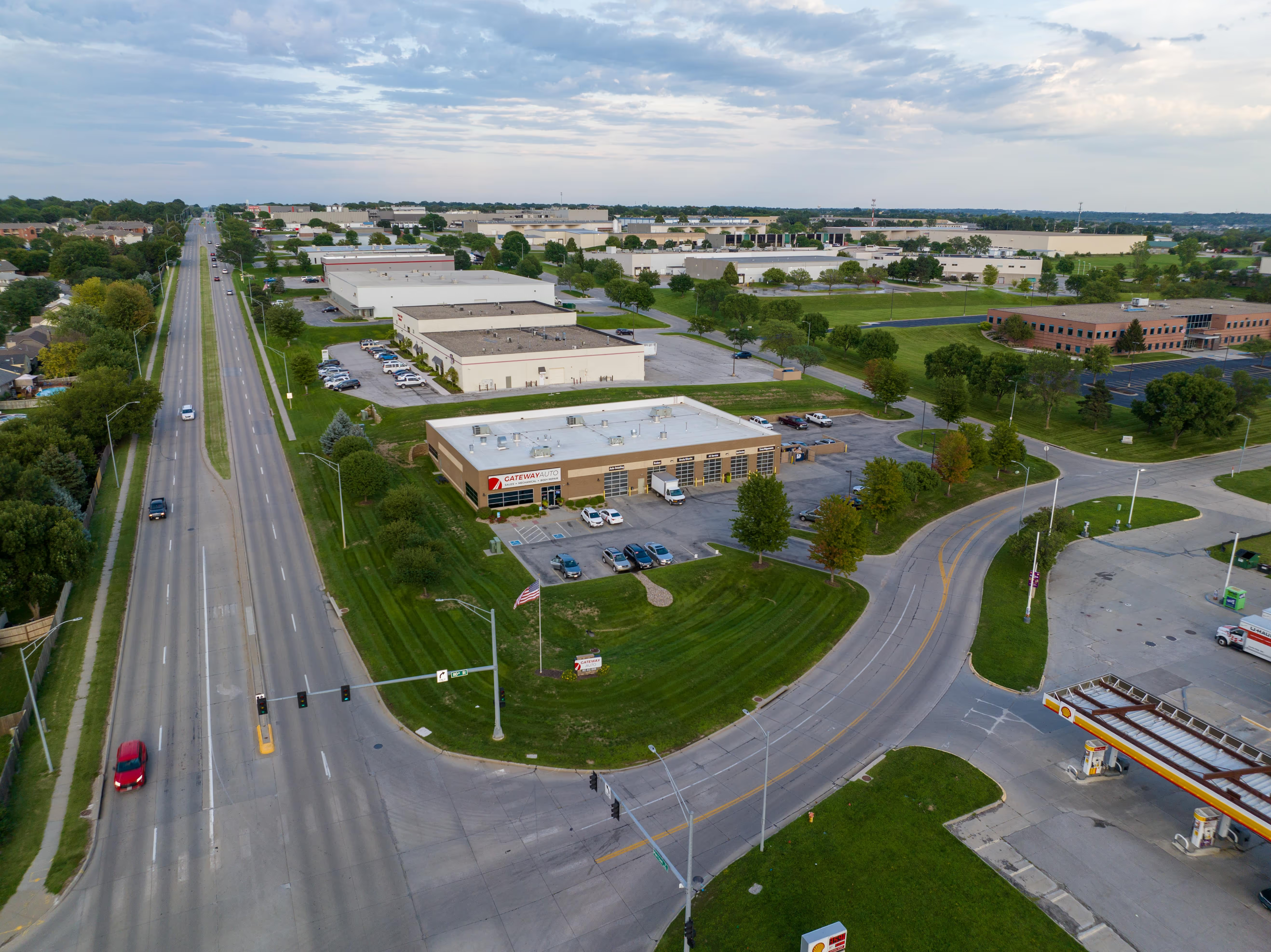
La Vista
110th & Harrison
Flagship. Mechanical service and the collision center under one roof.
10939 Harrison St, La Vista, NE 68128. 24 hour key drop.
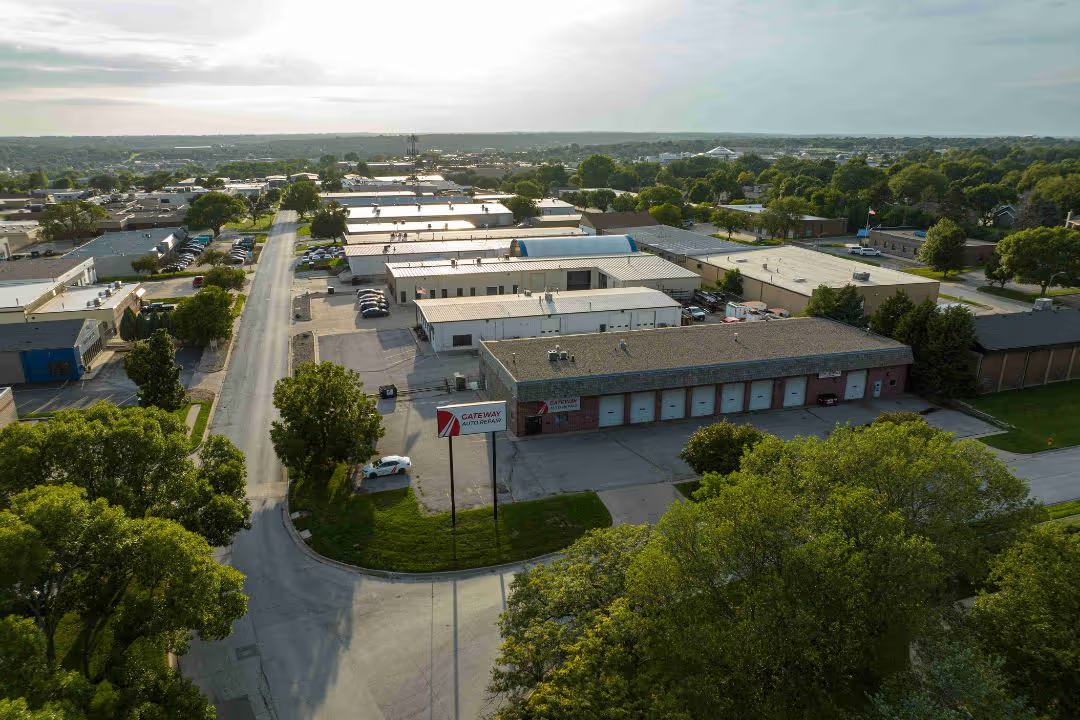
West Omaha
133rd & B Street
Standalone service center. Mechanical repair and maintenance, all makes and models.
13306 B St, Omaha, NE 68144. 24 hour key drop at the front of the building.